





Staphylococcus aureus Sortase A Inhibitors Library
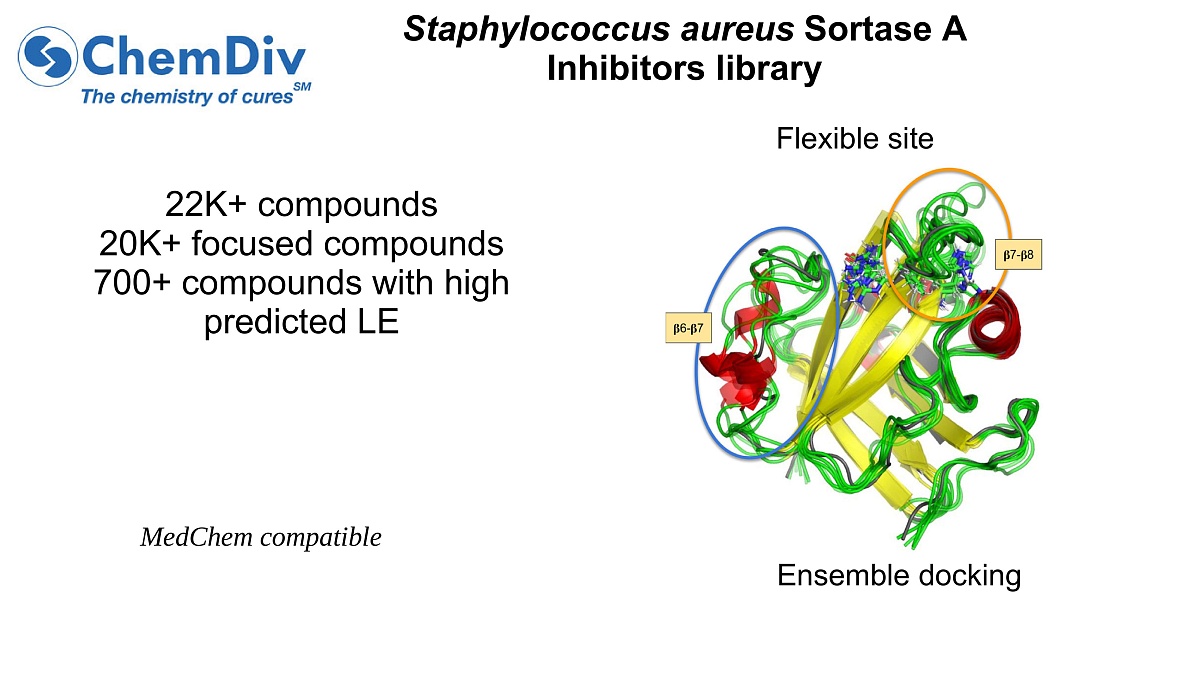
Staphylococcus aureus Sortase A Inhibitors Library
The ChemDiv Staphylococcus aureus Sortase A Inhibitors library is rationally designed on the basis of ensemble docking scores and conformational coverage, where each compound is prioritized for its favourable binding free energy profile across the dominant SrtA conformers, thereby statistically enriching hit rates in biochemical assays while minimising conformation‑dependent false negatives, and providing a mechanistically sound starting point for experimental validation – positioning this collection as a robust chemogenomic resource for anti-staphylococcal drug discovery.
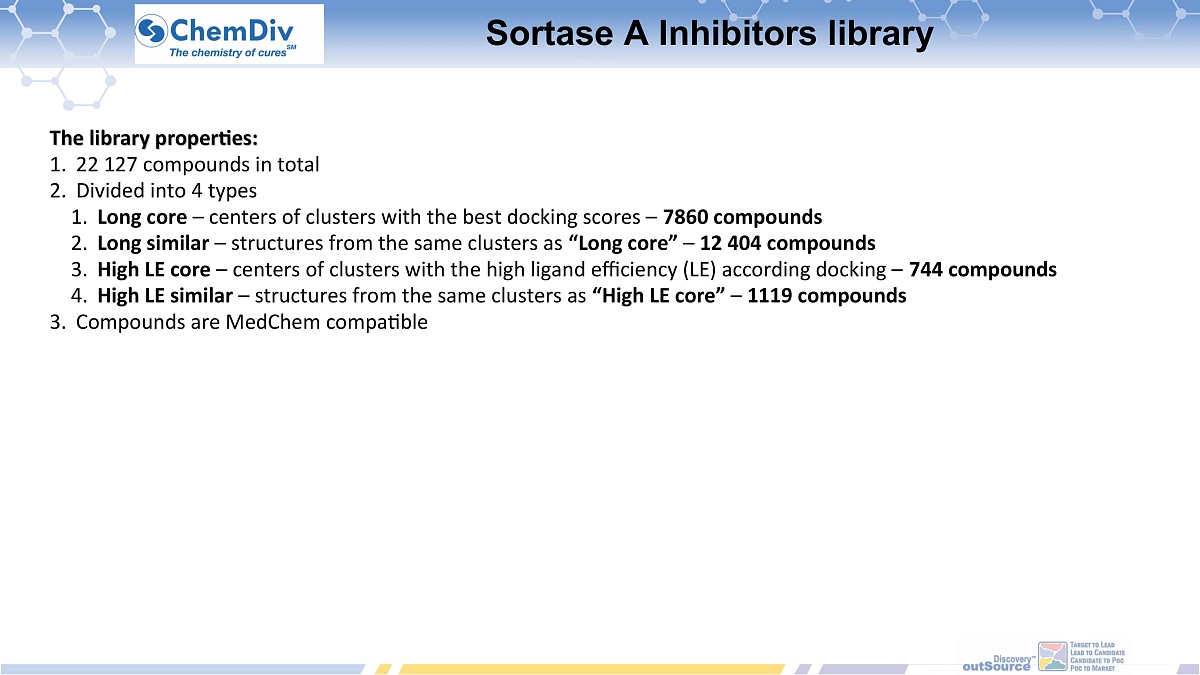
Library Properties
- The library contains a total of 22,127 compounds.
- It features over 20,000 focused compounds.
- It includes over 700 compounds with high predicted ligand efficiency (LE).
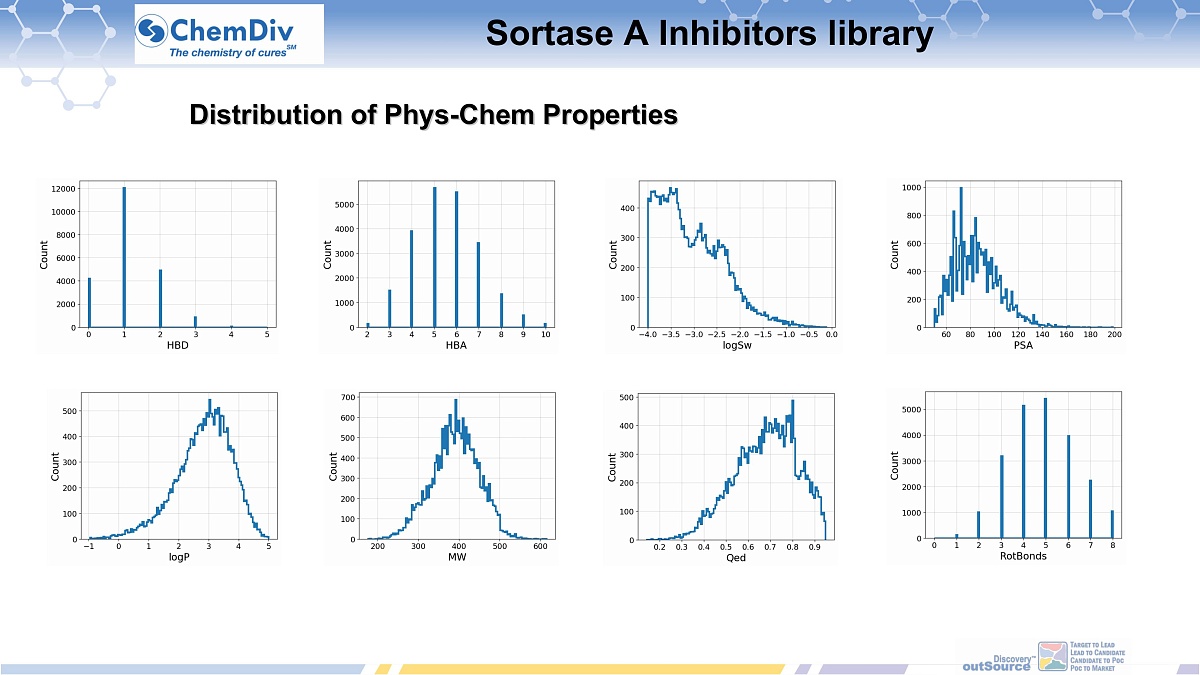
- The compounds within the library are MedChem compatible.
Compound Classification
The library is divided into four specific types:
| Type | Description | Compound Count |
|---|---|---|
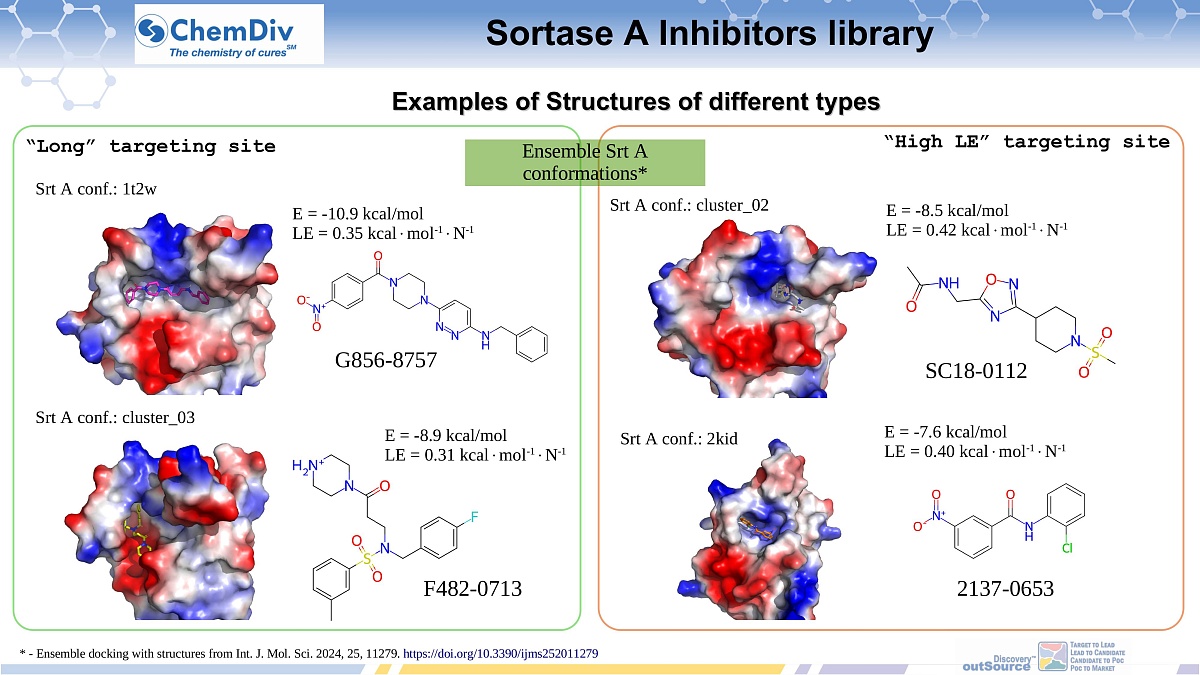
| Long core | Centers of clusters with the best docking scores. | 7,860 |
| Long similar | Structures that belong to the same clusters as the "Long core". | 12,404 |
| High LE core | Centers of clusters with high ligand efficiency (LE) according to docking. | 744 |
| High LE similar | Structures belonging to the same clusters as the "High LE core". | 1,119 |
Methodology and Preparation Algorithm
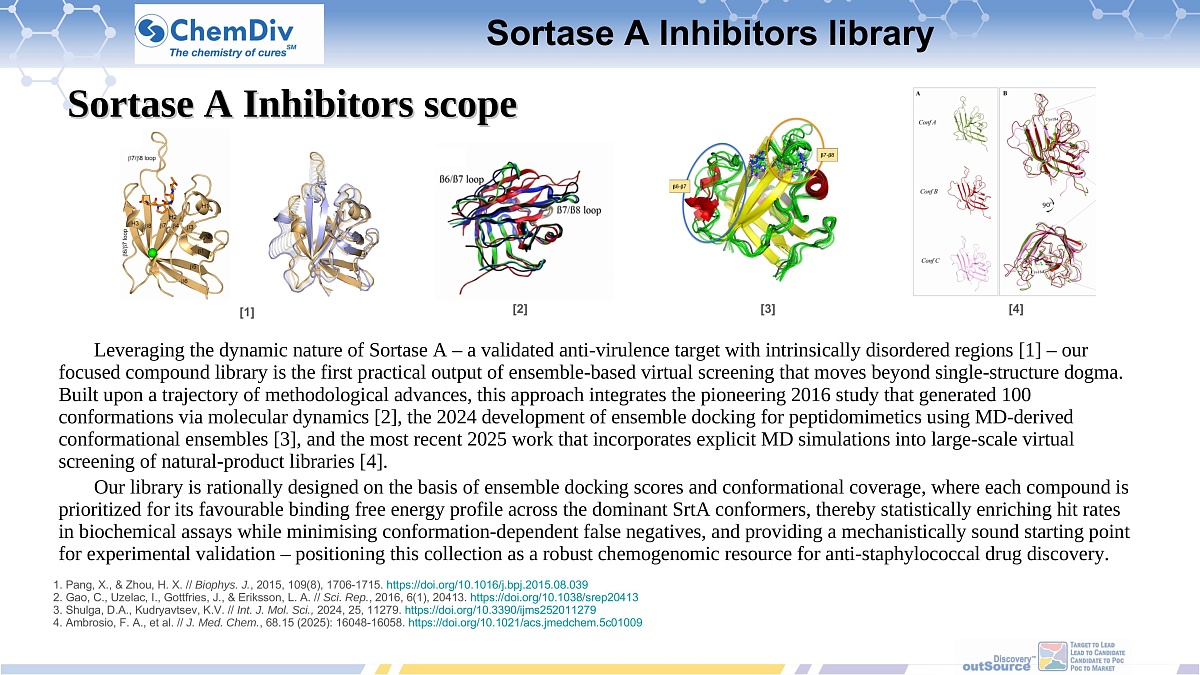
- The library is the first practical output of ensemble-based virtual screening that moves beyond single-structure dogma.
- The methodology integrates previous advances, including the generation of 100 conformations via molecular dynamics (MD), the development of ensemble docking for peptidomimetics using MD-derived conformational ensembles, and the incorporation of explicit MD simulations into large-scale virtual screening.
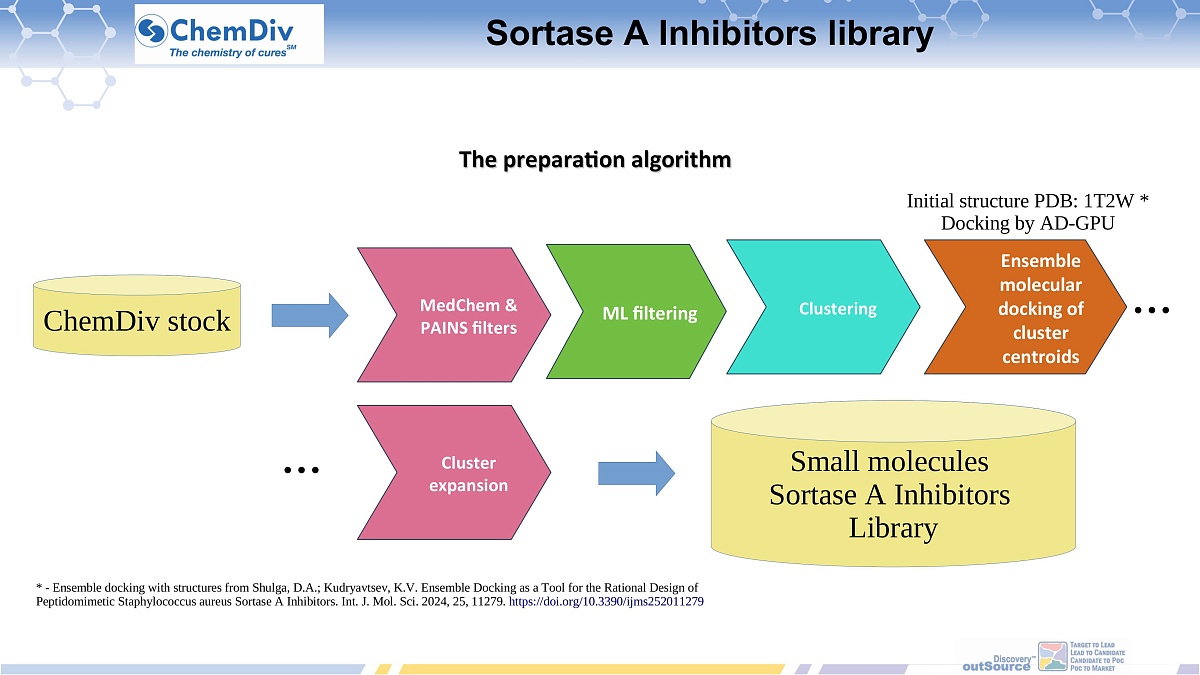
- The library's preparation algorithm begins with ChemDiv stock, applies PAINS filters and ML filtering clustering, performs ensemble molecular docking of cluster centroids using AD-GPU, and concludes with cluster expansion.
Rational Design and Benefits
- The library is rationally designed based on ensemble docking scores and conformational coverage.
- Each compound is prioritized for its favourable binding free energy profile across the dominant SrtA conformers.
- This approach statistically enriches hit rates in biochemical assays.
- The design minimises conformation-dependent false negatives.
- The collection provides a mechanistically sound starting point for experimental validation.