



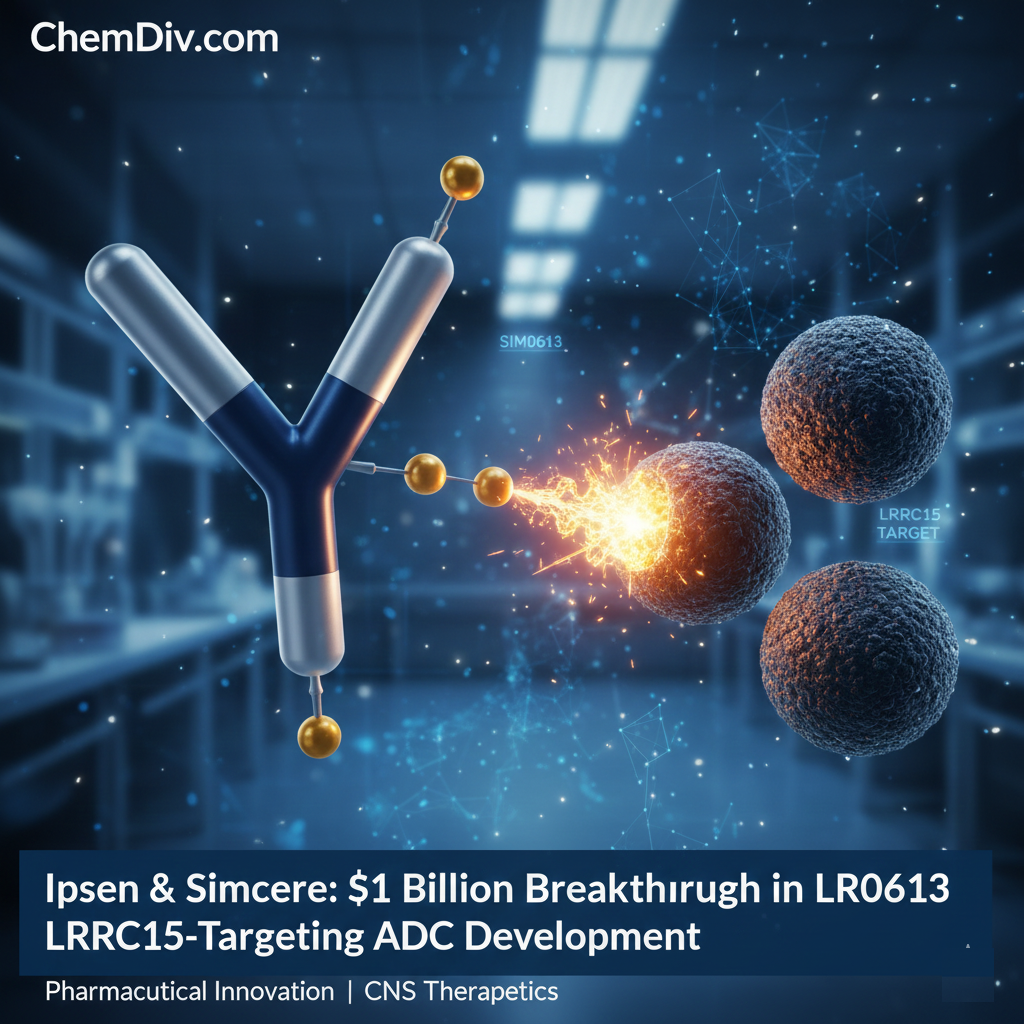
Ipsen Secures $1.06 Billion Licensing Agreement for Simcere’s Next-Gen ADC Asset

In a strategic move to dominate the rapidly evolving Antibody-Drug Conjugate (ADC) landscape, the French biopharmaceutical giant Ipsen has entered into an exclusive licensing agreement with Simcere Zaiming, a subsidiary of China-based Simcere Pharmaceutical Group. The deal, valued at up to $1.06 billion, focuses on SIM0613, a preclinical ADC candidate targeting the LRRC15 protein.
SIM0613: Targeting the Tumor Microenvironment
The asset at the heart of the deal, SIM0613, is designed to target LRRC15 (Leucine-Rich Repeat Containing 15), a protein highly expressed in various solid tumors and cancer-associated fibroblasts (CAFs). Unlike many traditional therapies, SIM0613 aims to penetrate deep into the tumor stroma, neutralizing the supportive environment that cancers use to evade the immune system.
Strategic Expansion into the ADC Market
For Ipsen, this acquisition is a critical component of its oncology roadmap. Since 2020, Ipsen has added over 20 programs to its development portfolio. The ADC modality is particularly attractive as it offers the precision of monoclonal antibodies combined with the potent cell-killing power of cytotoxic payloads.
Key Facts about the Agreement:
- Global Rights: Ipsen gains exclusive rights for development and commercialization worldwide, excluding Greater China.
- Financials: Beyond the $45M upfront, Simcere is eligible for significant development, regulatory, and commercial milestones, plus tiered royalties.
- Manufacturing: Ipsen will assume responsibility for manufacturing and all Phase I preparation activities outside of Greater China.
Industry Context: The Rise of Chinese Biopharma
The deal highlights a massive 280% surge in licensing value between Western and Chinese firms since 2020. China has emerged as a powerhouse for ADC development, with nearly half of the world's active ADC pipeline originating from Chinese labs. Simcere, with its four R&D centers in Shanghai, Nanjing, Beijing, and Boston, continues to prove its "Innovation 2.0" strategy is delivering world-class molecules.
As preclinical studies show "robust tumor regressions" in multiple models, the industry eagerly awaits the H2 2026 launch of Phase I clinical trials. For companies like ChemDiv, these developments signify a shift towards more complex, multi-functional therapeutics that require sophisticated discovery and development platforms.