



Radiopharmaceuticals & Advanced Preclinical Models: Bridging Discovery to Clinic | ChemDiv
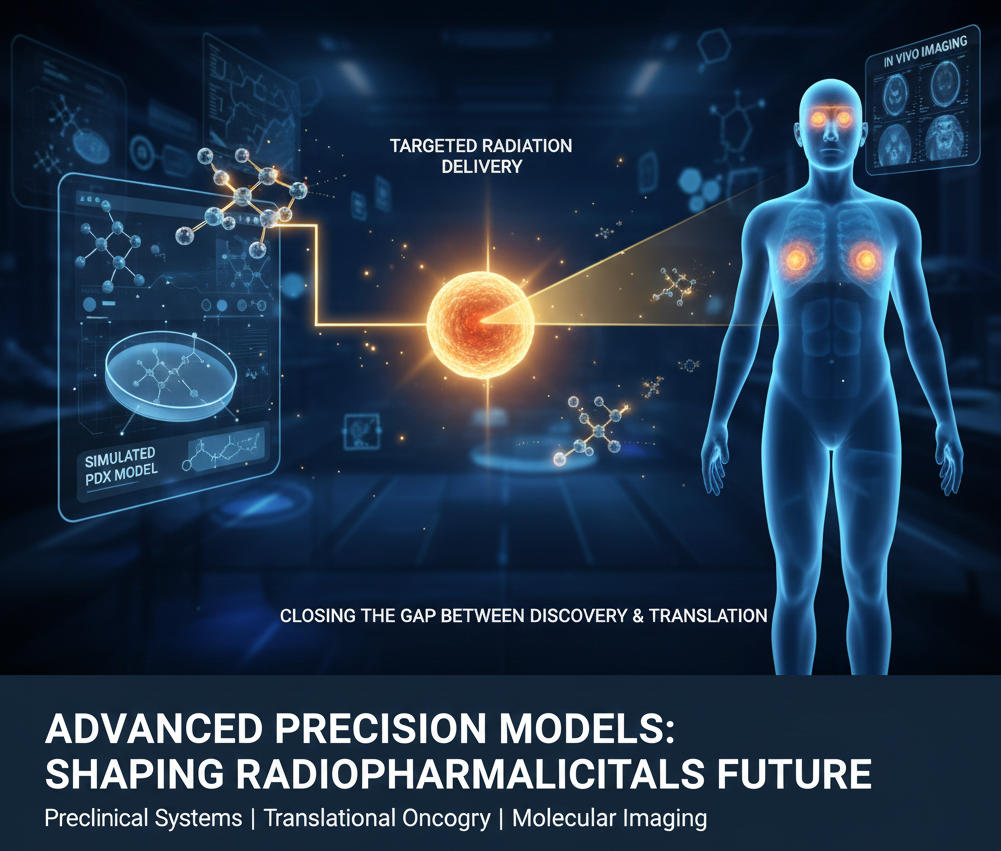
Radiopharmaceuticals & Advanced Preclinical Models: Shaping the Future of Precision Oncology
Advanced preclinical systems, particularly patient-derived xenografts (PDX), are providing unprecedented insights into tumor biology. By bridging the gap between initial discovery and clinical translation, these models allow drug developers to visualize "biology in motion," leading to more informed decision-making in the rapidly evolving field of radiopharmaceuticals.

The Evolution of Radioligand Therapies
Radiopharmaceuticals have transitioned from niche applications to a cornerstone of precision medicine. The significant clinical impact of agents like Pluvicto and Lutathera has validated the potential of targeted radiation to achieve durable responses in advanced-stage cancers. This success has sparked a surge in innovation across radiochemistry and conjugation technologies.
Radiolabeled Compounds as Discovery Engines
Beyond diagnostics, radiolabeled tracers act as functional biomarkers. Utilizing PET and SPECT imaging in early development allows researchers to confirm target engagement and quantify tissue penetration in vivo. This real-time data is critical for prioritizing candidates and avoiding costly late-stage failures.
Strengthening Preclinical Foundations
The success of any radiopharmaceutical program depends on the fidelity of its biological models. While traditional cell-line models (CDX) are reproducible, they often fail to replicate the complex tumor microenvironment. Advanced PDX models address this by capturing the heterogeneity, blood flow dynamics, and receptor density of human tumors, providing a more reliable forecast for clinical success.