



Adjuvant Alectinib Maintains Manageable Safety, QoL in NSCLC
Click to view quick news summary (Spoiler)
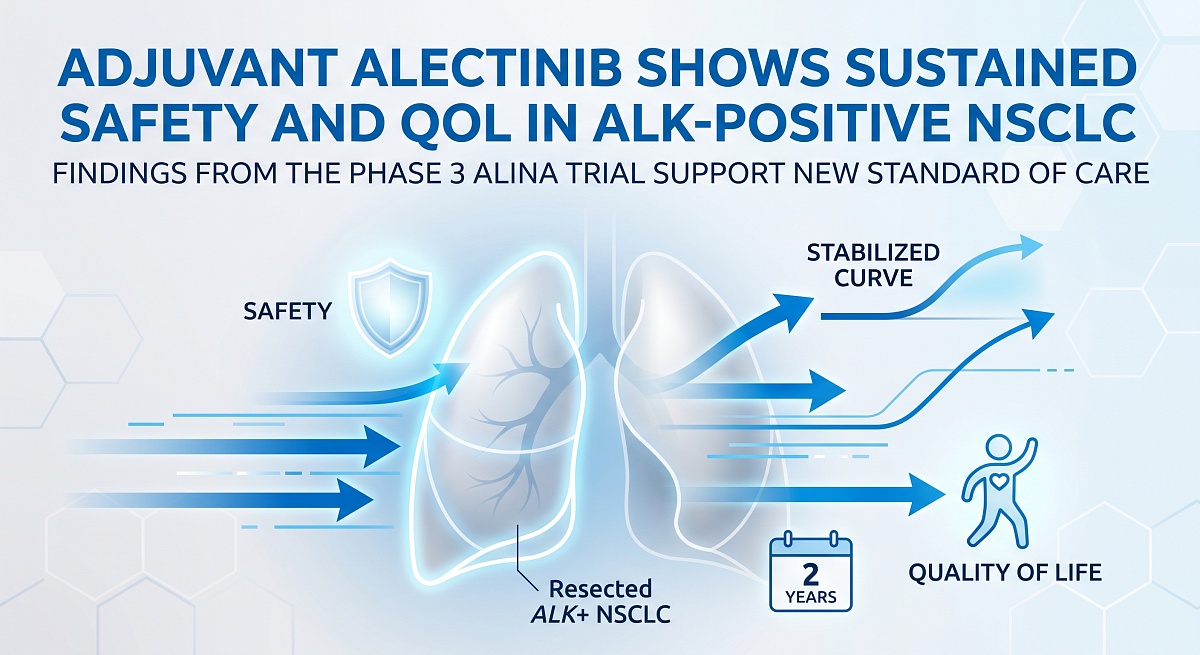
Findings from the phase 3 ALINA trial confirm that adjuvant alectinib offers a manageable safety profile and sustained quality-of-life improvements over two years for patients with resected ALK-positive non-small cell lung cancer.
Adjuvant treatment with alectinib (Alecensa) demonstrated a manageable safety profile and early, sustained improvements in health-related quality of life (HRQoL) over 2 years among patients with resected, ALK-positive non–small cell lung cancer (NSCLC), according to safety and HRQoL outcomes from the phase 3 ALINA trial (NCT03456076).
Published in The Lancet Oncology, the findings indicate that adjuvant alectinib exhibited a manageable safety profile among 128 patients in the safety-evaluable population over the treatment period. With a median safety follow-up of 24.8 months, among patients receiving alectinib, the most frequently reported grade 3 to 4 adverse events (AEs) were increased blood creatine phosphokinase (6%) and increased blood bilirubin (2%).
AEs lasting longer than 4 months, including constipation, increased blood alkaline phosphatase, increased blood bilirubin, and anemia, were predominantly grade 1 or 2 and did not lead to treatment discontinuation. No deaths due to AEs occurred in either treatment group.
Taken together, the longer-term efficacy findings and the newly reported safety and HRQoL outcomes further support the use of alectinib as an adjuvant treatment option for patients with resected, ALK-positive NSCLC.
“Together with the disease-free survival benefit seen in ALINA, these data support adjuvant alectinib as an important new standard-of-care for patients with resected ALK-positive NSCLC,” study authors Dziadziuszko et al concluded.