



Barrow, ASU embark on one of first clinical trials of ibogaine in the US
Click to view quick news summary (Spoiler)
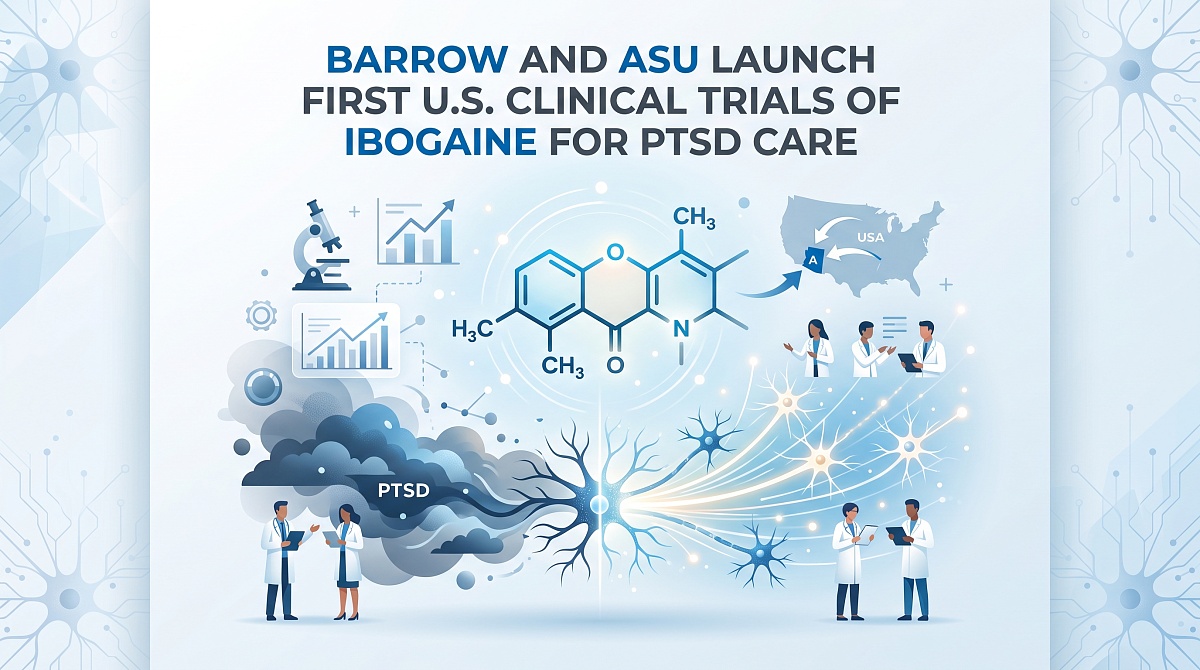
Backed by a $5 million grant, researchers at Barrow Neurological Institute and ASU are initiating one of the first controlled US clinical trials to study ibogaine for PTSD, depression, and addiction.
Ibogaine, a psychoactive compound derived from a shrub found in Central Africa, has long been reported to help those suffering from post-traumatic stress disorder, depression and addiction. However, its status as a Schedule I drug has limited its study in the United States, with patients instead seeking treatment at unregulated clinics abroad.
For people living with post-traumatic stress disorder, depression or addiction, existing treatments do not always bring relief. Some are desperate enough to travel outside the United States for experimental therapies that are not approved by the Food and Drug Administration.
A cursory Google search turns up a litany of options: a treatment center in Tijuana, Mexico. A wellness institute with two locations in Cozumel. A clinic in Cancún.
These are just a few of the clinics offering ibogaine, a plant-derived psychedelic compound with broad effects on brain chemistry. Researchers have long been interested in its potential anti-addictive and antidepressant properties, and patients who travel abroad for treatment often report dramatic improvements.
“I don't think it's plausible that people going to Mexico and just getting a nice beach vacation would be seeing this much improvement in symptoms, but we need a control group. We need to compare ibogaine to something,” says Candace Lewis, an Arizona State University assistant professor with a dual appointment in the School of Life Sciences and Department of Psychology.
Studying ibogaine with a control group has been nearly impossible in the United States due to its classification as a Schedule I drug, the most restricted category under the Controlled Substances Act of 1970.
But a $5 million grant from the Arizona Department of Health Services could help researchers learn more about the safety and efficacy of the compound. In this study awarded to Barrow Neurological Institute with a subcontract to ASU, Lewis and other university researchers are beginning to explore ibogaine’s therapeutic potential in one of the first clinical trials of its kind in the United States.
Researchers hope to enroll the first participant in 2027 and will use standardized assessments, brain imaging and other lab tests to evaluate whether ibogaine improves participants’ symptoms and quality of life, and to establish its safety profile.