



Bio Solutions’ Successful Study Advances FDA Drug Screening
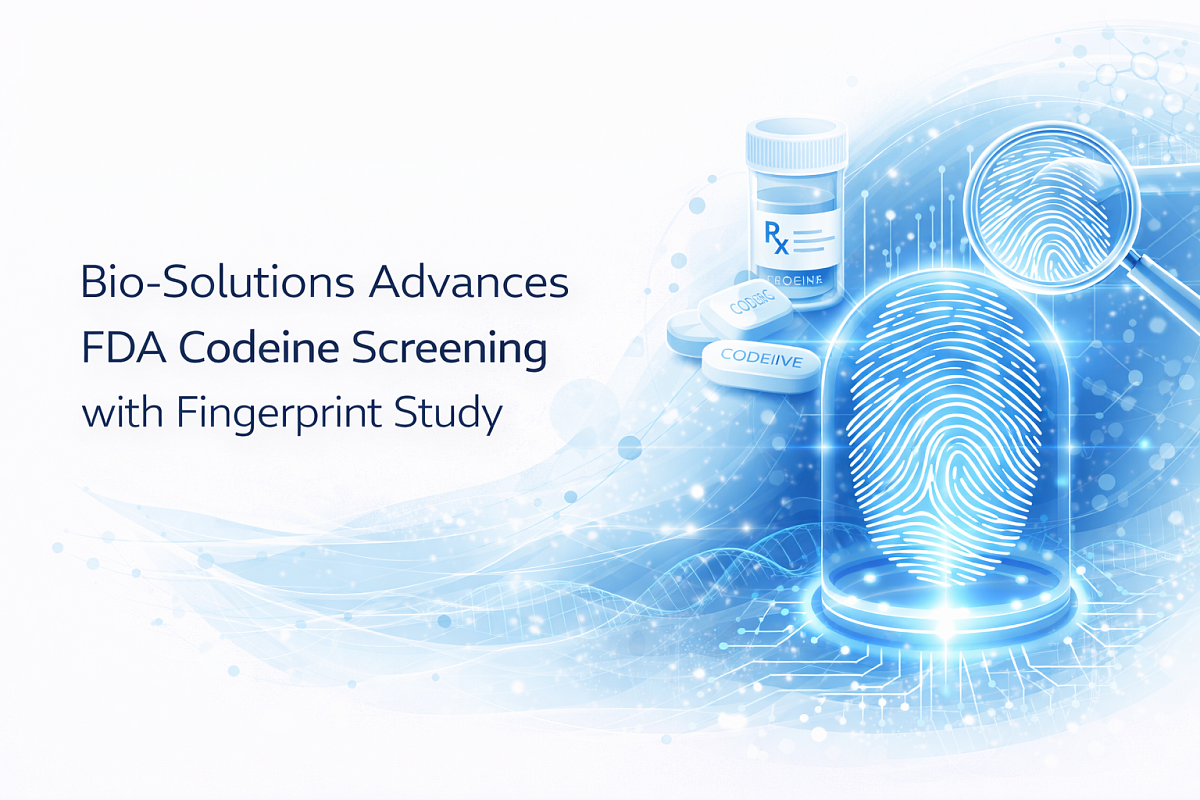
Intelligent Bio Solutions completed its initial clinical cut-off study for a fingerprint-based codeine screen, supporting a planned FDA 510(k) submission for U.S. clearance of its DSR-Plus reader and disposable cartridge system.
Intelligent Bio Solutions completed a fingerprint-based codeine screen study, supporting a planned FDA 510(k) submission for U.S. clearance.
Date: April 6, 2026
Key facts
- Intelligent Bio Solutions completed its initial clinical Cut-off Study for a fingerprint-based codeine screen in 40 adults.
- The company aligned test performance against an FDA-cleared predicate with LC-MS/MS confirmation.
- The readout supports a planned 510(k) submission for U.S. clearance of the DSR-Plus reader and disposable cartridge system.
- Next steps include a multi-site Method Comparison and Usability Study and an Interference Study in 2026.
Intelligent Bio Solutions completed its initial clinical Cut-off Study for a fingerprint-based codeine screen in 40 adults, finalizing data on schedule and aligning test performance against an FDA-cleared predicate with LC-MS/MS confirmation. The readout supports the company’s planned 510(k) submission for U.S. clearance of its instrumented DSR-Plus reader and disposable cartridge system.
The company is moving immediately into a multi-site Method Comparison and Usability Study operated by intended end users, targeting completion by the end of June 2026, alongside an Interference Study to evaluate performance in the presence of real-world substances, expected by late July. The stepwise program is designed to demonstrate substantial equivalence to an existing device while building an evidence package around usability and matrix-specific risks for fingerprint sweat.
Fingerprint sweat testing offers a differentiated path into drug screening
Strategically, this is a targeted entry into a crowded drugs-of-abuse testing market using a differentiated specimen type. By leading with a single analyte, codeine, on a reader-based platform, the company is aiming for what appears to be the most straightforward regulatory path available for a novel matrix. Anchoring the dossier with predicate comparisons and confirmatory LC-MS/MS is expected, but the added emphasis on interference and operator usability testing signals sensitivity to FDA scrutiny of point-of-collection devices used outside traditional laboratories.
The bigger question is classification. If the FDA determines that fingerprint sweat lacks a suitable predicate for the claimed intended use, the pathway could shift from 510(k) to de novo, altering both timelines and evidence expectations. Positioning around recent use rather than impairment will also matter, because impairment claims typically invite a higher evidentiary standard and may introduce cross-agency complications.
The regulatory strategy appears designed to show substantial equivalence while also addressing usability, interference and specimen-specific risks associated with fingerprint sweat testing.
Operational advantages may support uptake in nonregulated screening settings
If cleared, the operational pitch is clear: hygienic, observed and rapid collection without restroom logistics, together with a lower adulteration risk relative to urine. That could make the system attractive for nonregulated workplace screening and potentially for pain management or treatment programs that want an immediate screen before definitive confirmation.
For research sites and CROs, a portable, instrument-read screen could help streamline pre-visit checks, reduce protocol deviations tied to prohibited substance use, and fit into decentralized or community-based settings where conventional sample handling is a constraint. However, chain-of-custody requirements, confirmation workflows, and site SOP integration will play a major role in determining whether real uptake follows.
Federal workplace programs governed by SAMHSA and DOT remain aligned to urine, and increasingly oral fluid, with certified-lab confirmation. Fingerprint sweat is not part of that framework today, which limits near-term penetration into regulated segments even if the device secures FDA clearance.
Future growth may depend on performance data and broader multiplex potential
Vendors in oral fluid and cup-based urine categories should view the move as a possible wedge toward broader multiplex fingerprint panels if the first 510(k) lands. Reader-based fluorescence can offer more controlled cut-off adherence and digital result capture, which aligns with employers and sponsors seeking auditable, data-forward screening tools.
That said, the absence of published sensitivity, specificity and agreement metrics means performance positioning remains untested against high-quality oral fluid assays and next-generation lateral flow systems. Much of the commercial argument will therefore depend on whether upcoming method comparison, usability and interference studies can demonstrate not just regulatory adequacy, but practical differentiation in real-world screening workflows.
Taken together, the company’s program represents a focused attempt to open a new specimen category in FDA-cleared drug screening by starting with a single analyte and a comparatively narrow intended use claim. If Intelligent Bio Solutions can maintain schedule, avoid a pathway shift, and produce credible usability and interference data, its fingerprint-based screening platform could become an important test case for how alternative specimen types enter the U.S. drugs-of-abuse testing market.