



New Namodenoson Trial Data ‘Positive’ for Drug’s Use in Pancreatic Cancer
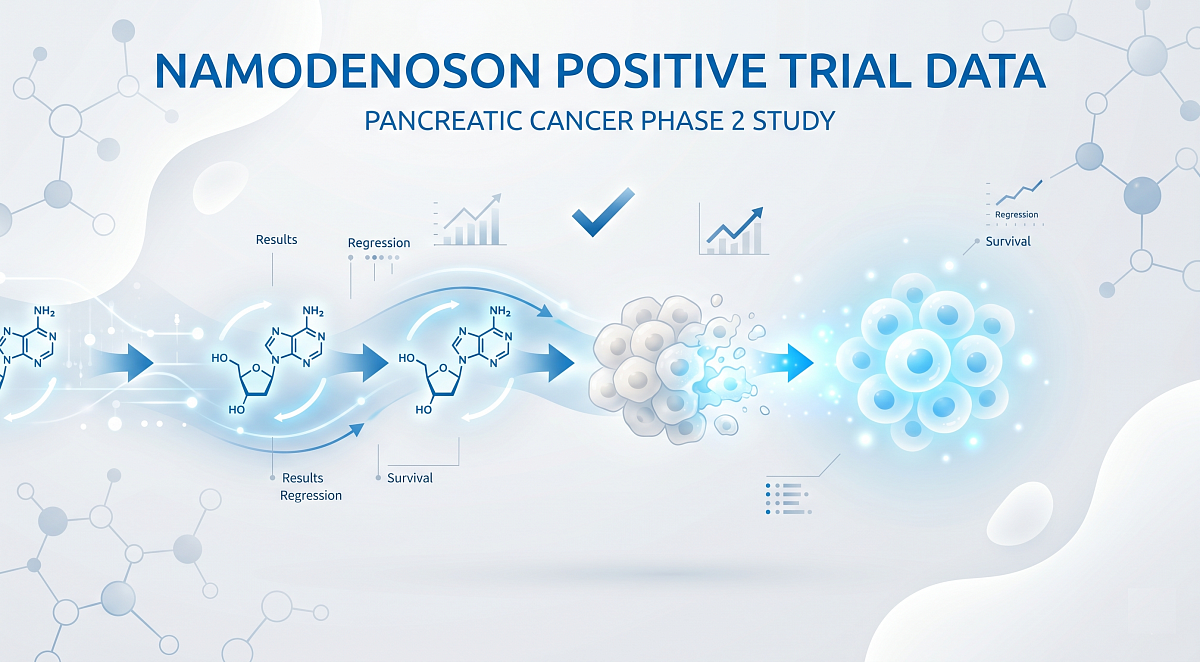
Almost a third of people with advanced pancreatic cancer taking part in an ongoing clinical trial had stable disease following treatment with the experimental oral medication namodenoson, new data show[cite: 369]. Can-Fite Biopharma, the Israeli biopharmaceutical developing namodenoson and sponsoring the Phase 2 trial (NCT06387342), said it expects to have top-line results in the coming months[cite: 370]. Full results are expected to include measures such as overall survival time and time to disease progression in namodenoson-treated patients[cite: 371].
“As we continue to analyse the data, we are encouraged by the emerging signal of durable disease stabilization observed in this study,” said Pnina Fishman, chairperson and chief scientific officer of Can-Fite[cite: 372].
Study Demographics and Outcomes
The small study enrolled a total of 20 adults with pancreatic cancer that was resistant to available therapies and/or had metastasized, meaning it had spread to other parts of the body[cite: 374]. All participants in the ongoing trial are given namodenoson at a dose of 25 mg twice daily, with the main goals of evaluating the therapy’s safety and its effect on patient functioning[cite: 375].
According to Can-Fite, available data show that more than 30% of patients in the study had stable disease, with a favorable safety and tolerability profile[cite: 377]. The company did not provide further details on these outcomes, but it noted that 35% of patients in the study are still on treatment[cite: 378]. Remarkably, one participant has been on namodenoson for more than 16 months, per Can-Fite[cite: 379].
“Importantly, a meaningful proportion of patients remain on therapy for extended periods, supporting the continued clinical development of namodenoson in pancreatic cancer,” Fishman said[cite: 380].
Mechanism of Action and Future Directions
Namodenoson works by activating a cellular receptor protein known as the A3 adenosine receptor, or A3AR[cite: 381]. In certain cancer cells, activating this receptor can trigger a cascade of molecular events that ultimately leads to programmed cell death, known as apoptosis[cite: 382]. The developer noted that namodenoson has shown particularly strong anticancer activity in pancreatic and liver cancer[cite: 383].
In addition to the Phase 2 study in pancreatic cancer, Can-Fite is running a Phase 3 clinical trial (NCT05201404), dubbed LIVERATION, that’s testing namodenoson against a placebo in certain patients with advanced liver cancers[cite: 384]. Furthermore, Can-Fite is developing namodenoson as a potential treatment for MASH, fully known as metabolic dysfunction-associated steatohepatitis[cite: 385]. MASH is a liver disease in which fat builds up abnormally in the organ and triggers liver inflammation and scarring[cite: 386]. A Phase 2 study (NCT04697810) of namodenoson in MASH is also currently ongoing[cite: 387].