



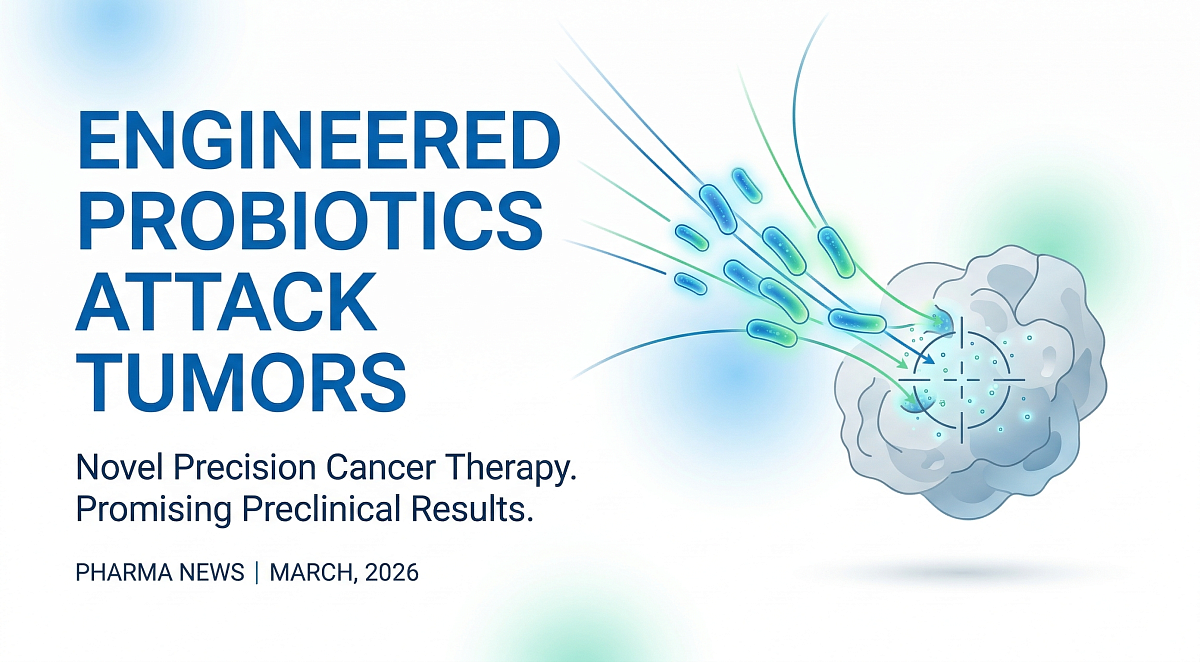
Probiotic bacteria successfully attacks tumours in preclinical models
Engineered probiotic bacteria that can deliver cancer-fighting drugs directly to tumours have shown promising results in mice, offering a potential new approach to targeted cancer therapy.
A new study from Shandong University suggests that genetically engineered bacteria could offer a novel way to target and treat cancer. The researchers have explored how a probiotic strain of bacteria, Escherichia coli Nissle 1917 (EcN), can be modified to produce anti-cancer compounds directly within tumours. Their findings in mouse models provided promising results, though further work is needed before the approach can be tested in humans.
Harnessing bacteria to fight tumours
Despite advances in cancer treatment, many therapies are limited by the complexity of the disease and the difficulty of targeting tumours without harming healthy tissue. In this study, scientists investigated whether bacteria could be used as a targeted delivery system for anti-cancer drugs. Bacteria naturally interact with the human body and can thrive in tumour environments, making them a potentially useful tool for targeted therapy.
The team engineered EcN to produce Romidepsin, an approved anti-cancer drug known for its tumour-inhibiting properties. Using advanced genetic and genomic techniques, they created a modified strain capable of synthesising the drug.
Promising results in mouse models
To test the therapy, researchers developed a mouse model using breast cancer cells that form tumours. The engineered bacteria were then introduced into the mice to observe and evaluate their targeted anti-tumor efficacy in a living organism.
Results showed that EcN successfully colonised the tumours and released Romidepsin in both laboratory and living conditions. This demonstrated the bacteria’s ability to act as a targeted delivery system, producing and releasing the drug directly at the tumour site. Such an approach could significantly reduce the side effects often associated with conventional cancer treatments, which can impact healthy cells as well as cancerous ones.
Cautious optimism for future applications
Despite the promising findings, researchers stress that the therapy is still in its early stages. The treatment has not yet been tested in humans and further studies are required to assess safety, potential side effects and how the engineered bacteria might be controlled or eliminated after treatment.
There are concerns about possible adverse outcomes and the long-term impact of introducing modified bacteria into the body. These factors could influence whether the therapy becomes viable in clinical settings.
A step towards innovative cancer care
While still experimental, the research highlights the growing interest in using engineered biological systems to tackle complex diseases. If eventually proven safe and effective in humans, bacteria-based therapies could represent a significant shift in how cancer is treated, offering more precise and potentially less harmful options for patients.