



How Evogene is Putting AI Agents to Work on Small-Molecule Discovery
Click to view quick news summary (Spoiler)
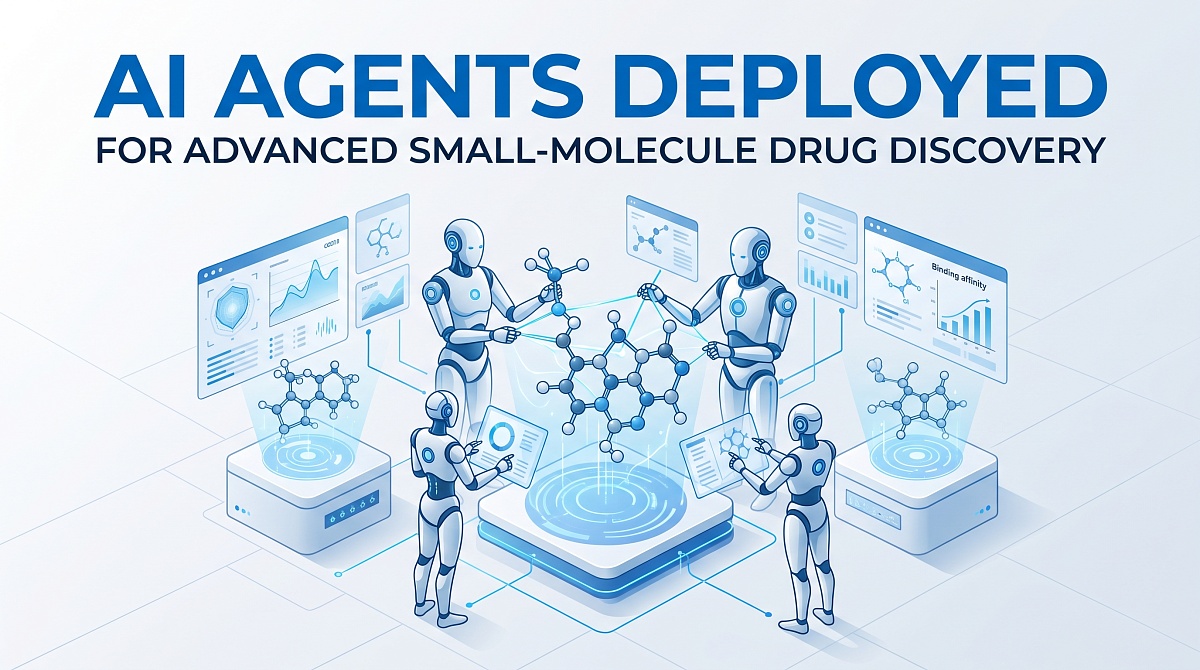
Evogene has restructured to focus on computational chemistry, utilizing its proprietary ChemPass AI engine and AI agents to streamline small-molecule discovery for pharmaceuticals and agriculture.
Small molecules are the basis of most medicines and crop-protection products in use today, and account for the majority of new drug approvals each year, yet designing new ones remains a challenge. The space of drug-like structures runs to an estimated 10⁶⁰ compounds, and conventional discovery navigates it through slow rounds of synthesis and lab testing, with most candidates failing late, consuming significant resources. New computational chemistry technologies are working to change this model, and capital has moved accordingly with roughly $60 billion invested into AI-driven drug discovery since 2019, and more than 200 AI-derived candidates in clinical development as of early 2026.
Evogene Ltd. has spent the past two years restructuring around this shift, converting from a diversified life-science holding company into a focused technology-first computational chemistry business applying proprietary AI to the discovery of novel small-molecule candidates for pharmaceuticals and agriculture.
ChemPass AI and Drug Discovery Agents
At the heart of Evogene’s platform is ChemPass AI™, a proprietary generative AI engine built to explore vast chemical space and design novel small molecules. The company recently expanded its searchable virtual library from approximately 36 billion to approximately 110 billion enumerated, vendor-accessible compounds to support new discovery. Built on years of proprietary data from Evogene’s internal research and its external collaborations, the platform is designed to optimize the process that currently takes over a decade and more than a billion dollars to bring a new drug to market.
Where conventional discovery depends on rounds of synthesis and lab testing, ChemPass AI pushes optimization earlier, weighing efficacy, selectivity, safety, and manufacturability during the design phase itself, before a molecule is ever synthesized. The technology has been developed through the company’s partnership with Google Cloud, which recently expanded to integrating AI agents into the platform’s workflows in a step towards increasingly autonomous molecule discovery and optimization. The agents build a target product profile (TPP), the full set of biological, chemical, clinical, and commercial requirements a molecule has to meet to become a product, at the outset, pulling data together so that all parameters are considered from the initial step. ChemPass converts processes that previously required weeks or months of specialized scientific work to minutes, enabling the company to run more discovery programs in parallel.
The Internal/External Pipeline Approach
Evogene’s model pairs internal development with outside partnerships, applying its technology to candidates spanning both human health and crop protection in order to develop new lead molecules. Its internal drug discovery program has completed the initial drug discovery stage of Hit-to-Lead and moved into Lead Optimization, where it is generating proprietary molecules intended as candidates for preclinical development. In parallel, four new partnerships since the start of 2026 brought the total to six active drug development collaborations with biotechnology companies and academic institutions, spanning oncology, metabolic disease, neurology, and inflammation. Across all of them, Evogene retains significant commercial rights in the resulting discoveries, diversifying risk while maximizing the odds of success.