




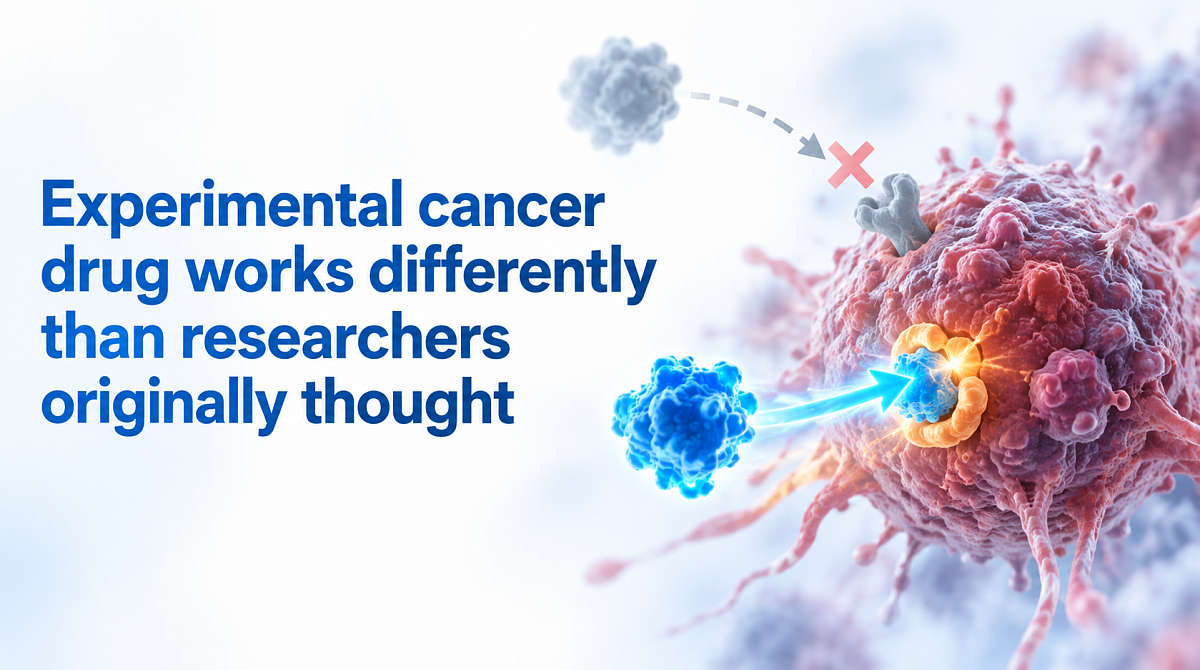
Experimental cancer drug works differently than researchers originally thought
Click to view quick news summary (Spoiler)
Research indicates that the experimental cancer drug zavondemstat blocks the DHODH enzyme instead of the KDM4 protein, altering the understanding of its anti-cancer mechanism.
A cancer drug currently being tested in patients may have entered clinical trials based on an incorrect understanding of how it works, according to a new study led by the University of Sydney in collaboration with Goethe University, Oxford University and the Institute of Cancer Research, London.
Published in Nature Chemical Biology, the study found the experimental drug zavondemstat and a closely related research compound, QC6352 – developed to treat cancers such as colorectal, pancreatic and prostate cancer – do not primarily target KDM4, a family of proteins which can help cancer cells grow and spread when it becomes overactive. Instead, both compounds largely work by blocking DHODH, an enzyme cancer cells rely on to produce the molecules needed for rapid growth.
These findings could affect the interpretation of previous studies around the world that used the research compound (QC6352) to investigate the biology of the cancer protein and may have implications for the ongoing clinical development of the zavondemstat drug. The discovery emerged from research investigating whether zavondemstat and QC6352 could be repurposed for glioblastoma, the most common and aggressive form of brain cancer.
"We tested these compounds to investigate whether they could potentially be repurposed for glioblastoma treatment," Professor Munoz said. "When we tested other KDM4 inhibitors, we found they did not reproduce the anti-cancer effects observed with QC6352. If blocking KDM4 was driving those effects, we would have expected the other inhibitors to behave similarly. Instead, the results suggested QC6352 was acting through a different mechanism."
Using patient-derived glioblastoma stem cells, tumour models and a series of genetic, mechanistic and molecular experiments, the researchers traced the compounds' response to DHODH rather than KDM4.
"Researchers around the world have used QC6352 as a leading tool to study KDM4 biology, while the related drug zavondemstat progressed into clinical trials based on the same understanding," Professor Munoz said. "Our study found much of the anti-cancer activity of these compounds is driven by blocking DHODH rather than KDM4."