



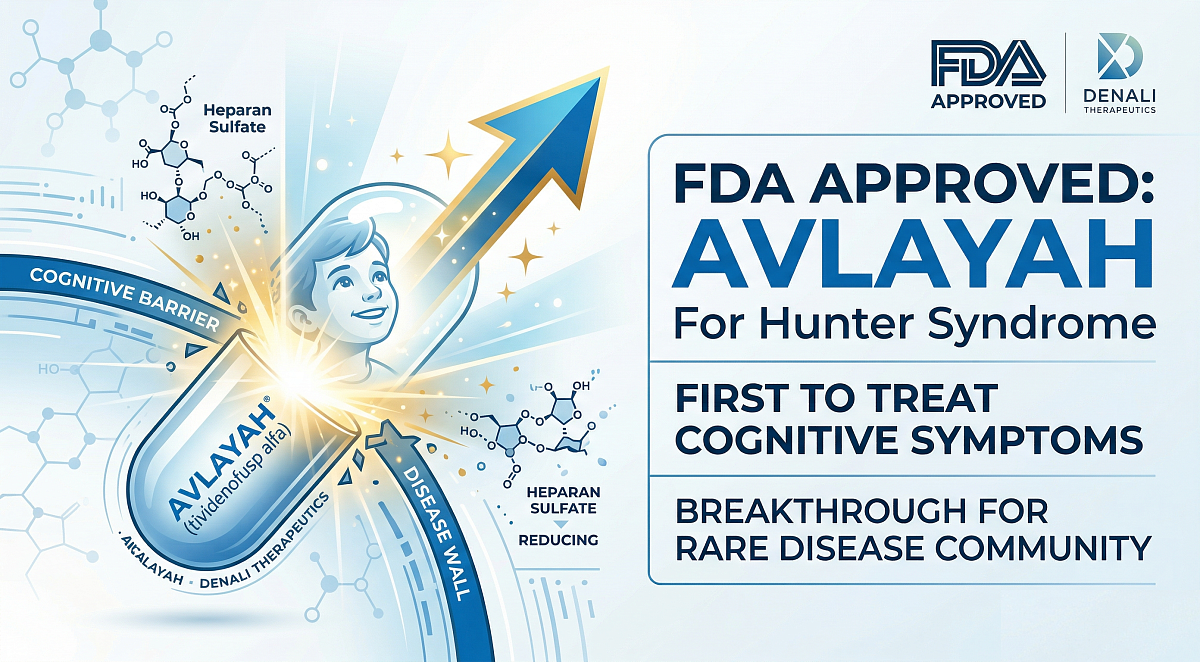
The FDA has approved Denali Therapeutics’ enzyme replacement therapy for a genetic lysosomal storage disease after a string of high-profile rejections for rare disease candidates. In approving Denali’s tividenofusp alfa, now known as Avlayah, the FDA has greenlit the first treatment for Hunter syndrome that can address the condition’s pernicious cognitive symptoms.
“Avlayah is the first product approved to address neurologic complications of Hunter syndrome,” Tracy Beth Høeg, M.D., Ph.D., acting director of the FDA’s Center for Drug Evaluation and Research (CDER), said in a March 25 release. “This accelerated approval was based on a surrogate endpoint: reduction of cerebrospinal fluid heparan sulfate, which the review team determined was reasonably likely to predict Avlayah’s clinical benefit.”
Overcoming Regulatory Hurdles and Biomarker Debates
Denali’s success follows the rejection of another Hunter syndrome candidate, a gene therapy from Regenxbio. When turning down Regenxbio’s RGX-121 in February, the FDA cited issues with the clinical trial’s ability to properly define the patient population, the use of a natural history control arm and the use of a single form of heparan sulfate as a surrogate endpoint.
At the time, analysts predicted that Denali had a better chance than Regenxbio because tivi was reviewed by CDER rather than the Center for Biologics Evaluation and Research (CBER). CBER’s outgoing leader, Vinay Prasad, M.D., has sparked controversy for dismissing surrogate endpoints and demanding placebo-controlled trials, even in rare diseases with small patient populations. Additionally, Denali measured more forms of heparan sulfate than just the one assessed by Regenxbio, and included longer-term data in its submission to the FDA, Jefferies analysts noted in early March.
But Regenxbio’s rejection did still raise concerns about whether the FDA would accept heparan sulfate as a surrogate biomarker, even as the expert community considered it acceptable for accelerated approval. Avlayah’s approval may help end that debate, analysts from Leerink Partners said in a March 25 note.
“The fact that we are seeing this FDA accept [heparan sulfate] as a surrogate endpoint is highly encouraging,” the analysts wrote, noting that Avlayah’s label specifically cites levels of heparan sulfate in cerebrospinal fluid as the basis for accelerated approval.
Industry Reactions to FDA's Rare Disease Stance
The FDA’s recent rejections of rare disease candidates, including candidates from Disc Medicine and Capricor Therapeutics, among others, have drawn widespread condemnation. Biotech CEOs, physicians and patient advocates alike have all criticized the agency’s actions, and Wisconsin Sen. Ron Johnson, a Republican, has pledged to investigate the FDA’s “bureaucratic idiocy.”
Denali itself faced a delay from the FDA in securing tivi’s approval, with the decision deadline pushed back from Jan. 5 to April 5. Now, the company is set to commercialize its first-ever approved medicine, Denali CEO Ryan Watts, Ph.D., told Fierce last week. “We're ready to launch immediately,” he said.
Commercialization and Patient Access
Avlayah should be available in the U.S. two weeks from today at a list price of $5,200 per 150 milligram single-use vial, a Denali spokesperson told Fierce on March 25. Like other enzyme replacement therapies, the exact costs for each patient will vary based on body weight.
“Denali is providing a comprehensive suite of access and affordability programs, including co-pay assistance, to help ensure eligible patients can receive Avlayah,” the spokesperson added. “The Denali Copay Program is designed to help eligible commercially insured patients reduce their out-of-pocket costs for this medicine.”