



FDA Approves First Oral Drug Indicated to Treat Dermatomyositis in Adults
Click to view quick news summary (Spoiler)
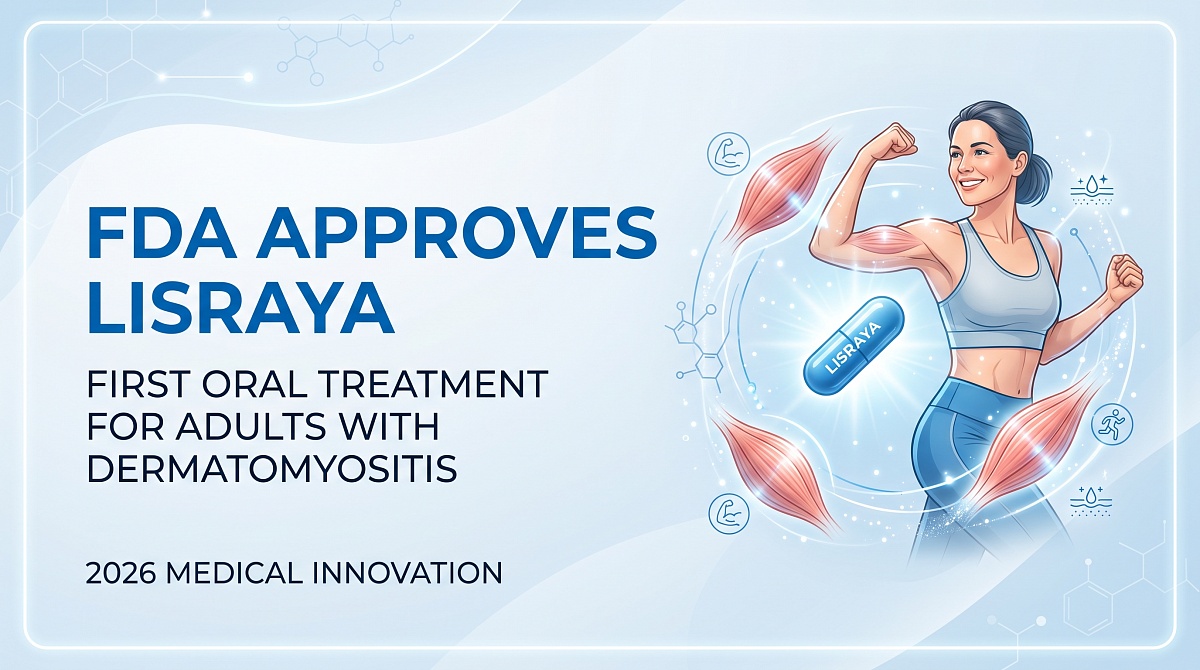
Priovant Therapeutics has secured FDA approval for Lisraya (brepocitinib), providing adult dermatomyositis patients with the very first targeted oral therapy to manage debilitating muscle and skin inflammation.
Lisraya is the first FDA-approved oral treatment option for patients with dermatomyositis, addressing the high unmet need for this rare disease. The U.S. Food and Drug Administration has approved Lisraya (brepocitinib) tablets for the treatment of dermatomyositis in adults. For decades, dermatomyositis patients have had limited treatment options to manage their symptoms. The approval of Lisraya offers patients an important new alternative by providing an effective oral treatment option.
“For too long, patients with dermatomyositis have faced a significant unmet need for effective treatments, often relying on therapies meant for other diseases,” said Nikolay Nikolov, M.D., Director of the Office of Immunology and Inflammation in the FDA’s Center for Drug Evaluation and Research. “Today’s approval is a meaningful step forward, giving patients and their healthcare providers an approved oral therapy proven to help manage this rare and debilitating disease.”
Dermatomyositis is a rare autoimmune disease in which the immune system attacks the muscles and skin, causing chronic inflammation, progressive muscle weakness, and distinctive skin rashes. Lisraya is a once-daily oral tablet that works as a Janus kinase (JAK/TYK2) inhibitor. By blocking JAK pathways, which play a key role in the body's immune and inflammatory responses, Lisraya helps reduce the harmful inflammation that damages the muscles and skin, offering an effective new option for disease control.
The efficacy and safety of Lisraya were evaluated in a phase 3 randomized, double-blind, multicenter, placebo-controlled study (NCT05437263) that included 241 adults with dermatomyositis. Participants were randomized to receive Lisraya (brepocitinib) 30 mg once daily, brepocitinib 15 mg once daily or placebo for a 52-week treatment period. The study measured Total Improvement Score (TIS) at week 52, a standardized scoring tool that tracks changes across six areas (muscle strength, physical function, skin and other disease activity, muscle enzymes, and both physician and patient assessments of overall health) to assess how much a patient’s dermatomyositis has improved.
Participants treated with Lisraya 30 mg had a higher average TIS score (indicating greater clinical response and disease control) at week 52 compared to those who received a placebo. They also showed improvements in physical function and skin disease activity and were more likely to reduce corticosteroid use by week 48.
Some of the most common adverse reactions to Lisraya were upper respiratory tract infection, headache, fatigue, urinary tract infection, and nausea. Discontinuation due to adverse reactions occurred in 6% of participants treated with Lisraya 30 mg, compared with 11% of those given a placebo. Lisraya carries a boxed warning for serious infections, increased all-cause mortality (a higher risk of death from any cause), malignancies (cancers), major adverse cardiovascular events (serious heart and blood vessel problems), and thrombosis (blood clots).
The FDA granted Lisraya Orphan Drug and Priority Review designations. The approval of Lisraya for the treatment of dermatomyositis was granted to Priovant Therapeutics Inc.