



With new FDA green light for developer, Parkinson’s clinical trial to launch soon
Click to view quick news summary (Spoiler)
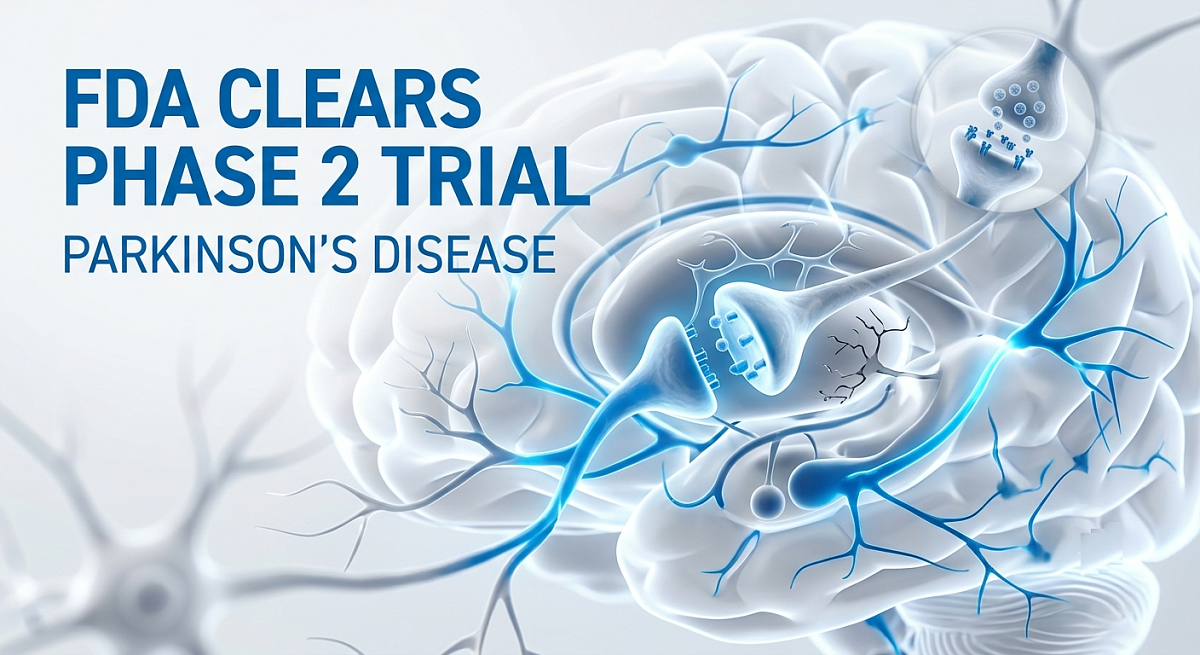
Gain Therapeutics has received FDA clearance for its Investigational New Drug application for GT-02287, paving the way for a global Phase 2 clinical trial across three continents to test this disease-modifying oral therapy for Parkinson's disease.
The U.S. Food and Drug Administration (FDA) has given Gain Therapeutics a green light to launch a clinical trial — to run across three continents — testing GT-02287, an oral therapy explicitly designed to prevent the formation of toxic protein clumps in Parkinson’s disease. The federal agency clearance follows positive early results from studies involving both healthy human volunteers and people living with Parkinson’s. The accumulated data showed distinct biomarker and clinical evidence of GT-02287’s targeted activity, accompanied by a favorable safety profile.
The Phase 2 trial is planned to start between July and September, at clinical sites in the U.S., Australia, and Europe, Gain stated in a company press release announcing the FDA’s authorization of an Investigational New Drug (IND) application for GT-02287 that officially clears the study’s start.
“The FDA’s decision is a significant milestone for Gain and we believe it validates the extensive preclinical and clinical work supporting further development of GT-02287,” said Gene Mack, Gain’s president and CEO, noting that, “in clinical studies to date, GT-02287 demonstrated target engagement with favorable safety and tolerability.”
Targeting GBA1 Mutations and GCase Activity
Mutations in the GBA1 gene are among the most common genetic risk factors for Parkinson’s disease. These genetic mutations reduce the natural activity of glucocerebrosidase (GCase), an enzyme that normally helps break down and clear cellular waste. As a direct result, harmful substances and misfolded proteins, such as alpha-synuclein and tau, accumulate in the brain, directly contributing to the development and progression of Parkinson’s. An oral small molecule, GT-02287 is designed to securely bind to GCase and restore its activity, thereby preventing the formation of toxic protein clumps and slowing the progression of Parkinson’s.
Preclinical and Phase 1 Trial Success
Preclinical studies demonstrated that the treatment slowed Parkinson’s progression and improved motor function and coordination in mouse models of Parkinson’s with or without GBA1 mutations. In the animals, clear improvements were seen in overall cognition and activities of daily living. The treatment also successfully reduced disease biomarkers, including alpha-synuclein clumping and blood levels of neurofilament light chain, which is a known marker of neurodegeneration.
In a Phase 1 clinical trial that enrolled 73 healthy volunteers, the treatment was found to be generally safe and well tolerated. At a daily dose of 7.7 mg/kg and higher, it reached therapeutic blood levels and was detected in the cerebrospinal fluid (CSF), the liquid that surrounds the brain and spinal cord. This confirmed that the oral therapy could successfully cross the blood-brain barrier. Additional results from an open-label Phase 1b trial showed that GT-02287 improved motor function and daily living activities over three months in people with Parkinson’s, with or without GBA1 mutations.