



FDA issues CRL for Sobi’s NASP filing
Click to view quick news summary (Spoiler)
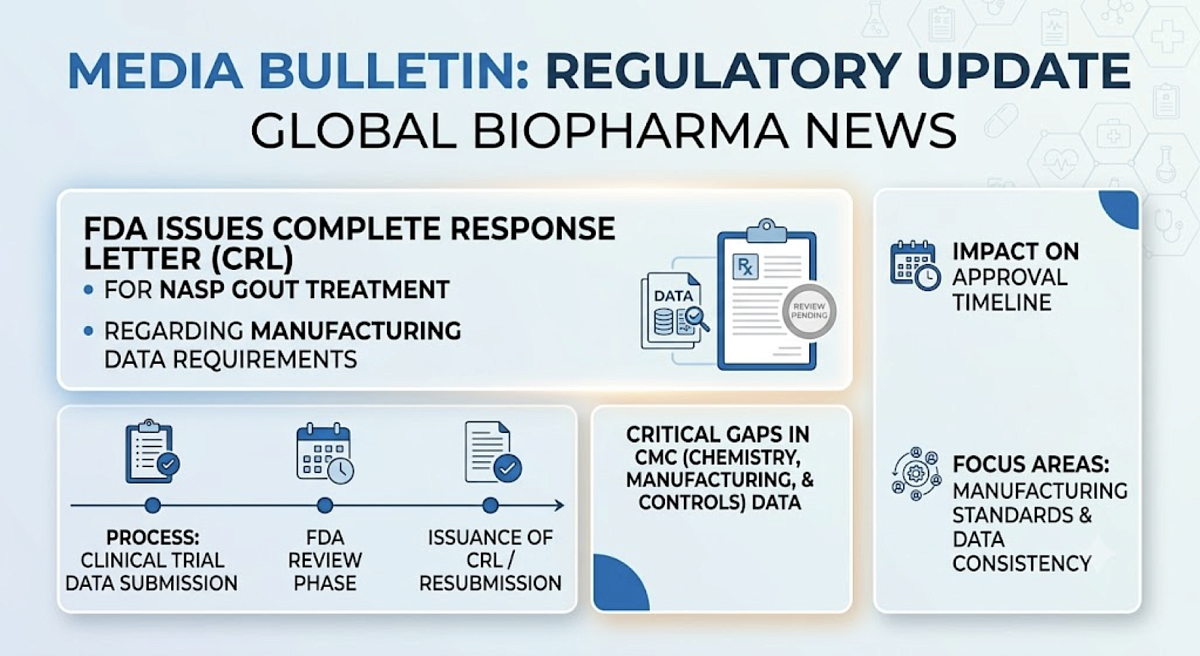
The FDA issued a Complete Response Letter to Sobi regarding its uncontrolled gout treatment, NASP. The agency flagged contract manufacturing deficiencies rather than clinical safety or efficacy issues, prompting Sobi to seek further FDA guidance for resubmission.
Swedish Orphan Biovitrum, also known as Sobi, said late Friday it had received a Complete Response Letter (CRL) from the US Food and Drug Administration (FDA) for its Biologics License Application (BLA) for NASP (nanoencapsulated sirolimus plus pegadricase) for the treatment of adult patients with uncontrolled gout.
In the CRL, the FDA required that the company provide additional data mainly related to manufacturing control strategy of the biological component of NASP and to address contract manufacturing facility deficiencies.The FDA identified no concerns regarding the clinical efficacy or safety of NASP that impact approvability.Sobi will request a meeting with the FDA to discuss the feedback, determine the appropriate steps toward resubmission and work with the contract manufacturing organisations to address the deficiencies.
How NASP Works
Nanoencapsulated sirolimus plus pegadricase (NASP) is an investigational two-part infusion therapy for uncontrolled gout.It pairs an immune-tolerizing nanoparticle (NAS) with the uricase enzyme (pegadricase) to lower uric acid without triggering the body's immune defenses, a common flaw in previous enzyme therapies.
Previous uricase enzyme treatments for gout often failed because the body's immune system recognized the enzyme as foreign and created anti-drug antibodies (ADAs), neutralizing the drug.NASP overcomes this with a sequential two-component infusion:
- Nanoencapsulated Sirolimus (NAS): Small, biodegradable nanoparticles deliver sirolimus directly into the lymphoid tissues, inducing targeted immune tolerance.
- Pegadricase: Administered immediately after NAS, this enzyme breaks down and clears serum uric acid.