



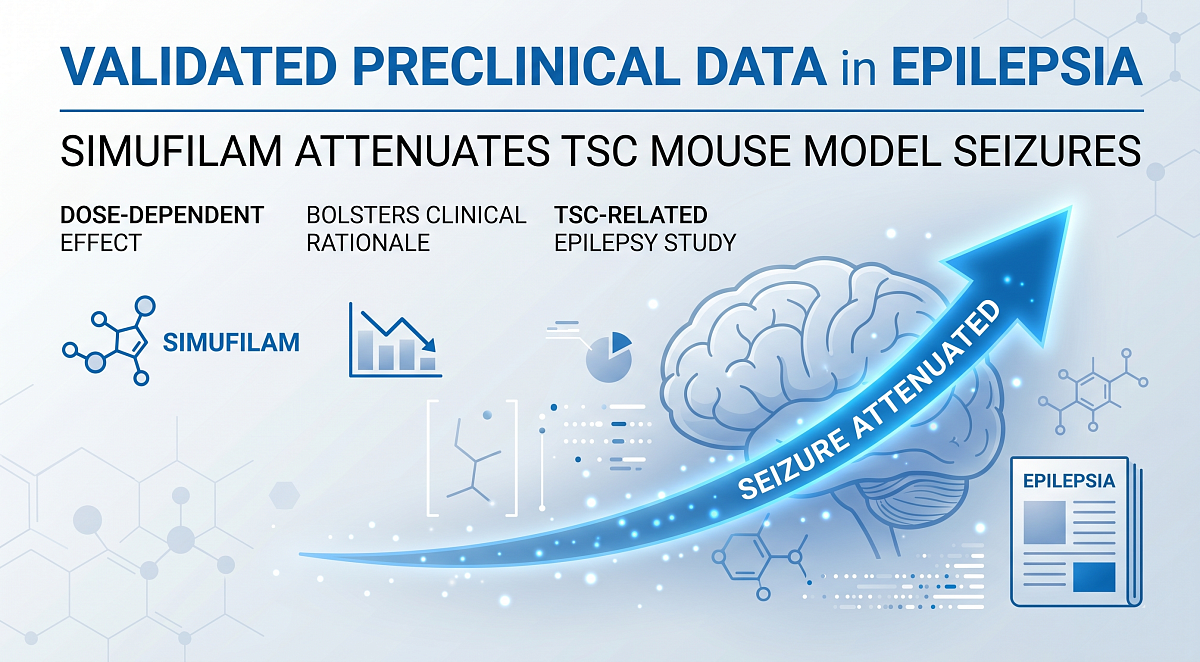
AUSTIN, Texas -- Filana Therapeutics, Inc., a biotechnology company focused on developing therapies for Tuberous Sclerosis Complex (TSC)-related epilepsy, today announced publication in Epilepsia of preclinical data showing that simufilam attenuated seizure progression in a well-accepted mouse model of severe TSC-related epilepsy. The results support the continued evaluation of simufilam for the treatment of TSC-related epilepsy, which affects approximately 45,000 people in the U.S. Simufilam is an oral small molecule intended to modulate filamin A protein.
The study was led by Angélique Bordey, PhD, Senior Vice President, Neuroscience of Filana Therapeutics and Vice Chair of Research for the Department of Neurosurgery at Yale School of Medicine, and included a co‑author from Yale School of Medicine’s Departments of Neurosurgery and Cellular & Molecular Physiology. Top line results of the study were previously reported by the Company in August 2025. The work was conducted in collaboration with the TSC Alliance® and PsychoGenics, Inc., the clinical research partner of the TSC Preclinical Consortium. The paper, titled “The small molecule simufilam dose-dependently attenuates the worsening of seizures in a mouse model of tuberous sclerosis complex” was published online in Epilepsia on April 14, 2026, and is available at https://doi.org/10.1002/epi.70227.
“The formal publication of these data in Epilepsia supports our previously reported findings and reinforces the biological rationale for studying simufilam in TSC-related epilepsy,” said Dr. Bordey. “Together with our findings in an earlier animal model, these results underscore the positive correlation between seizure outcomes and plasma exposure to simufilam and bolster the scientific basis of our clinical program.”
“While we continue to address FDA’s questions related to the clinical hold, the publication of our data in Epilepsia adds to the biological rationale behind simufilam in TSC-related epilepsy,” said Rick Barry, President and Chief Executive Officer of Filana Therapeutics, Inc. “We remain focused on generating the necessary data to resolve the clinical hold and advancing our program for the TSC community.”
Key Takeaways
- The study evaluated simufilam in the Tsc1-cKO mouse, an exceptionally severe and rapidly progressive model of TSC-related epilepsy. In this model, seizures normally worsen steadily over time.
- Simufilam attenuated the expected worsening of seizures over time in both number and total duration. Attenuation of seizure worsening increased with drug exposure.
Dose Escalation Study Findings
This dose escalation study evaluated simufilam’s ability to slow the worsening of seizures in the Tsc1 conditional knockout mouse (Tsc1-cKO), an exceptionally severe and progressive model of TSC-related epilepsy. Seizures were monitored for approximately three weeks following onset. The data showed that simufilam attenuated the progression of seizure activity compared to vehicle, with a statistically significant correlation between simufilam dose and the number of seizures by the end of the study.
Study in a well-accepted mouse model of severe Tuberous Sclerosis Complex (TSC) showed that simufilam attenuated the progression of seizures in a dose-dependent manner. Results confirm and extend previously published preclinical findings. TSC-related epilepsy affects approximately 45,000 people in the U.S.