



Preclinical Gene Therapy Targets Brain's Pain Circuits Without Risks of Opioid Addiction
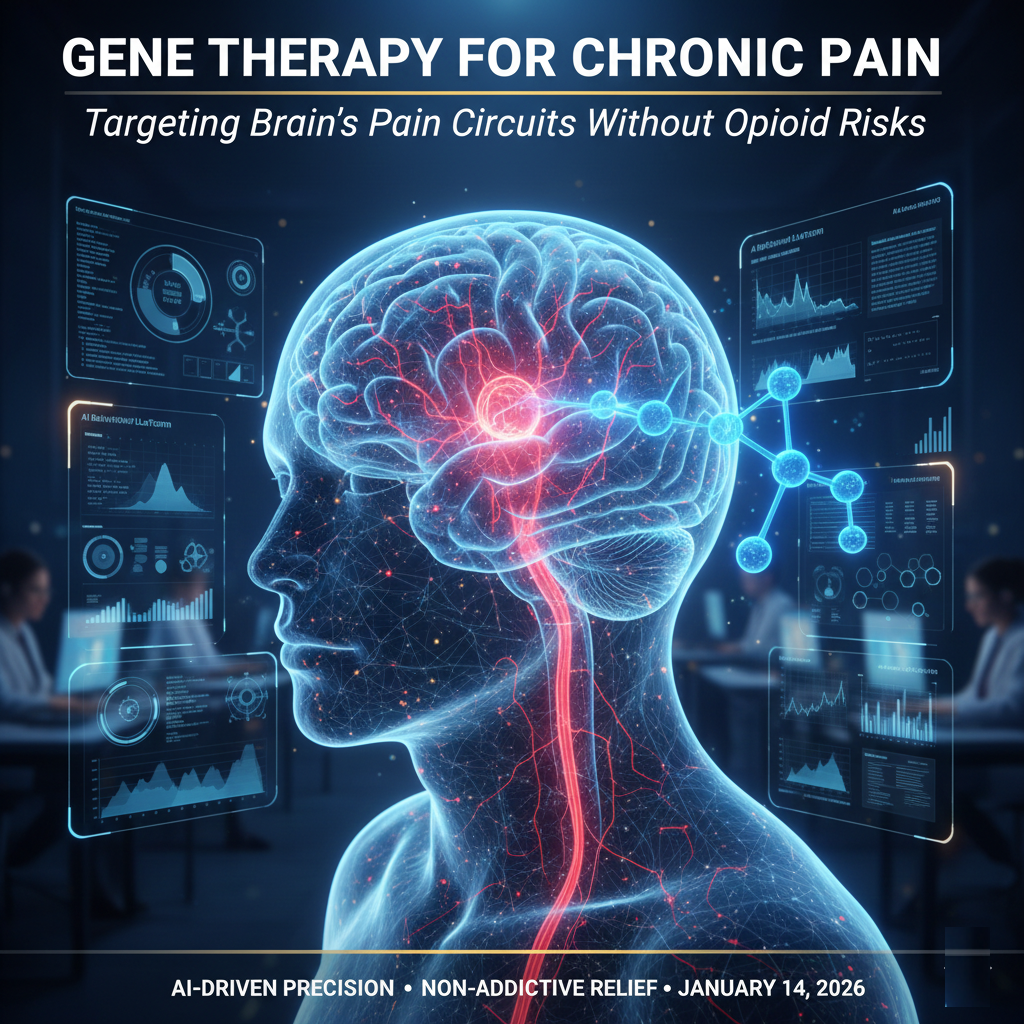
In a groundbreaking preclinical study, researchers have unveiled a novel gene therapy approach that directly targets pain-processing centers in the brain. This strategy effectively decouples analgesic relief from the addictive neural pathways, offering a potential lifeline for the millions of people worldwide living with chronic pain.
Chronic pain is often compared to an audio signal locked at maximum volume. Traditional opioids like morphine reduce this signal but also hit reward and motivation pathways, leading to dependence and tolerance. This new approach lower pain perception alone, leaving other brain functions unaffected.
The research team, led by specialists from the University of Pennsylvania, utilized artificial intelligence to map neural activity with precision. By imaging brain cells that encode pain states, they developed a targeted molecular intervention.
The urgency of this research is underscored by the ongoing opioid crisis. In 2019 alone, approximately 600,000 deaths in the USA were attributed to drug use, with 80% linked to opioids.
| Feature | Opioid Medicines | CNS-Targeted Gene Therapy |
|---|---|---|
| Primary Goal | Signal Suppression | Circuit-Specific Inhibition |
| Addiction Risk | High (Reward Pathway Activation) | Minimal/Eliminated |
| Side Effects | Tolerance & Dependence | Sustained Relief |
This study represents over six years of investigation, supported by the NIH New Innovator Award. The team, including collaborators from Carnegie Mellon and Stanford, is now moving toward further preclinical development and eventual clinical trials.
“The journey from discovery to implementation is long … this represents a strong first step,” added Dr. Michael Platt. “The potential to relieve suffering without fueling the opioid crisis is exciting”.
By targeting the precise brain circuits that morphine acts on, researchers aim to restore normal activity levels for chronic pain sufferers without the life-disrupting consequences of narcotic treatments.