




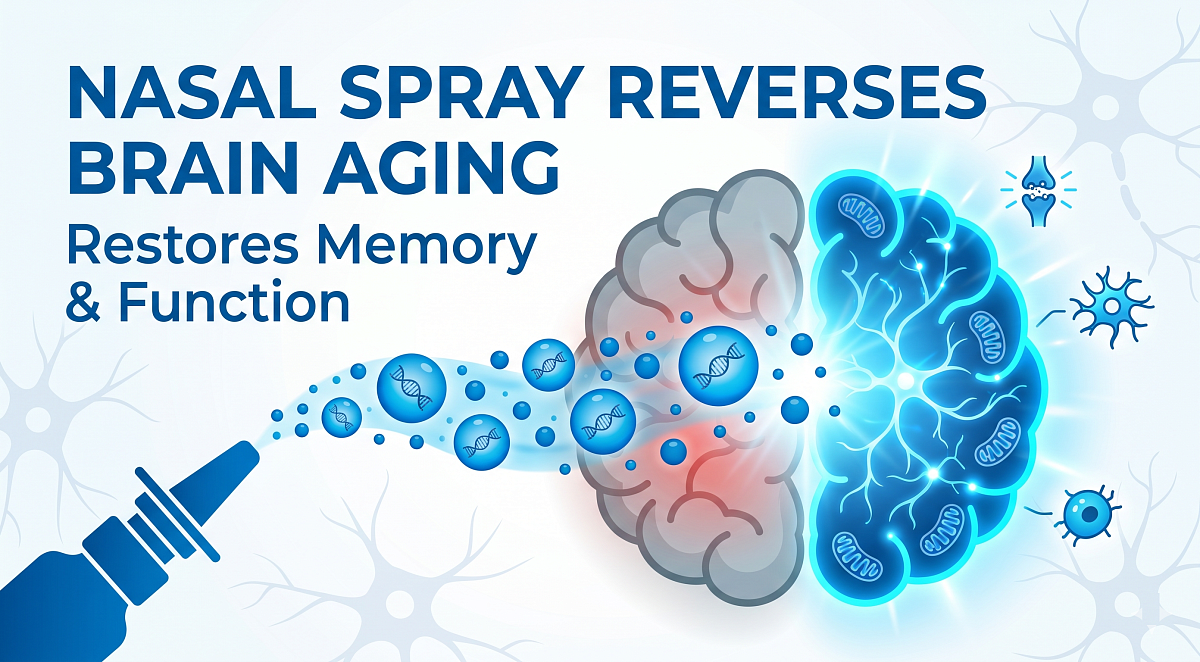
Researchers at Texas A&M University have developed a nasal spray delivering extracellular vesicles that reverses neuroinflammaging in preclinical models. Two doses significantly reduced brain inflammation, restored mitochondrial function and improved memory within weeks, with effects persisting for months.
The therapy bypasses the blood-brain barrier and targets inflammatory pathways whilst reactivating cellular energy production.
The End of "Neuroinflammaging"?
Scientists call this slow burn “neuroinflammaging,” and for decades it was thought to be the inevitable price of growing older.
Until now.
A landmark study from researchers at the Texas A&M University Naresh K. Vashisht College of Medicine suggests the inflammatory tide responsible for brain aging and brain fog might actually be reversible. And the solution doesn’t involve brain surgery, but a simple nasal spray.
Led by Dr. Ashok Shetty, university distinguished professor and associate director of the Institute for Regenerative Medicine, along with senior research scientists Dr. Madhu Leelavathi Narayana and Dr. Maheedhar Kodali, the team developed a nasal spray that, with just two doses, dramatically reduced brain inflammation, restored the brain’s cellular power plants and significantly improved memory. The most surprising part? It all happened within weeks and lasted for months.
Societal and Scientific Impact
The findings, published in the Journal of Extracellular Vesicles, could reshape the future of neurodegenerative therapies and may even change how scientists think about brain aging itself. This nasal spray could redefine what it means to grow old, aiming for a future where people stay mentally sharp and connected.
The societal impact could be just as profound. In the United States alone, new dementia cases are projected to double over the next four decades, from about 514,000 in 2020 to about 1 million in 2060.
Extracellular Vesicles and MicroRNAs
At the heart of this groundbreaking development are millions of microscopic biological parcels known as extracellular vesicles (EVs). They act like delivery vehicles, carrying powerful genetic cargo called microRNAs.
“MicroRNAs act like master regulators,” Narayana said. “They help modulate and regulate many gene and signaling pathways in the brain.”
But the delivery route is just as important as the cargo. Packed into a nasal spray, the tiny EVs bypass the brain’s protective shield and travel directly into brain tissue, where they are absorbed.
“The mode of delivery is one of the most exciting aspects of our approach,” Kodali said. “Intranasal delivery allows us to reach, and treat, the brain directly without invasive procedures.”