



iBio obesity antibody cuts Activin E and spares lean mass
Click here to view quick news summary (Spoiler)
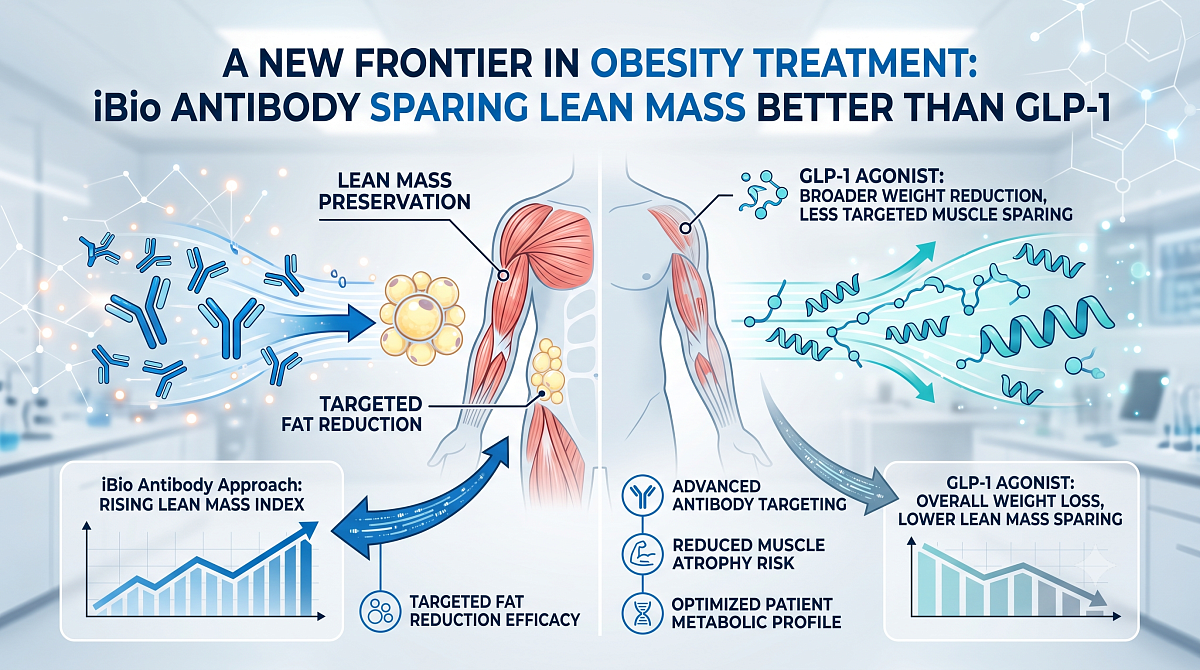
iBio’s experimental Activin E antibody, IBIO-610, successfully lowered active Activin E levels by 98% in preclinical primate studies. When combined with semaglutide, the therapy promoted targeted visceral fat loss while dramatically reducing lean muscle mass loss by 73%.
iBio, Inc. reported new preclinical results from an obese non-human primate study of IBIO-610, a potentially first-in-class Activin E antibody for obesity and related diseases.After a single dose, active Activin E in blood fell in all treated animals and stayed suppressed for eight weeks.
Active Activin E levels were reduced by 98% at week 4 and 97% at week 8 compared with baseline, with levels below the limits of the assay at both time points.The company states this supports the potential for strong pathway inhibition and an infrequently dosed, long-acting antibody.
Preserving Lean Mass with GLP-1 Complementary Therapy
The data also suggest IBIO-610 may promote fat-selective weight loss while preserving lean mass.In obese primates, adding IBIO-610 to semaglutide produced greater visceral and total fat loss and cut lean mass loss by 73% versus semaglutide alone, supporting its potential as both a stand-alone and GLP-1-complementary therapy.The full dataset will be presented at the 2026 EASD Annual Meeting in Milan.
About Activin E
Activin E is a protein and member of the transforming growth factor-β (TGF-β) superfamily, encoded by the INHBE gene.Secreted by the liver as a hepatokine, it plays a key role in energy homeostasis.Research indicates that Activin E acts through the ALK7 receptor to stimulate energy expenditure and activate brown/beige adipocytes (fat cells), although its exact metabolic role—including whether it prevents fatty liver or promotes obesity — has been a subject of ongoing study.