



First results from funded preclinical study into probucol and chlorogenic acid
Click to view quick news summary (Spoiler)
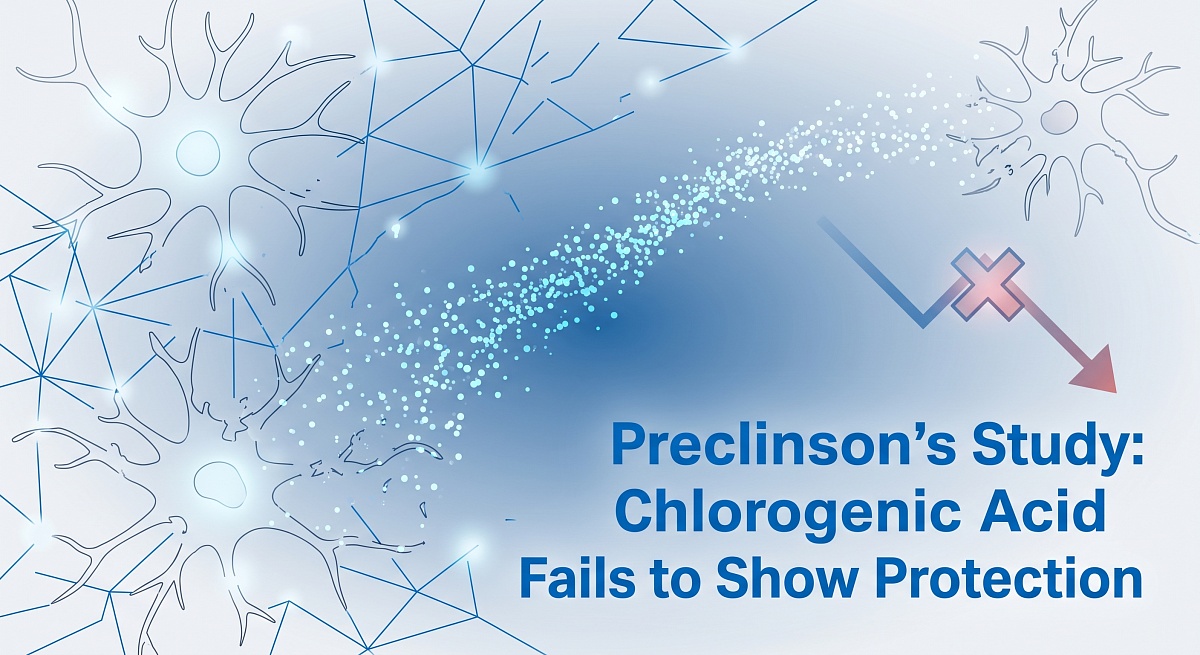
A preclinical study funded by Cure Parkinson's revealed that chlorogenic acid failed to protect neurons or affect alpha-synuclein levels in Parkinson's models.
Researchers in lab coats and gloves conduct experiments with a microscope, highlighting preclinical Parkinson's study advancements.
The first of the results from a Cure Parkinson’s funded project investigating two treatments has now been published, demonstrating that chlorogenic acid does not have a protective effect in Parkinson’s models.
Dr Poonam Thakur at the Indian Institute of Science Education and Research (IISER) Thiruvananthapuram was awarded a grant through our International Linked Clinical Trials (iLCT) Pipeline Research Acceleration Programme. The goal of this project was to investigate whether chlorogenic acid and probucol (a medicine used to treat high cholesterol) was neuroprotective in laboratory models of Parkinson’s.
Chlorogenic acid is a compound found naturally in coffee as well as other foods. Evaluated by our iLCT committee in 2023, evidence has suggested that chlorogenic acid may be able to slow Parkinson’s. Although these results are interesting, the committee suggested that some additional laboratory evidence was needed before it was ready for clinical trial. Therefore, to speed up this process, chlorogenic acid entered our iLCT Pipeline Research Acceleration Programme.
What were the findings?
The research team recently published a paper summarising their findings with chlorogenic acid. Here, Dr Thakur’s lab looked at whether chlorogenic acid was protective in alpha-synuclein models of Parkinson’s. Alpha-synuclein is a protein found most abundantly in nerve cells (neurons); the build-up of dysfunctional copies of alpha-synuclein is a common characteristic of Parkinson’s and is thought to help drive neuron loss. Thus, when evaluating treatments, it is important to understand how they interact with alpha-synuclein.
Although previous studies have shown that chlorogenic acid can protect neurons, this was not reflected here. The researchers found that chlorogenic acid had no effect on levels of alpha-synuclein, nor did it affect neuron survival.
More about the results
Interestingly, the researchers did find that in female mice, there was a greater reduction in inflammation. This reflects the results of other anti-inflammatory treatments being tested for Parkinson’s, which have demonstrated that drugs targeting inflammation seem to have greater beneficial effects in women, such as the recent AZA-PD trial of the immunosuppressive medication azathioprine. However, this effect was not strong enough to have an overall impact on neuron loss.
Why are these results important?
Conducting research, especially clinical trials, is a task that takes a substantial amount of time, money, and resources. Therefore, it is important that we identify and invest in the treatments that have the greatest chance of success. Determining whether a therapy is neuroprotective early in the process enables us to ensure that only the most promising drugs move forward. Chlorogenic acid represents one of two treatments being investigated in this study. Experiments with probucol are still ongoing, and we look forward to hearing the results.