



A novel CAR-T cell approach targets amyloid plaques in preclinical Alzheimer models, raising the possibility that engineered immune therapies could reshape future treatment strategies while major clinical questions remain.
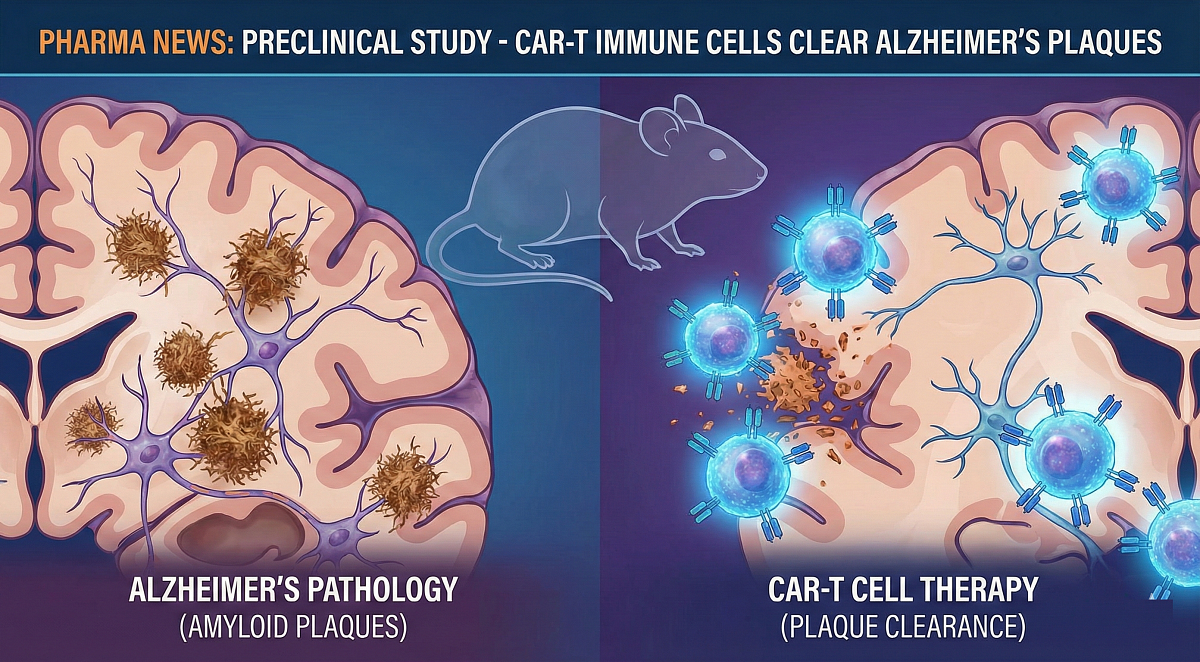
In a recent study published in Proceedings of the National Academy of Sciences, researchers engineered Chimeric Antigen Receptor (CAR) CD4 T cells, a technology originally revolutionized for cancer treatment, to target fibrillar amyloid-beta (Aβ) plaques in the brain.
The study leveraged murine (mouse) models to demonstrate that these “smart” reprogrammed immune cells can effectively reduce amyloid deposition in distinct anatomical compartments depending on the delivery strategy, including the protective membranes of the brain and the brain tissue itself. This approach represents an early proof-of-concept advance rather than a clinical breakthrough in Alzheimer’s disease (AD) and cellular immunotherapy in neurodegeneration.
Alzheimer’s Pathology and Limits of Current Immunotherapies
Alzheimer’s disease (AD), a progressive neurodegenerative condition characterized by severe cognitive decline and behavioral alterations, remains the leading cause of age-associated dementia. Despite decades of research aimed at mitigating and treating the condition, current ‘gold standard’ antibody treatments are reported to offer only marginal cognitive benefits, although clinical responses vary across trials and patient populations.
Neurodegenerative biology elucidates that the hallmark of Alzheimer’s disease is the toxic accumulation of Aβ plaques in the parenchyma (the functional tissue of the brain), which subsequently triggers neurofibrillary tangles and microglial activation, eventually leading to brain atrophy and memory loss.
Current interventions, such as anti-amyloid antibodies like Lecanemab and Donanemab, have been observed to clear some of these plaques in preclinical and clinical trials, but a growing body of evidence suggests that their clinical efficacy remains limited.
Recent breakthroughs in neuroimmunology have shown that T cells may play a dual role in the brain. While most T cells function primarily in adaptive immune signaling rather than direct phagocytosis, CD4+ T cells (helper T cells) have demonstrated significant potential to regulate inflammation and improve cognitive performance.
Unfortunately, attempts to program these cells to recognize specific Alzheimer’s targets without triggering a broad autoimmune response have been a significant hurdle for neurobiological research.