



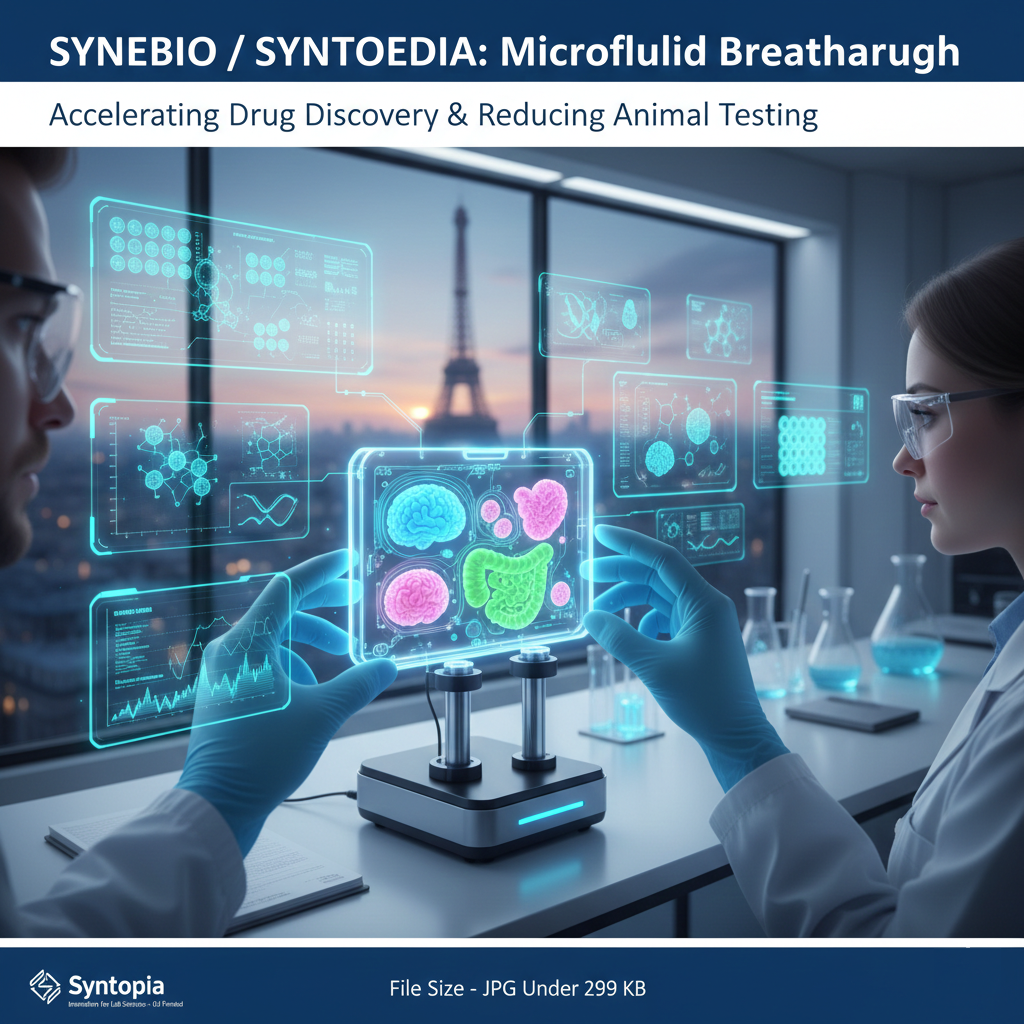
Catching up with SYNEBIO: Supporting Better Screening for New Drug Development
In a significant leap for preclinical research, the Paris-based start-up Syntopia is commercializing the results of the EU-funded SYNEBIO project. Launched in March 2025 as a spin-off from ESPCI Paris - PSL, Syntopia introduces a breakthrough microfluidic platform designed to accelerate drug discovery while drastically reducing the pharmaceutical industry's reliance on animal testing.
The SYNEBIO project demonstrated the effectiveness of a patented HTS microfluidic platform for continuous perfusion of 3D human cell models. By maintaining nutrient and oxygen flow without external pumps, the technology reproduces physiological conditions over long-term cultures, providing more reliable data for high-throughput screening (HTS).
Syntopia’s core mission is to solve the high failure rates in clinical trials by generating higher-quality biological data during the preclinical phase. The company’s device utilizes a 96-well plate format that is fully automation-ready, allowing pharmaceutical companies to scale their research without the complexity of traditional pump-based systems.
The transition from a laboratory concept to a market-ready product was guided by direct feedback from some of the world's leading pharmaceutical and research institutions. This collaboration ensured that the platform met the rigorous "plug-and-play" standards required for modern industrial drug screening.
Beyond biotech companies, Syntopia’s technology serves regulatory and public health organizations seeking validated alternatives to animal testing. By supporting complex immuno-oncology assays and co-culture models in a miniaturized format, the platform reduces waste and improves the predictive accuracy of drug testing.
Syntopia now holds an exclusive licence from ESPCI Paris - PSL to commercialise the technology globally. The platform is fully compatible with ANSI/SLAS labware standards, ensuring its immediate integration into existing contract research organizations (CROs) and academic screening platforms.