



New Preclinical Data Further Support Potential for Tvardi’s STAT3 Inhibitors in Ulcerative Colitis (UC)
Click to view quick news summary (Spoiler)
Tvardi Therapeutics published new preclinical data demonstrating that its oral STAT3 inhibitor, TTI-101, effectively prevents the progression of chronic colitis to colorectal cancer.
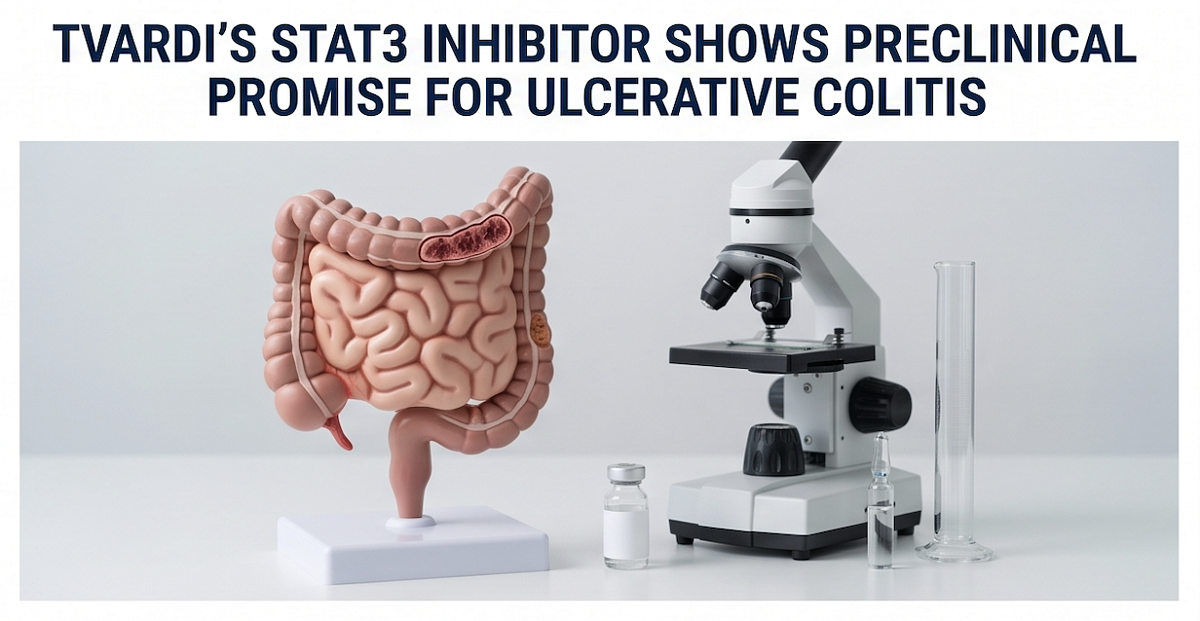
HOUSTON, Sept. 24, 2026 -- Tvardi Therapeutics, Inc., a clinical-stage biopharmaceutical company focused on the development of novel, oral small molecule therapies targeting STAT3 to treat inflammatory and proliferative diseases, today announced the publication of preclinical data evaluating Tvardi’s STAT3 inhibitor in the International Journal of Molecular Sciences. The publication provides additional evidence supporting further investigation of STAT3 inhibition as a potential therapeutic approach to treating inflammatory bowel diseases, including ulcerative colitis (UC).
The publication, titled "Colitis-Associated Colorectal Cancer-STAT3 Inhibition as a Preventive Strategy,” evaluated Tvardi’s first-generation oral STAT3 inhibitor, TTI-101, in an azoxymethane (AOM)-dextran sodium sulfate (DSS) mouse model, designed to replicate the human progression from chronic colitis to colorectal cancer (CRC). Patients with UC are estimated to have a 20- to 30-fold higher risk of CRC than the general population. In this model, the orally administered STAT3 inhibitor reached pharmacologically relevant concentrations in the colon, normalized STAT3-regulated colonic gene expression and modulated proliferative programs associated with colitis-driven disease progression, preventing the development of colon polyps and adenocarcinomas. The chronic AOM-DSS prevention model is the fourth preclinical model of colitis in which Tvardi’s STAT3 inhibitors have shown biological activity. Previously, Tvardi’s oral small molecules normalized the UC hallmarks of immune dysregulation, inflammation and proliferation across three acute models representing distinct immune axes: DSS (innate/Th17), trinitrobenzene sulfonic acid (TNBS; adaptive Th1) and oxazolone (OXA; adaptive Th2/NKT).
"UC is a multifactorial disease shaped by three interconnected processes: immune dysregulation, inflammation and proliferation, each of which is regulated by STAT3. Current advanced therapies are designed primarily to target inflammation,” said Imran Alibhai, Ph.D., Chief Executive Officer of Tvardi Therapeutics. "Even patients who reach endoscopic remission are not disease-free: 98% retain lesions composed of B- and T-cell aggregates, inflammatory infiltrates and distorted crypts associated with the chronic disease characteristics of UC. In this preclinical model, oral STAT3 inhibition achieved high exposure in the colon and normalized gene expression spanning unique STAT3-regulated programs associated with relapse and progression. We believe these findings demonstrate the potential of STAT3 inhibition in modulating multiple aspects of the underlying disease biology with a profile favorable for gastrointestinal indications requiring high mucosal drug exposure.”