



WHO begins clinical trial to evaluate potential Ebola treatments in DR Congo
Click to view quick news summary (Spoiler)
Amidst a growing epidemic, the World Health Organization is enrolling patients in the Democratic Republic of the Congo to test the efficacy of MBP134 and remdesivir against the Bundibugyo Ebola strain.
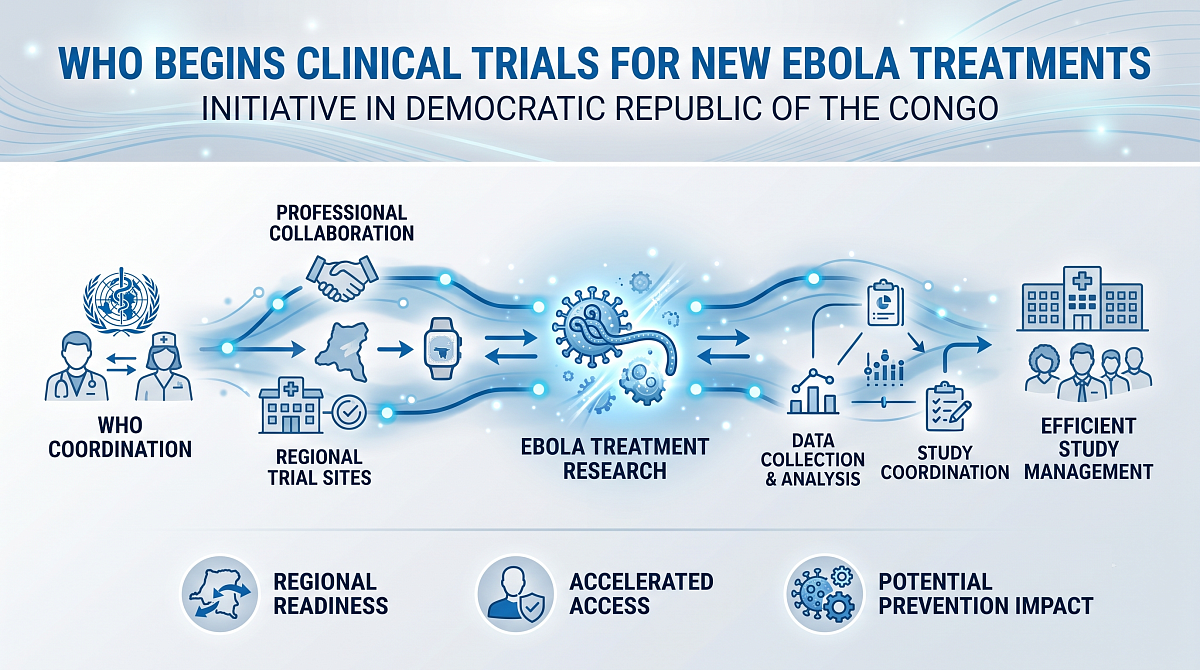
The World Health Organization (WHO) said on Thursday that a clinical trial of two therapeutics had begun enrolling patients in the Democratic Republic of the Congo (DR Congo) to evaluate potential treatments for the Bundibugyo Ebola strain.
WHO Director-General Tedros Adhanom Ghebreyesus told a media briefing that the trial will evaluate the monoclonal antibody MBP134 and the antiviral drug remdesivir — both alone and in combination — to determine whether they can improve survival among patients diagnosed with Bundibugyo virus disease. Patients enrolled will receive "comprehensive supportive care and close follow-up," Tedros said, adding that WHO is working to ensure access to the drugs should they prove safe and effective.
Meanwhile, Vasee Moorthy, acting lead for the Research and Development Blueprint in WHO's Office of the Chief Scientist, cautioned that it could take months and even go into next year to get the results. He noted that more than 1,000 patients may need to be enrolled before a definitive answer emerges, or it could be earlier if there's a very high efficacy from the trial.
The trial came as the epidemic continues to expand, with an average of 38 new confirmed cases every day for the past two weeks. According to the latest data released by the DR Congo government on Thursday, Ebola cases in the country had risen to 1,460, including 447 deaths.
A total of 595 patients were currently in isolation or hospitalized, while 213 patients had recovered. The rate of contact follow-up across the three affected provinces stood at 82.7 percent, the data showed, highlighting ongoing efforts to contain the deadly outbreak.