




Dr Hurvitz on Gedatolisib's Superior Efficacy in PIK3CA+ Breast Cancer
Click here to read the quick summary (Spoiler)
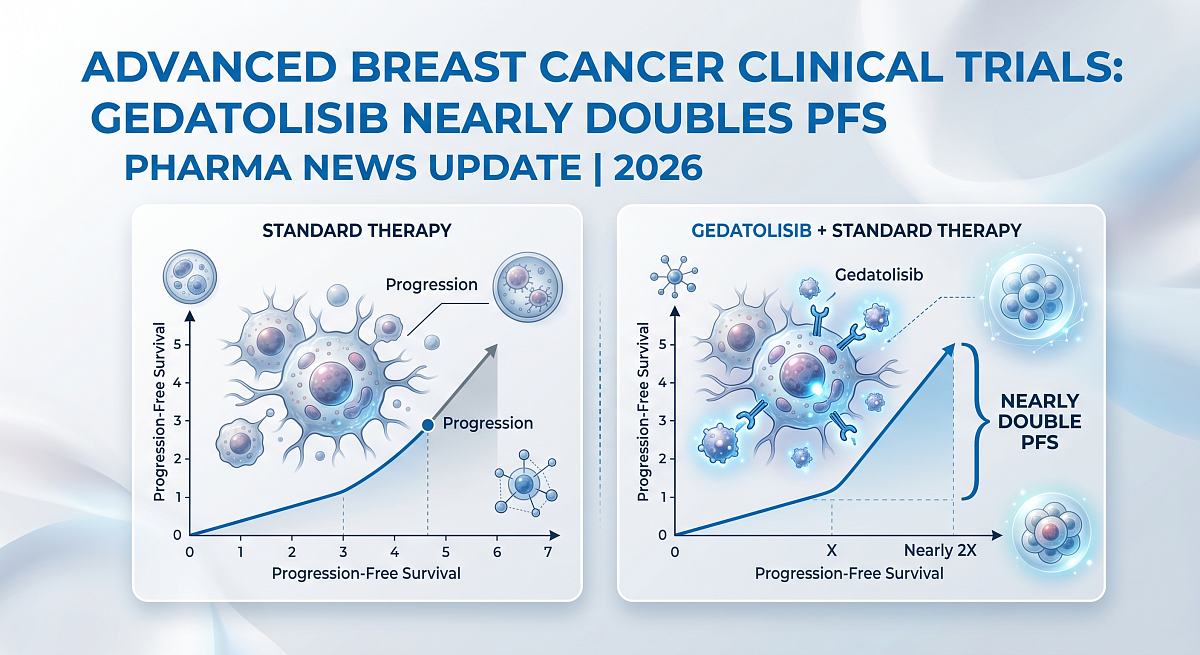
Phase 3 VIKTORIA-1 results demonstrate that the PI3K/AKT/mTOR pathway inhibitor gedatolisib nearly doubles progression-free survival milestones to 11.1+ months for HR+/HER2– advanced breast cancer, while showing superior tolerability profiles over single-target alternatives.
Data from the phase 3 VIKTORIA-1 trial, presented by Sara A. Hurvitz, MD, at the 2026 ASCO Annual Meeting, demonstrate that multi-target inhibition of the PI3K/AKT/mTOR pathway with gedatolisib significantly outperforms single-target standard therapy in patients with HR+/HER2– advanced breast cancer harboring PIK3CA mutations.
Doubling Progression-Free Survival Benchmarks
The randomized, open-label trial enrolled 362 pre- and postmenopausal patients whose disease had progressed on a CDK4/6 inhibitor plus a nonsteroidal aromatase inhibitor. Compared with the control arm of alpelisib plus fulvestrant, which yielded a median PFS of 5.6 months, both gedatolisib-based regimens nearly doubled that benchmark. The gedatolisib triplet (gedatolisib, palbociclib, and fulvestrant) achieved a median PFS of 11.1 months, representing a 50% reduction in the risk of progression or death. The gedatolisib doublet (gedatolisib plus fulvestrant) produced a nearly identical result at 11.3 months.
Tumor response rates reinforced these findings. The triplet arm achieved an objective response rate of 48.9% versus 26.0% in the control arm, with a median duration of response of 15.7 months compared with 7.5 months for alpelisib. Overall survival data remained immature at the time of interim analysis.
Improved Tolerability and Lower Side-Effect Risks
Gedatolisib also demonstrated a markedly improved tolerability profile. Rates of hyperglycemia—a hallmark toxicity of alpelisib—were dramatically lower, occurring in roughly 15% of triplet patients versus 57.9% in the control arm. Diarrhea showed a similar pattern. The most common adverse event with gedatolisib was stomatitis, affecting approximately 61% of patients across both investigational arms.
Hurvitz concludes that these results validate the PAM pathway as a key molecular driver in HR+/HER2– advanced breast cancer regardless of PIK3CA mutation status, positioning gedatolisib-based regimens as a compelling new standard of care in this setting.