



AI in clinical trials: Building better trials before they start
Click to view quick news summary (Spoiler)
Artificial intelligence and virtual twin predictive modeling are helping clinical trial sponsors optimize protocol designs and mitigate operational risks before enrolling patients.
Drug development is an inherently risky endeavour, with the average probability of approval for a drug entering Phase I studies now sitting at just 6.7%. While much of this can be attributed to lack of efficacy, factors such as poor clinical trial design and challenges with enrolling and retaining patients can lead to significant roadblocks.
Meanwhile, studies have become increasingly complex and the advancement of technology means that we are now able to collect a higher volume of data than ever, with Phase III studies now producing an average of 5.9 million data points, an increase of 283% over the past decade.
Against this backdrop, artificial intelligence (AI) is shifting how clinical development is approached. Instead of designing trials based on institutional precedent and legacy processes, sponsors are now reducing risk, accelerating timelines, and driving innovation by modelling what is most likely to work in the future.
Shift towards predictive modelling
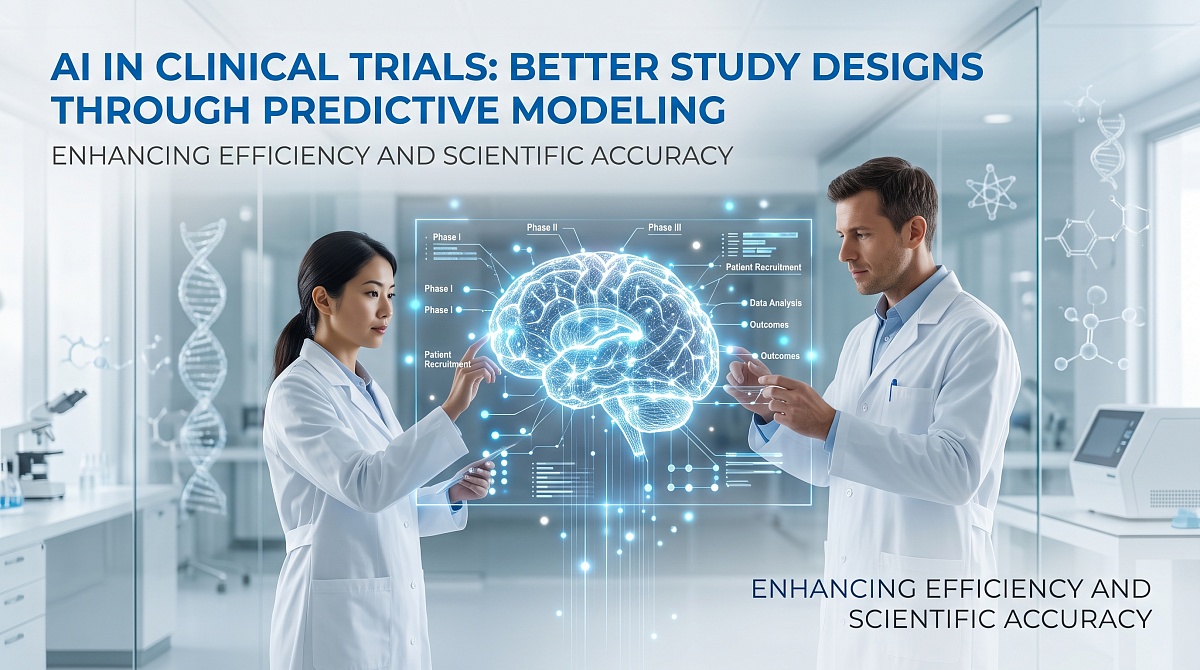
AI-driven simulation and predictive modelling have emerged as a turning point. Virtual twins enable teams to optimise their protocol designs, test eligibility criteria, recruitment assumptions, dropout risk, and site performance in advance. The concept of a virtual twin is rooted in product life cycle management, historically applied to designing complex products like an aircraft. Similarly, a virtual twin in clinical research is a digital model of the entire trial, combining data and knowledge that enables earlier testing of design choices, such as optimising the design of the protocol.
From eligibility criteria through objectives and endpoints to the schedule of activities, clinical and operational teams can anticipate potential outcomes like the number of patients to enrol in a given country or the risk of patient dropout. These teams can account for preventable causes of delay before a single patient is enrolled by reducing complexity, anticipating increased cost, and mitigating the risk of operational failure. Virtual twins enable clinical programmes and studies to move from static planning closer to structured reality.
Recent research has shown that high-fidelity, fit-for-purpose data sets derived from historical clinical trials and real world data can be reliably used to construct external control arms that support evidence generation in oncology. In some late-stage neurological studies, simulation approaches have been used to reduce control arm sizes by up to 33%. For patients, this is transformative as, with fewer people on the control arm of the trial, more participants can take the study drug and, consequently, gain access to life-changing or even life-saving treatments.
While results vary by therapeutic area, it is clear that trial design is becoming something that can be tested and improved before patients are even enrolled.
This also changes how inefficiency is addressed. Mid-study protocol amendments have long been a major source of delays, cost, and patient burden. Predictive modelling allows teams to conduct scenario-based risk assessments of the likely impacts of these changes before implementation, reducing the need for mid-study changes and improving confidence in decision-making.