



Preclinical Data Show Annamycin Makes Pancreatic Cancer Responsive to Checkpoint Inhibitors, Opening a Combination Path with Immunotherapies
Click to view quick news summary (Spoiler)
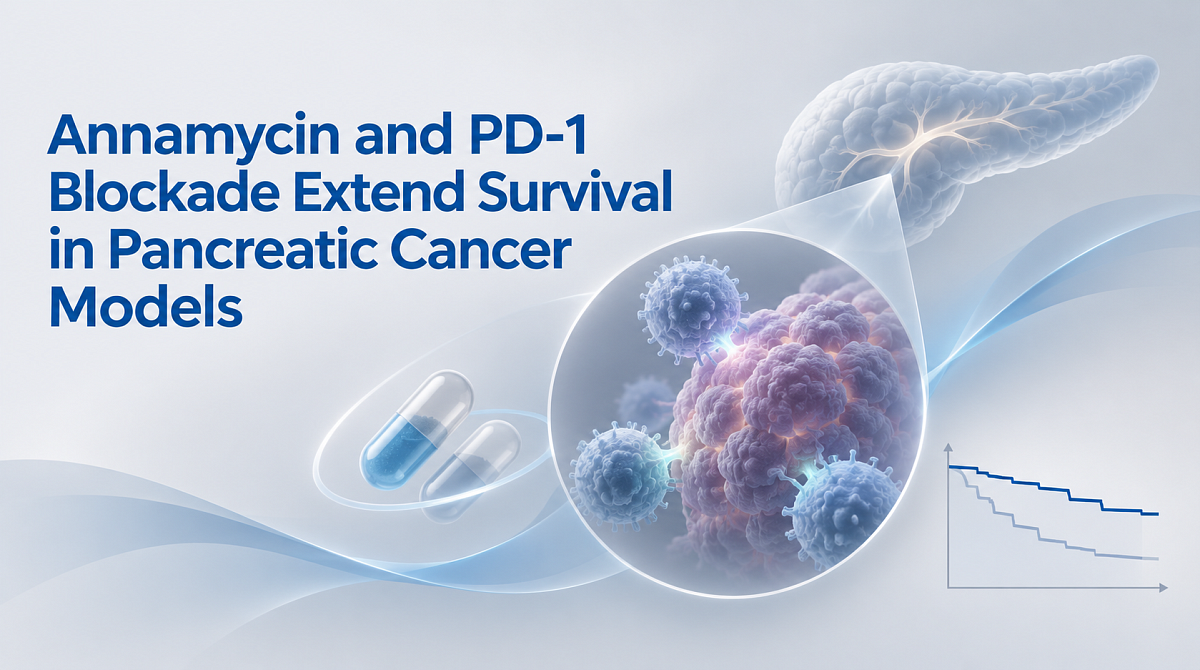
Preclinical mouse data suggest Annamycin plus PD-1 blockade prolongs survival and increases immune-cell infiltration in pancreatic tumors.
Moleculin Biotech announced preclinical findings showing Annamycin combined with PD-1 immune checkpoint blockade extended survival in pancreatic cancer mice. The combination significantly increased survival versus either treatment alone in an immune-intact mouse model, with confirmation in a second independent experiment.
Annamycin achieved higher and more sustained pancreatic tissue exposure than doxorubicin at the same dose. Treated tumors showed DNA damage and increased infiltration of CD8+ and CD4+ T cells, types of immune cells. Blocking CD8+ cells shortened survival in treated animals. Moleculin plans to sponsor an investigator-initiated pancreatic cancer trial in 2027; the animal findings may not predict clinical outcomes. Its immediate priority remains the MIRACLE trial in acute myeloid leukemia, with a Q1 2027 data readout.
- Annamycin plus PD-1 blockade significantly increased mouse survival versus either agent alone, confirmed in an independent experiment.
- Pancreatic tissue exposure was higher and more sustained with Annamycin than doxorubicin at the same dose.
- Treated tumors showed DNA damage consistent with topoisomerase II targeting and significantly increased CD8+ and CD4+ immune-cell infiltration.
- CD8+ cell inhibition shortened survival in treated mice, supporting these immune cells' contribution to Annamycin activity.
- Pancreatic cancer clinical trial sponsorship is planned for 2027 as an investigator-initiated study.
- MIRACLE leukemia trial remains the company's immediate priority, with a Q1 2027 data readout.