



Cancer Tumors May Protect Against Alzheimer's by Cleaning Out Protein Clumps
- Source: Huazhong University
- Journal: Cell
- Key Protein: Cystatin-C (Cyst-C)
- Target: Amyloid-beta Plaques
- Mechanism: Microglia Activation
Cancer and Alzheimer's are two of the most common chronic diseases associated with aging. For years, doctors have known about a curious aspect of these two conditions: people who survive cancers are significantly less likely to develop Alzheimer's. While this link has been observed in the data for some time, the biological reasons for it have remained a mystery. Now, a new study published in the journal Cell has discovered a possible explanation.
In the Alzheimer's brain, abnormal levels of a naturally occurring protein called amyloid-beta clump together to form plaques. The plaques disrupt communication between brain cells, eventually leading to cognitive decline and memory loss. Current medicines struggle to remove these clumps, but this new research suggests that cancer might be sending in a biological cleanup crew.
Study Methodology: Mouse Models and Tumor Transplants
To see whether and how cancer provides this protection, researchers at the Huazhong University of Science and Technology in China used advanced mouse models of Alzheimer's disease. They transplanted three types of tumors (lung, colon and prostate cancer) into the mice and found that the amyloid plaques in their brains shrank significantly.
The Cleanup Protein: Cystatin-C (Cyst-C)
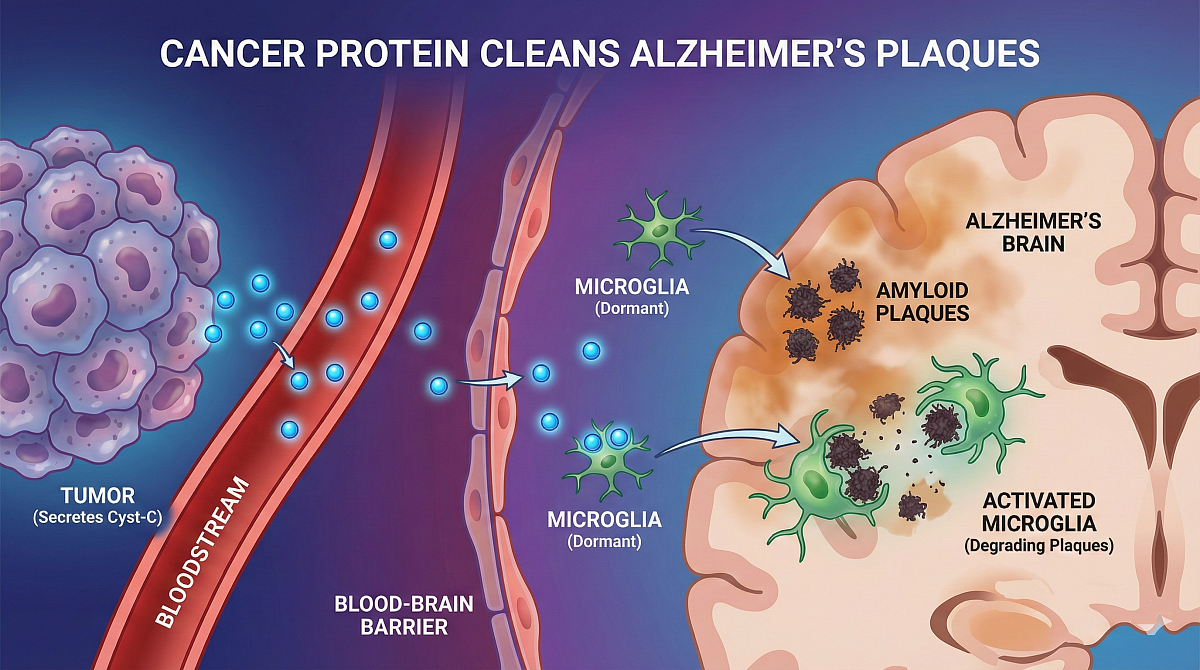
When the team analyzed the proteins secreted by these tumors, they discovered that a specific protein called Cystatin-C (Cyst-C) was traveling through the bloodstream, crossing the blood-brain barrier and entering the brain.
Once in the mouse brain, Cyst-C binds to both amyloid oligomers (toxic protein clusters) and the TREM2 receptor on microglia, specialized immune cells of the central nervous system. This binding activates microglia, transforming them from a dormant state into an active defense mode that begins degrading plaques.
Restoring Memory and Reversing Damage
To see if this actually made a difference to the mice, the researchers tested their memory in a water maze, where the rodents had to remember the location of a hidden platform to escape the water. Previously, the Alzheimer's mice struggled to find their way out. However, after receiving treatment with purified Cyst-C protein or secreted proteins collected from cancer cells, they performed much better and found the platform faster.
— Youming Lu, Senior Author
While most medicines focus on preventing new damage, Cyst-C clears out pre-existing plaques. If these results are confirmed and later replicated in humans, they could lead to a new raft of treatments for people with dementia.