



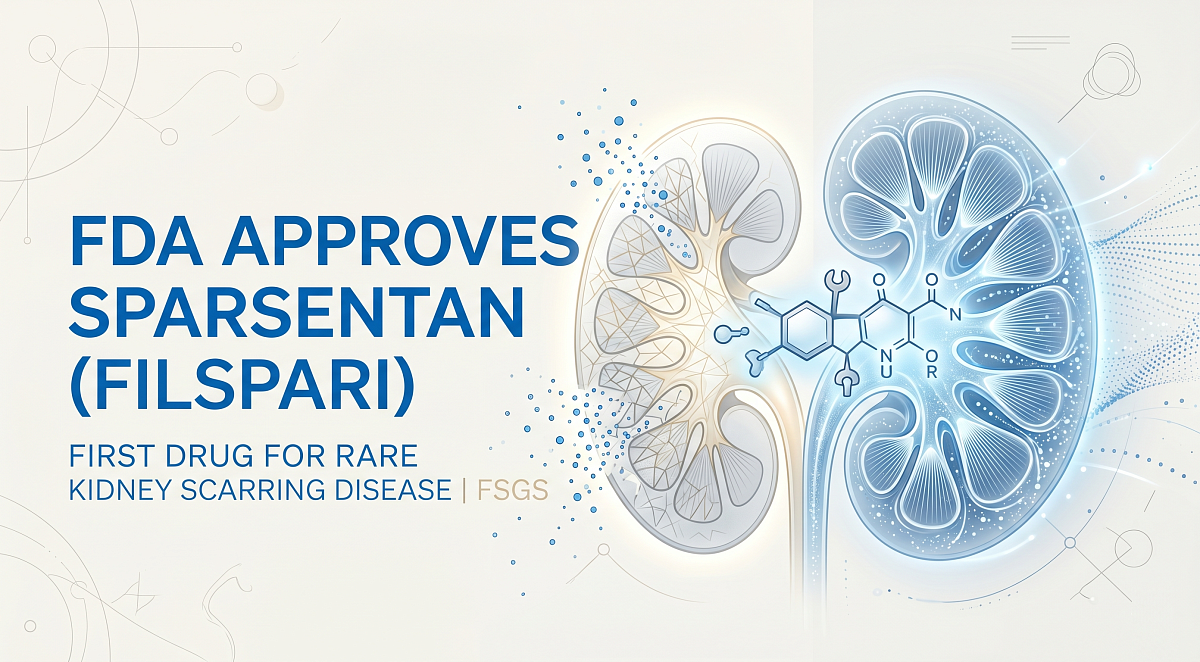
The U.S. Food and Drug Administration (FDA) has approved sparsentan as the first drug to treat focal segmental glomerulosclerosis (FSGS), a rare kidney disease, according to Travere Therapeutics.
Availability for Patients
Sparsentan, sold under the brand name Filspari, will be available for nephrologists to prescribe immediately to patients with FSGS. Travere said kidney specialists can start prescribing it to FSGS patients without delay.
What is Focal Segmental Glomerulosclerosis (FSGS)?
FSGS is a kidney disease where the filtering units become scarred. This condition can cause swelling, significant loss of protein in urine, and eventually lead to kidney failure. Reuters reports that over 40,000 people in the U.S. have FSGS, with similar prevalence numbers recorded in Europe.
How Sparsentan Works
The drug works by targeting two specific receptors to reduce the amount of protein lost through the kidneys. According to the company, this dual-targeting mechanism helps slow the overall progression of the disease.
Regulatory Timeline and Pricing
Before granting the FSGS indication, the FDA had in January pushed back its review timeline, requesting more evidence of the drug's clinical benefit. For the IgA nephropathy indication, Filspari has a list price of roughly $9,900 per month, or about $170,000 annually, according to Reuters.
Because FSGS requires a higher dose, Jefferies analyst Maury Raycroft told Reuters that the drug's price for that condition could be about double the IgAN price.
Market Performance and Competition
Filspari brought in $103.3 million in sales during the last three months of the year. Travere originally licensed the drug from Ligand Pharmaceuticals in 2012. According to Reuters, Ligand receives 9% of global revenue and milestone payments under the agreement.
Meanwhile, market competition is developing. Atrasentan, a competing treatment from Switzerland-based Novartis, is now in a mid-stage clinical trial for the same group of patients, Reuters reports.