



Topical 4-Aminopyridine Gel Accelerates Burn Wound Healing in Preclinical Trials
Click to view quick news summary (Spoiler)
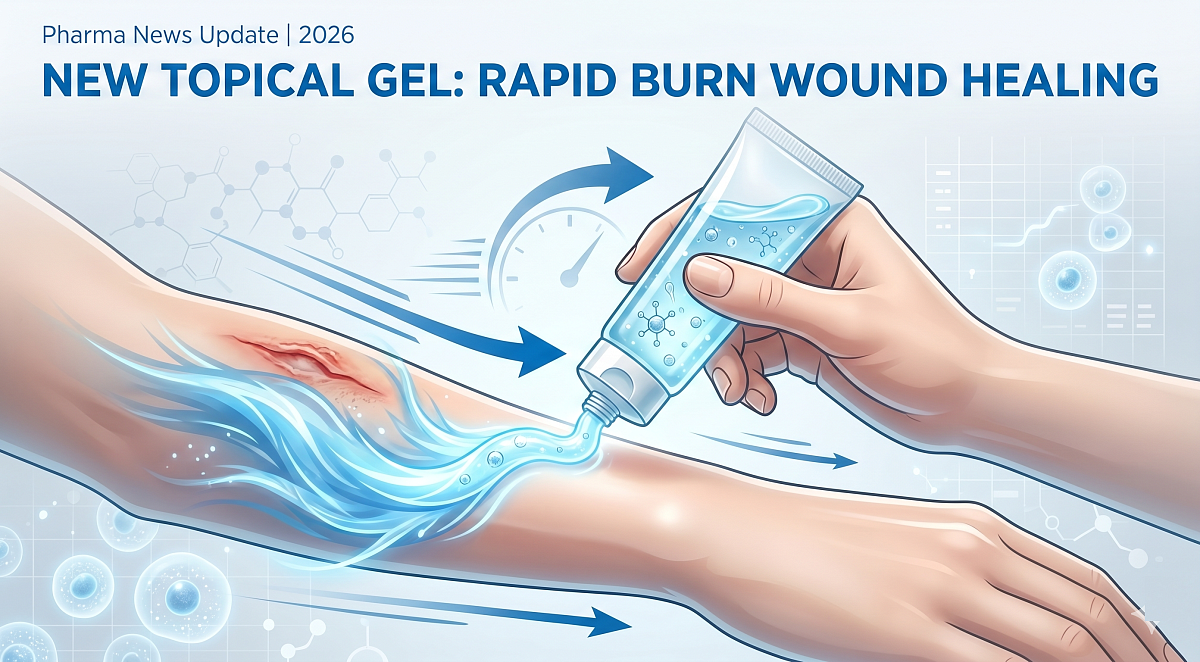
Researchers have developed a highly localized laponite-gelatin gel containing the FDA-approved drug 4-aminopyridine (4-AP). This novel delivery system accelerates burn wound healing and achieves near-complete closure within 21 days in preclinical trials, effectively minimizing the risks of systemic toxicity.
Researchers from the Terasaki Institute for Biomedical Innovation and the University of Arizona College of Medicine have developed a topical gel containing the FDA-approved drug 4-aminopyridine (4-AP) that accelerates the healing of burn wounds. In preclinical trials, the application of this gel resulted in near-complete wound closure within a 21-day period.
The study details how the research team integrated the drug into a specialized gel delivery system designed to facilitate skin regeneration. By utilizing 4-aminopyridine—a medication already approved for other medical uses—the researchers aimed to improve the recovery process for burn injuries. The findings indicate that the topical application of the drug supports the body’s natural repair mechanisms, leading to the observed outcomes in the test subjects. The research team continues to evaluate the efficacy and potential clinical applications of this formulation for future burn wound treatment.
A Non-Invasive Alternative to Standard Care
Burn injuries rank among the most difficult wounds to heal. The current gold standard, transplanting skin from a donor site on the patient’s own body, is limited by donor site morbidity and the need for large amounts of healthy tissue. This research offers a non-invasive alternative: a laponite-gelatin gel that delivers 4-AP directly to the wound, concentrating the drug where it is needed rather than exposing the whole body to it. Prolonged systemic use of 4-AP can cause serious side effects, including seizures, making localized delivery a critical advance.
The drug is best known under the brand name Ampyra for treating multiple sclerosis. Earlier work showed it could influence keratinocytes and fibroblasts: the two cell types central to skin repair, but systemic administration carried unacceptable risks. Embedding it in a gel resolves that problem while preserving its therapeutic potential.