



Novartis suffers double blow as muscular dystrophy AOC drug fails clinical trial
Click to view quick news summary (Spoiler)
Novartis faces a clinical setback as its investigational AOC therapy, del-desiran, fails to show significant disease improvement in a Phase III trial for DM1.
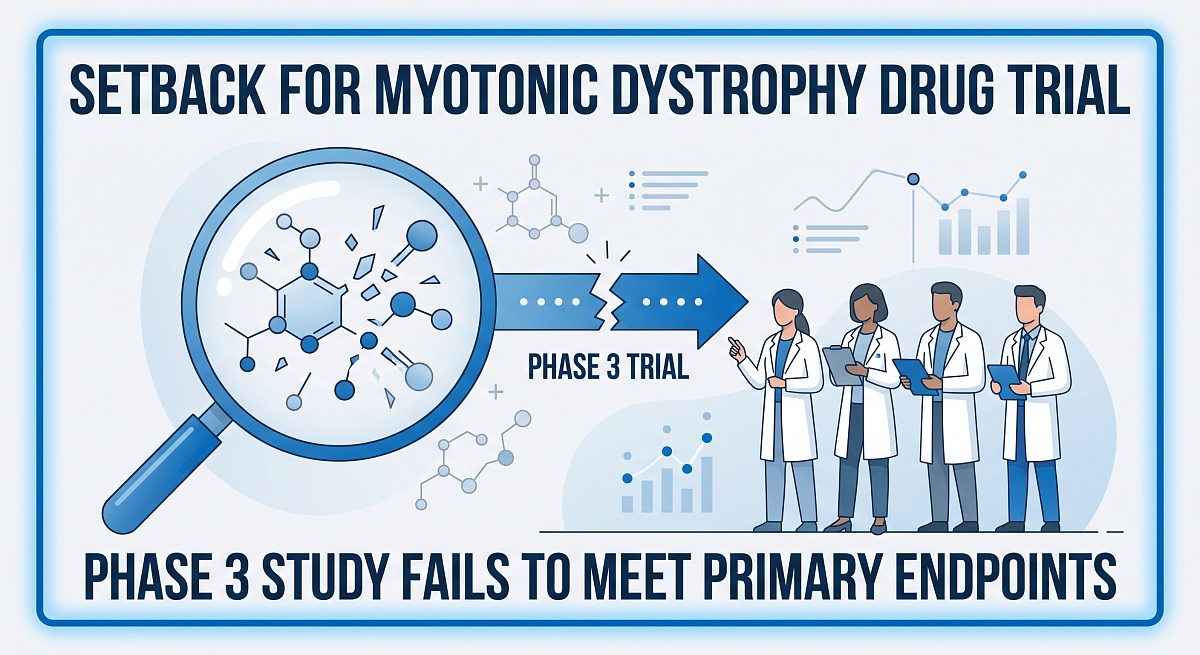
Earlier this week, Novartis announced that its antibody-oligonucleotide conjugate (AOC) drug delpacibart etedesiran (del-desiran) failed to meet primary endpoints in a Phase III clinical trial.
The therapy was designed for the treatment of myotonic dystrophy type 1 (DM1), an inherited neuromuscular disease. The drug works by targeting transferrin receptors in muscle tissue and then using small interfering RNA (siRNA) to deplete the expression of the disease-causing DMPK gene.
While the full data from the HARBOR trial (NCT06411288) is yet to be fully analyzed, del-desiran did not show a significant improvement in disease progression versus a placebo treatment.
“Developing therapies for a complex disease like DM1 remains challenging, and setbacks are part of scientific progress,” Novartis president and chief medical officer Shreeram Aradhye said in a release. “As we continue to evaluate the full HARBOR dataset, we remain committed to identifying the most appropriate development path for the del-desiran program.”
Unfortunately for Novartis, this isn’t the company’s only recent stumble. Just last week, the pharmaceutical giant had to completely halt a clinical trial evaluating chimeric antigen receptor (CAR) T-cell therapies following the deaths of three patients. The fatalities were attributed to a severe immune reaction in response to the drug.
That news triggered fellow pharma giant Bristol Myers Squibb to also put a hold on its clinical trial for a CAR T therapy following similar severe adverse reactions. Since facing these back-to-back failures, Novartis’ share price has declined by almost 14%. Although the company has yet to comment on the compounded effects of these events, a public statement reassured investors that Novartis “maintains its 5–6% five-year sales compound annual growth rate.”
Novartis designed its AOC therapy to target the mutated DMPK gene. Expanded CTG repeats within the gene lead to a phenomenon known as RNA toxicity, which incites disease in multiple body systems. Other groups are also investigating AOCs to treat neuromuscular diseases such as Duchenne muscular dystrophy. It remains to be seen if the failure of del-desiran will impact other AOC drug development efforts.
Del-desiran was granted orphan drug designation by the US Food and Drug Administration (FDA) and the European Medicines Agency (EMA), awarding it regulatory privileges such as fast-track review. Controversially, the FDA placed a partial clinical hold on the del-desiran in 2022 due to a serious adverse event in the MARINA (NCT05027269) clinical trial. The FDA lifted that hold in 2024.
Novartis has not yet commented on whether it will continue to develop del-desiran. The company did not respond to request for comment.