



Psilocybin prevents chemotherapy-induced nerve damage in new preclinical study
Click to view quick news summary (Spoiler)
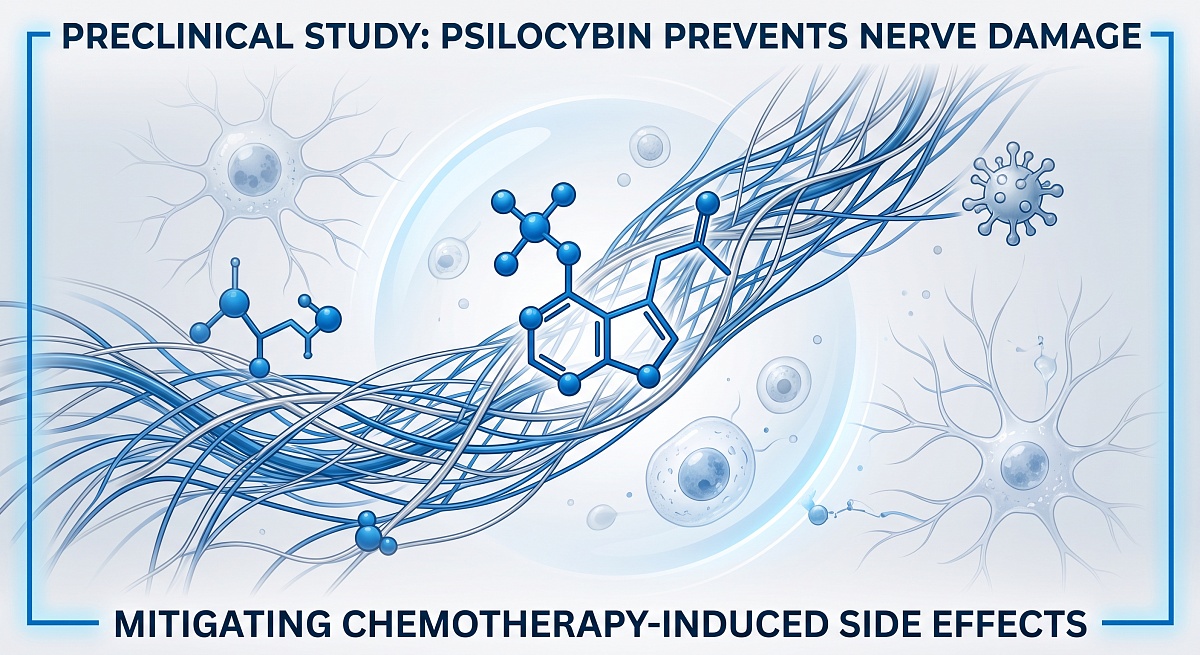
Researchers have discovered in preclinical mouse models that psilocybin can effectively prevent debilitating chemotherapy-induced peripheral neuropathy.
Recent research suggests that giving mice a compound found in magic mushrooms before chemotherapy can prevent the debilitating nerve damage that often accompanies cancer treatment. The findings indicate that psilocybin protects nerve fibers by keeping their cellular powerhouses moving and functioning properly. The study was published in Science.
Chemotherapy-induced peripheral neuropathy is a condition where cancer drugs damage the long sensory nerves that extend from the spinal cord to the hands and feet. This damage leads to pain, numbness, and an extreme sensitivity to cold. Because the condition can be severe and long-lasting, doctors often have to reduce a patient’s chemotherapy dose or stop the treatment entirely.
Medical scientists have worked to understand exactly how these drugs harm the nerves. For example, a 2014 review established that chemotherapy agents tend to damage mitochondria, the small structures inside cells that generate energy. These energy factories are especially important for sensory nerves, which require a constant supply of power along their extensive, thread-like extensions, called axons.
Subsequent work, such as a 2024 study, demonstrated that keeping mitochondria moving along these nerve fibers helps shield them from the physical degeneration caused by chemotherapy. In a parallel area of study, a 2018 study provided evidence that psychedelic compounds can stimulate specific growth pathways to rebuild and protect nerve connections.
The authors of the new study connected these pieces of evidence. Psilocybin, the active ingredient in certain mushroom species, activates a specific receptor on the surface of cells known as the serotonin 2A receptor. Because this receptor is involved in both nerve adaptability and mitochondrial regulation, the scientists hypothesized that administering psilocybin before chemotherapy might trigger a protective rescue mechanism, preventing the nerve damage before it begins.
The research, co-led by Dougherty and Amit, utilized a combination of mouse behavioral models and human tissue analysis. To test their hypothesis, the scientists gave mice two doses of psilocybin before administering common chemotherapy drugs, such as cisplatin and paclitaxel. They then subjected the mice to up to six cycles of chemotherapy, mimicking a clinical treatment schedule.
The scientists found that just two preventive doses of psilocybin kept the mice from developing the physical hypersensitivity and cold sensitivity typically caused by the chemotherapy drugs. The mice maintained normal baseline sensitivity scores, and this protective effect lasted across all six cycles of treatment and throughout the eight-month follow-up period.
Notably, psilocybin did not reduce the cancer-killing effectiveness of the chemotherapy. The tumor-bearing mice that received psilocybin showed the same reduction in tumor size as those that only received chemotherapy. Systemic immune markers also remained unchanged, suggesting the treatment targets the nerves without altering the body’s general response to cancer.
The team is already moving forward with an upcoming Phase 2 clinical trial, called NeuroGuard, to evaluate psilocybin during chemotherapy in patients with multiple cancer types. This work is part of UT MD Anderson’s Cancer Neuroscience Program, which examines the interactions between cancer and the nervous system.