




CAMBRIDGE, Mass. -- Nuvalent, Inc., a clinical-stage biopharmaceutical company focused on creating precisely targeted therapies for clinically proven kinase targets in cancer, today announced new clinical and preclinical data for zidesamtinib (NVL-520), an investigational ROS1-selective inhibitor, to be presented during poster sessions at the American Association for Cancer Research (AACR) Annual Meeting 2026 being held April 17-22 in San Diego.
"The strong patient enrollment in our ARROS-1 trial has reflected meaningful investigator enthusiasm for zidesamtinib's profile and generated a robust data set that enables deep characterization of its activity for patients with ROS1-positive NSCLC beyond our initial pivotal data presentation. We're highly encouraged by these clinical data for patients previously treated with repotrectinib or taletrectinib in our ARROS-1 trial, which we believe further reinforce the medical needs that remain for patients with ROS1-positive NSCLC despite the availability of new treatment options."
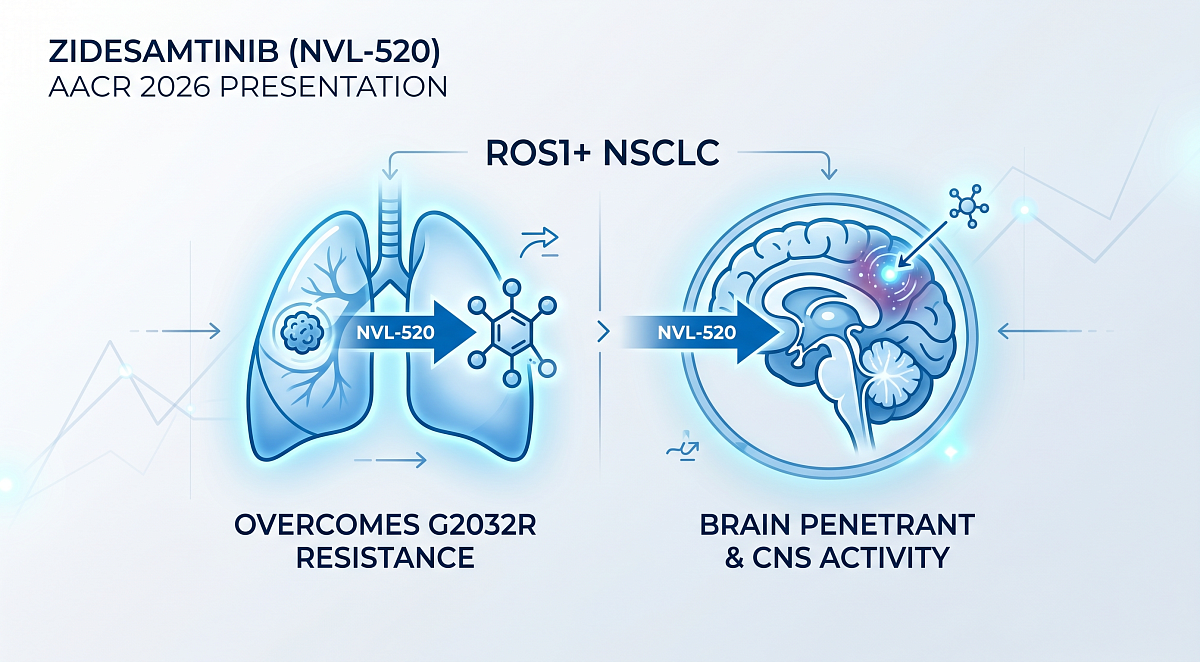
"Zidesamtinib demonstrated clinically meaningful activity in this heavily pre-treated subgroup, including activity in tumors with the ROS1 G2032R resistance mutation and intracranial complete responses for patients with CNS disease. Importantly, this indicates that ROS1-positive NSCLC tumors may remain ROS1-dependent beyond treatment with repotrectinib or taletrectinib and we believe supports the potential for zidesamtinib, if approved, to provide a clinically meaningful treatment option for patients who have exhausted available therapies. Furthermore, these clinical findings are consistent with the improved preclinical brain penetrance and intracranial ROS1 G2032R antitumor activity of zidesamtinib compared to repotrectinib and taletrectinib, and continue to support the potential for a differentiated clinical profile in earlier lines of therapy."
FDA NDA Acceptance and PDUFA Target Date
The U.S. Food and Drug Administration (FDA) has accepted the New Drug Application (NDA) for zidesamtinib for the treatment of adult patients with locally advanced or metastatic ROS1-positive NSCLC who received at least 1 prior ROS1 TKI, and assigned a Prescription Drug User Fee Act (PDUFA) target action date of September 18, 2026. Pending FDA review, Nuvalent anticipates U.S. commercial launch of zidesamtinib in 2026. Additionally, the company plans to submit data to the FDA to support a potential label expansion of zidesamtinib in TKI-naïve patients with advanced ROS1-positive NSCLC in the second half of 2026.
New Clinical Data for Zidesamtinib in ARROS-1 Trial
Title: Zidesamtinib in Patients with ROS1+ NSCLC Previously Treated with Repotrectinib or Taletrectinib.
Presenting Author: Geoffrey Liu, M.Sc., M.D.
Zidesamtinib is being evaluated in ARROS-1, a first-in-human, single-arm Phase 1/2 clinical trial in patients with advanced ROS1-positive NSCLC and other solid tumors. Clinical data presented are from a subgroup of patients with advanced ROS1-positive NSCLC in ARROS-1 who had been previously treated with the dual TRK/ROS1 TKIs repotrectinib and/or taletrectinib. No available ROS1 TKIs have demonstrated activity in this heavily pre-treated population.
About Zidesamtinib
Zidesamtinib is an investigational, brain-penetrant, ROS1-selective inhibitor created with the aim to overcome limitations observed with currently available ROS1 inhibitors. Zidesamtinib is designed to remain active in tumors that have developed resistance to currently available ROS1 inhibitors, including tumors with treatment-emergent ROS1 mutations such as G2032R. In addition, zidesamtinib is designed for central nervous system (CNS) penetrance to improve treatment options for patients with brain metastases, and to avoid inhibition of the structurally related tropomyosin receptor kinase (TRK) family. Together, these characteristics have the potential to avoid TRK-related CNS adverse events seen with dual TRK/ROS1 inhibitors and to drive deep, durable responses for patients across all lines of therapy.