





Setmelanotide Shows 7-Point HQ-CT Reduction in Prader-Willi Syndrome Phase 2
Click here to view quick news summary (Spoiler)
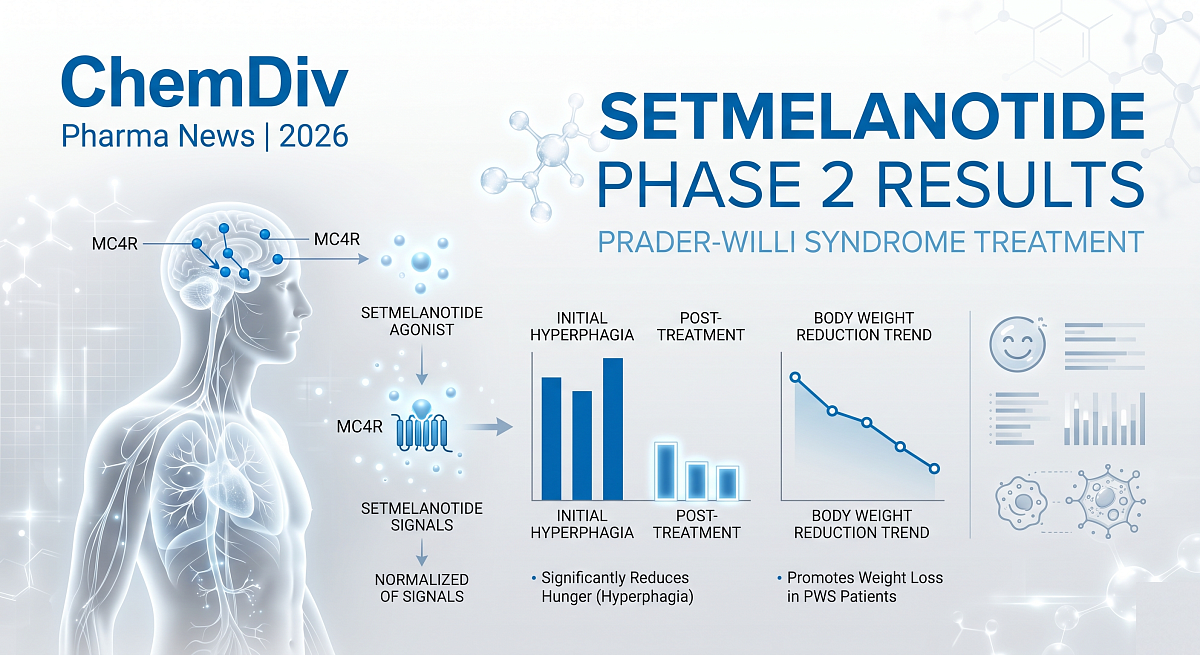
Rhythm Pharmaceuticals' Phase 2 trial of setmelanotide in Prader-Willi syndrome demonstrated a clinically meaningful 7-point or greater reduction in hyperphagia scores for 80% of moderate-to-severe patients, alongside favorable body composition changes and improved behavioral parameters.
Eight of ten patients with moderate to severe hyperphagia at baseline achieved a clinically meaningful 7-point or greater reduction in HQ-CT score after six months on setmelanotide, a result that cuts to the heart of why Rhythm Pharmaceuticals is pressing forward with Phase 3 development in Prader-Willi syndrome. The signal matters because hyperphagia in PWS is not simply excessive appetite; it is a relentless, biologically driven drive tied to MC4R pathway dysfunction that erodes quality of life for patients and their caregivers in equal measure. Reducing it by any meaningful margin is genuinely difficult.
Efficacy data from ENDO 2026
The Phase 2 interim data presented at ENDO 2026 covered 17 patients aged 6 to 23 years who remained on active therapy through mid-June. The six-month analysis showed a mean 3.06% BMI reduction across the full cohort, with five of seven pediatric patients achieving a BMI z-score drop exceeding 0.2, a threshold that carries clinical weight in growing children. Equally notable is the body composition picture: across 16 patients with DEXA data, fat mass fell a mean 4.19% while lean mass actually rose 0.74%. Preserving and adding lean tissue in a population where obesity management is inherently complicated by developmental considerations is not a trivial result. Anxiety and behavioral dysregulation, often overlooked in obesity trials, also improved: 10 of 15 patients with elevated baseline PADQ scores hit the 11-point threshold for clinically meaningful change. The safety profile remained consistent with what has been established across setmelanotide’s prior indications since its 2020 FDA approval.
The Competitive Landscape and Exclusivity
The competitive context adds urgency to Rhythm’s timeline. Soleno Therapeutics’ VYKAT XR received FDA approval in March 2025 specifically for hyperphagia in PWS patients aged 4 and older, meaning Rhythm is now a Phase 3 entrant into a market that already has an approved competitor. The differentiation argument Rhythm will need to make rests on mechanism: setmelanotide targets MC4R directly, attacking the pathway dysfunction at its root rather than downstream metabolic effects. Whether that mechanistic distinction translates into superior or complementary outcomes in a head-to-head or real-world setting is unanswered. The 52-week trial is still running, and full-year data will be critical.
The single result to track from here is the 12-month HQ-CT durability data. Hyperphagia reduction that holds through a full year would anchor the Phase 3 endpoint strategy and give Rhythm the strongest possible argument for differentiation in a PWS market that is no longer waiting for its first option.


