



Preclinical Models Provide Critical Foundation for Antibiotic PK/PD Targets
Preclinical in vitro and animal models remain essential for establishing antibiotic pharmacokinetic and pharmacodynamic targets, but experts say translating those findings into real-world patient care requires careful consideration of host factors, tissue penetration and clinical context.Preclinical models play a vital role in helping researchers understand how antimicrobials behave and what pharmacokinetic/pharmacodynamic (PK/PD) targets may be most effective before therapies reach patients, according to Sean N Avedissian, PharmD, MSc, PhD, associate professor, University of Nebraska Medical Center Department of Pharmacy Practice and Science, during a recent discussion on antibiotic development and clinical application.Avedissian, will be speaking on the topic during the ongoing MAD-ID/SIDP meeting.
Establishing Therapeutic Targets
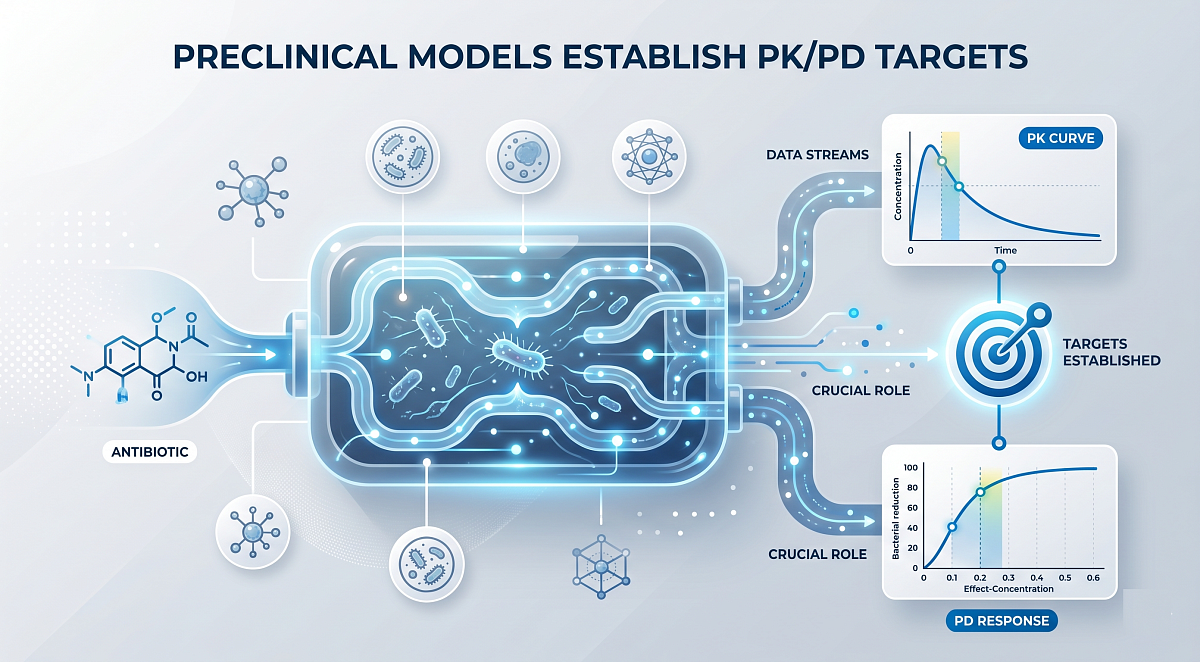
The conversation highlighted how in vitro systems and animal models serve as the initial framework for determining whether antimicrobials are driven by factors such as area under the curve (AUC) or time above minimum inhibitory concentration (MIC).These early studies help researchers establish practical therapeutic targets while balancing safety and efficacy concerns.
“A lot of times these preclinical models are kind of started as a starting point to kind of figure out what the PKPD driver is for a lot of these antimicrobials,” Avedissian, said.
The discussion also explored why stasis targets—rather than aggressive bacterial kill targets —are commonly used when establishing antimicrobial susceptibility breakpoints.According to Avedissian, higher kill targets may require drug exposures that are unrealistic or potentially toxic in clinical practice, particularly for agents with narrow therapeutic windows.
Translational Accuracy and Clinical Context
Avedissian emphasized that preclinical models can oversimplify what occurs in human patients because they often lack important host factors such as immune system contributions.However, advancements in more physiologically relevant systems, including organ-on-a-chip technologies and organoids, are helping improve translational accuracy.
“We treat a patient, not a number, and in the patient, you have all the other factors that help clear bacteria that you don’t always see in these preclinical models,” said Avedissian.He also addressed the challenge of antibiotic penetration into difficult-to-treat areas such as the central nervous system, lungs and bone.Avedissian, noted that plasma drug levels do not always reflect concentrations achieved within tissues, underscoring the importance of integrating published penetration studies with ongoing clinical assessment when managing critically ill or immunocompromised patients.