

Biosimilar Execs Optimistic About Future for US Biosims as Sandoz Locks in on ‘Golden Decade’
- Generic Opportunity: Up to $340 Billion
- Biosimilar Opportunity: $322 Billion
- Biologics Going Off Patent: >50 Drugs
- Sandoz Target Share: 60%
As Sandoz looks to address the “biosimilar void” created by the scores of lucrative drugs going off patent in the next decade, the generic and biosim specialist sees a multibillion-dollar opportunity up for grabs.
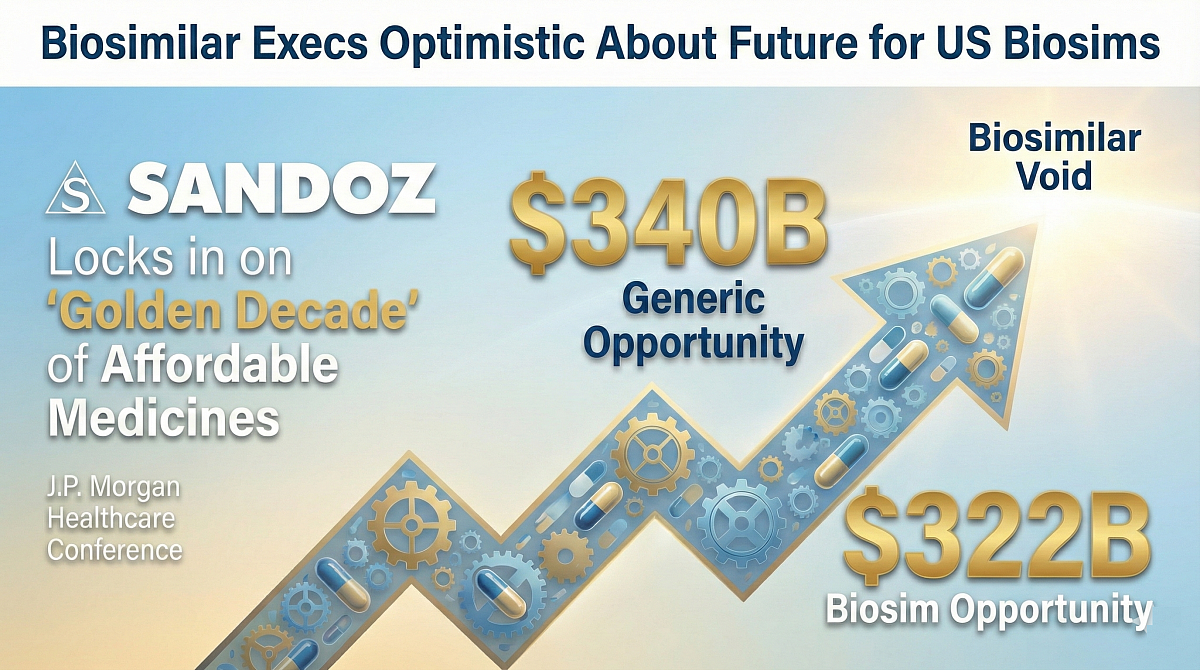
The company detailed its outlook on the upcoming “‘golden decade’ of affordable medicines” at the J.P. Morgan Healthcare Conference last week. Tallying up expected losses of exclusivity across the industry over that period, the Swiss drugmaker sees a generic drug opportunity of up to $340 billion and a biosim opportunity totaling $322 billion.
Addressing the Biosimilar Void
More than 50 biologic drugs are set to go off patent in the next seven years and have no biosimilars lined up to launch. This situation has created what’s been coined the “biosimilar void” among industry watchers.
While fully dissipating the void will require participation from many biosim players, Sandoz is committed to the cause: The company boasts a plan to target some 60% of the total biosimilar opportunity in sight. Still, “we want to do more,” the company’s North American president, Keren Haruvi, told Fierce Pharma in an interview on the sidelines of JPM.
Regulatory Advocacy and FDA Guidance
After delay, Sandoz's biosimilar Tyruko launches in the US to pressure Biogen's blockbuster MS med Tysabri. Haruvi, who also chairs the Association for Accessible Medicines, credits Sandoz with years of advocating for regulatory changes related to biosimilars. These efforts manifested last year with the FDA’s revised guidance on the copycat biologic drugs.
The draft guidance is meant to streamline biosimilar drug development by reducing the need for additional trials, allowing companies to develop biosimilars more quickly and for about half the cost. While the proposed regulations are still in the draft guidance phase, Haruvi is “very optimistic” that they'll be implemented as part of final agency guidance.
US-Specific Challenges and Market Dynamics
Despite the progress on the regulatory front, the U.S. biosimilar market still has a long way to go to deliver on its cost-savings potential. “I’m not happy,” Haruvi said when asked about the state of U.S. biosimilar access today. “The promise of biosimilars in the U.S. is not what it should be,” she said, adding, “it’s disappointing.” As she puts it, the unique dynamics in the U.S. healthcare system make it the “toughest market in the world” for biosims.
Strategy for Success: Humira and Cordavis
Yet, it’s still one Sandoz knows how to navigate. Having launched the U.S.’s first biosimilar in 2015, Sandoz is well-versed on the driving factors behind successful U.S. biosimilar launches. For example, the company’s copy of AbbVie’s immunology blockbuster Humira, called Hyrimoz, is “by far the most successful” copy in the crowded market, Haruvi said.
Haruvi attributes Hyrimoz’ success in part to the foundational necessity of a reliable supply, without which “you have no chance to win.” But to really lead the pack, the key is to have a finger on the pulse of market dynamics. This is how Sandoz ended up at the forefront of a now-dominant biosimilar market strategy in 2023, when it formed an alliance with CVS Health’s biosimilar arm Cordavis.