





Ferroptosis Library
Ferroptosis Library Description
The ChemDiv Ferroptosis Library is a specialized collection of 9,785 small molecules designed to modulate ferroptosis—an iron-dependent form of regulated cell death characterized by the accumulation of lipid peroxides. This library is specifically curated for researchers focused on discovering novel ferroptosis inducers and inhibitors for various therapeutic applications.
Design & Curation Strategy
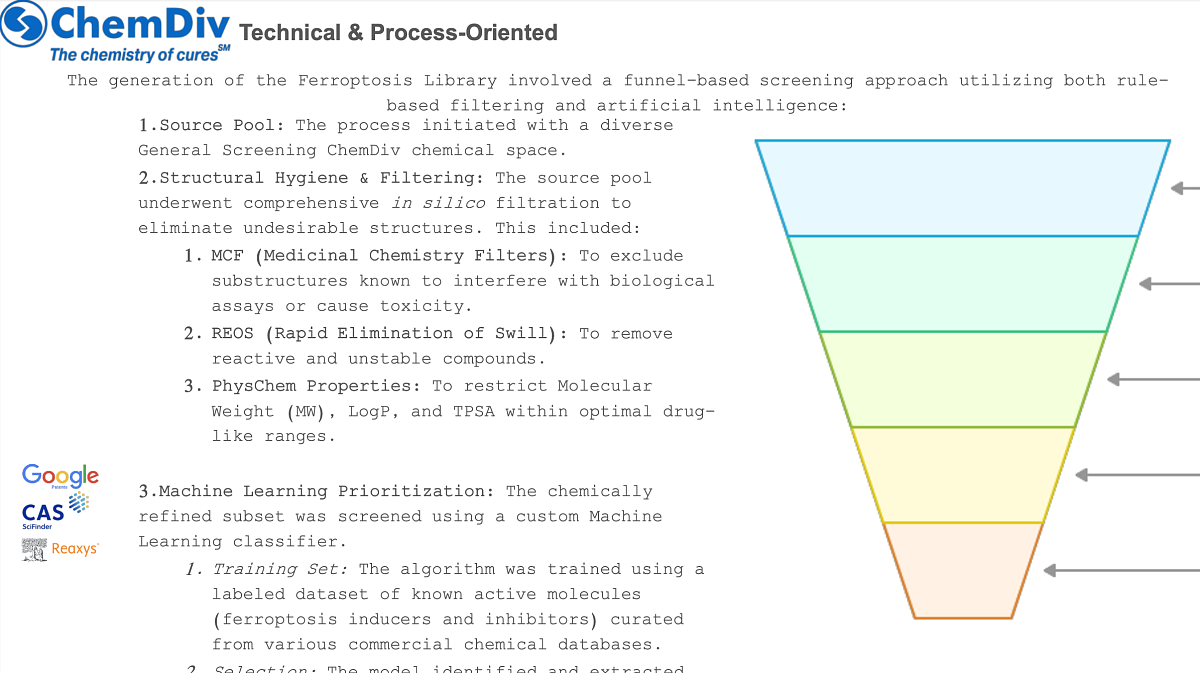
The library was developed using a rigorous, funnel-based screening approach that combines structural hygiene filters with advanced Machine Learning (ML) prioritization:
- Source Pool: Selected from a diverse general screening collection of 1.6 million unique entries.
- Structural Hygiene (In Silico Filtering):
- MCF & REOS: Application of Medicinal Chemistry Filters and Rapid Elimination of Swill to remove toxic, reactive, and unstable compounds.
- Physicochemical Optimization: Compounds are filtered for optimal drug-like properties (Molecular Weight, LogP, and TPSA).
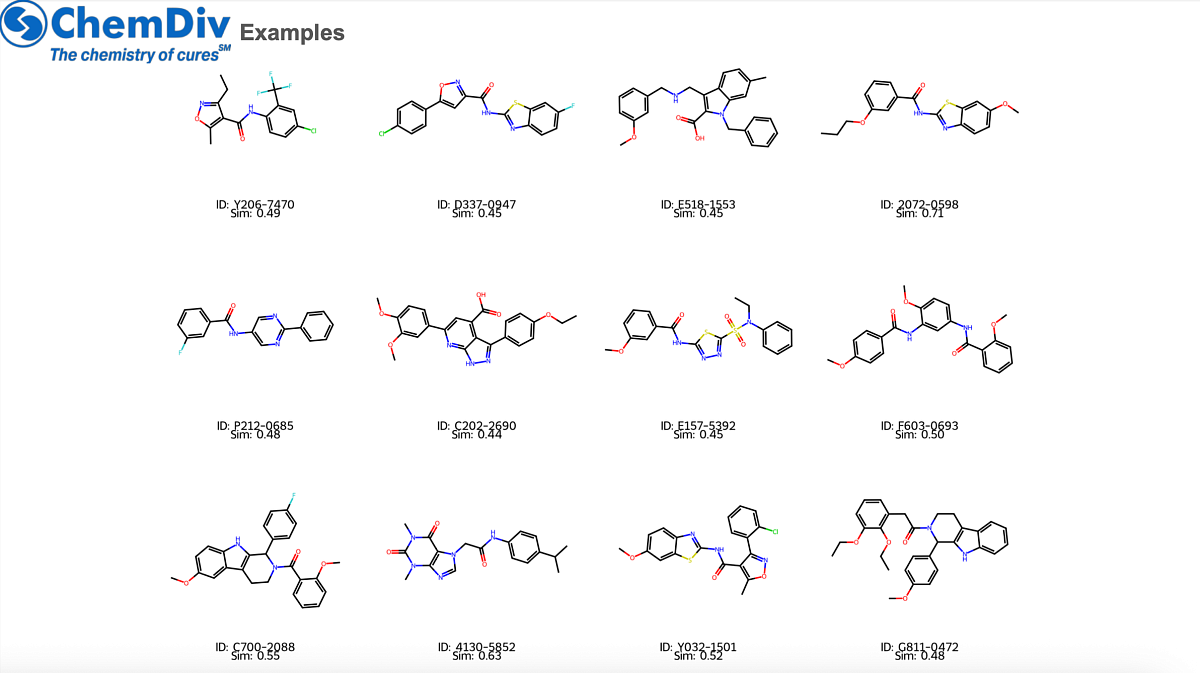
- AI/ML Prioritization: A custom Machine Learning classifier was trained on a labeled dataset of known ferroptosis modulators. The algorithm selected compounds exhibiting structural features and pharmacophores analogous to known active molecules.
Key Biological Targets
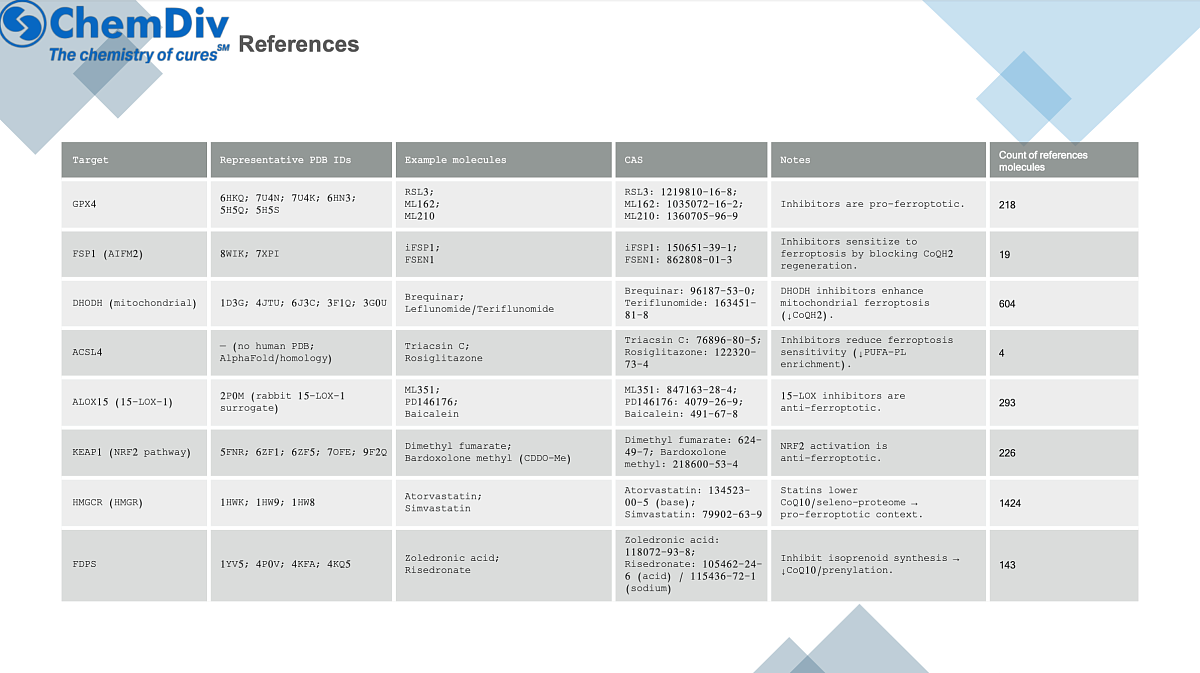
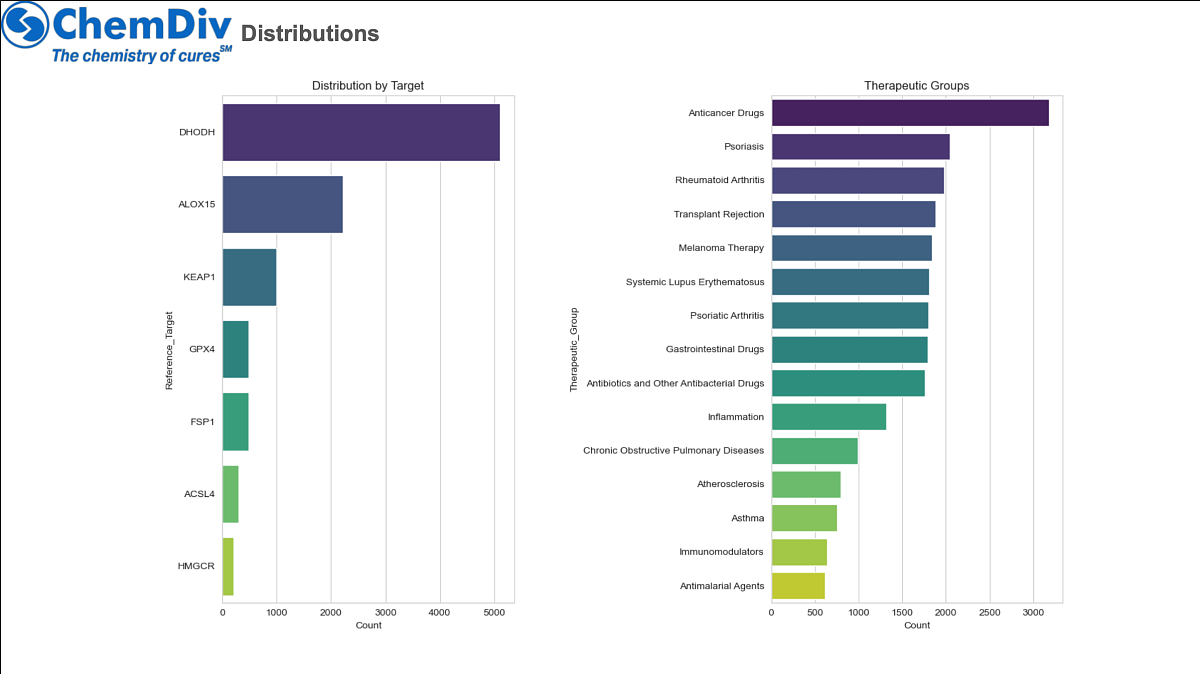
The library covers a wide range of critical targets involved in the ferroptosis pathway, including mitochondrial functions, lipid metabolism, and antioxidant defense systems. Key targets include:
- GPX4: The central regulator of ferroptosis (inhibitors are pro-ferroptotic).
- FSP1 (AIFM2): A ferroptosis suppressor distinct from GPX4.
- DHODH (Mitochondrial): Targets involved in mitochondrial lipid peroxidation.
- ACSL4 & ALOX15: Enzymes regulating lipid composition and peroxidation.
- KEAP1 (NRF2 pathway): Regulators of the antioxidant response.
- HMGCR & FDPS: Enzymes within the mevalonate pathway affecting CoQ10 synthesis.
Physicochemical Profile
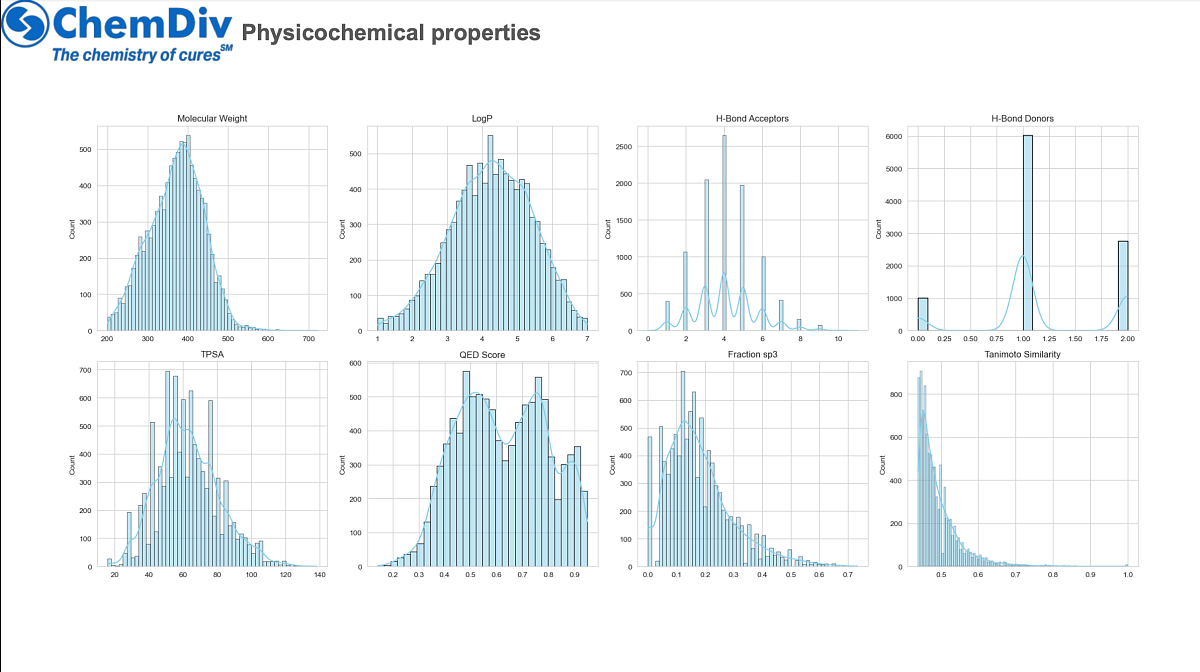
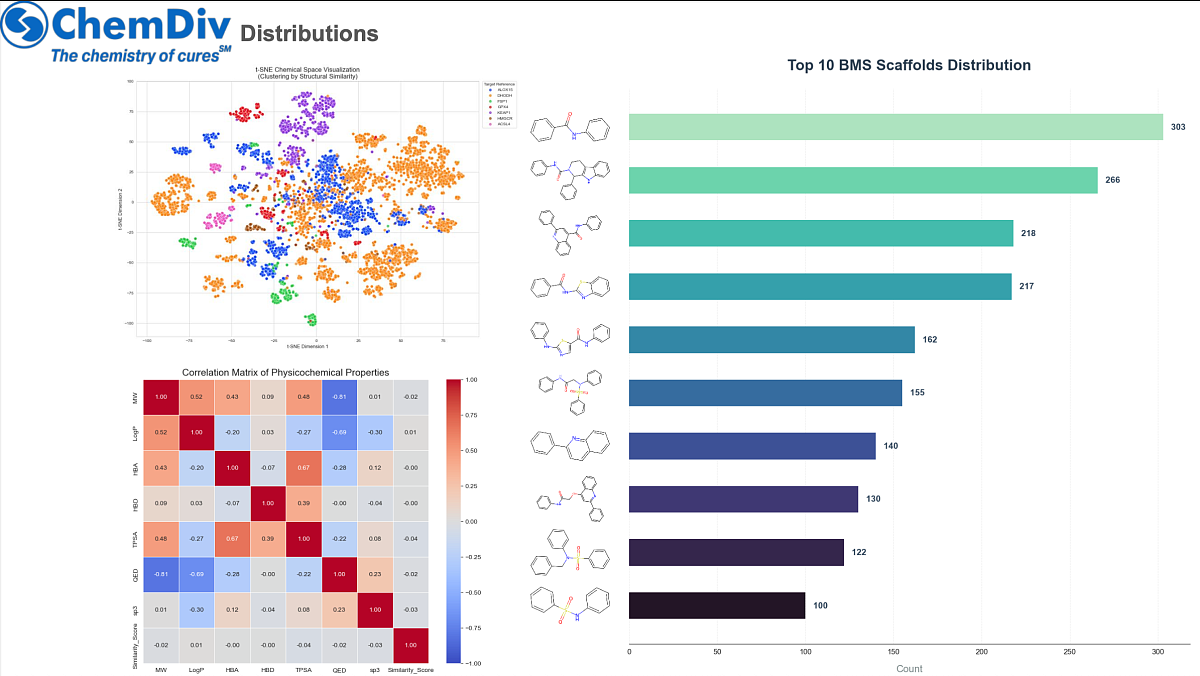
The compounds in this library possess favorable drug-like characteristics, compliant with Lipinski’s Rule of Five. The distribution analysis confirms optimal ranges for:
- Molecular Weight (typically 300–500 Da)
- Lipophilicity (LogP)
- Topological Polar Surface Area (TPSA)
- H-Bond Donors/Acceptors
Therapeutic Applications
Based on the targets and structural composition, the library is highly relevant for drug discovery in several therapeutic areas, including:
- Oncology: Exploiting ferroptosis induction to kill cancer cells (Anticancer drugs).
- Immunology & Inflammation: Treatment of Rheumatoid Arthritis, Psoriasis, and transplant rejection.
- Other Conditions: Ischemia-reperfusion injury, neurodegeneration, and metabolic disorders.