



Tuberculosis Drug Discovery Gets Smarter with Artificial Intelligence
Click to view quick news summary (Spoiler)
Researchers at Texas A&M have developed the CAGE-Fusion AI model and data management tools to eliminate misleading nuisance compounds and streamline collaborative data, dramatically speeding up the search for effective tuberculosis treatments.
When biomedical researchers screen potential candidate molecules for tuberculosis drug discovery, they frequently face an overwhelming volume of options — many of which initially appear promising but ultimately prove to be costly, time-consuming dead ends.
“We might get thousands of candidate compounds from a high-throughput screen and then have to decide which ones we are actually going to invest resources in,” explained James Sacchettini, Ph.D., the Rodger J. Wolfe-Welch Foundation Chair in Science, Texas A&M AgriLife Research scientist, and professor across the Departments of Biochemistry and Biophysics and Chemistry at Texas A&M University.
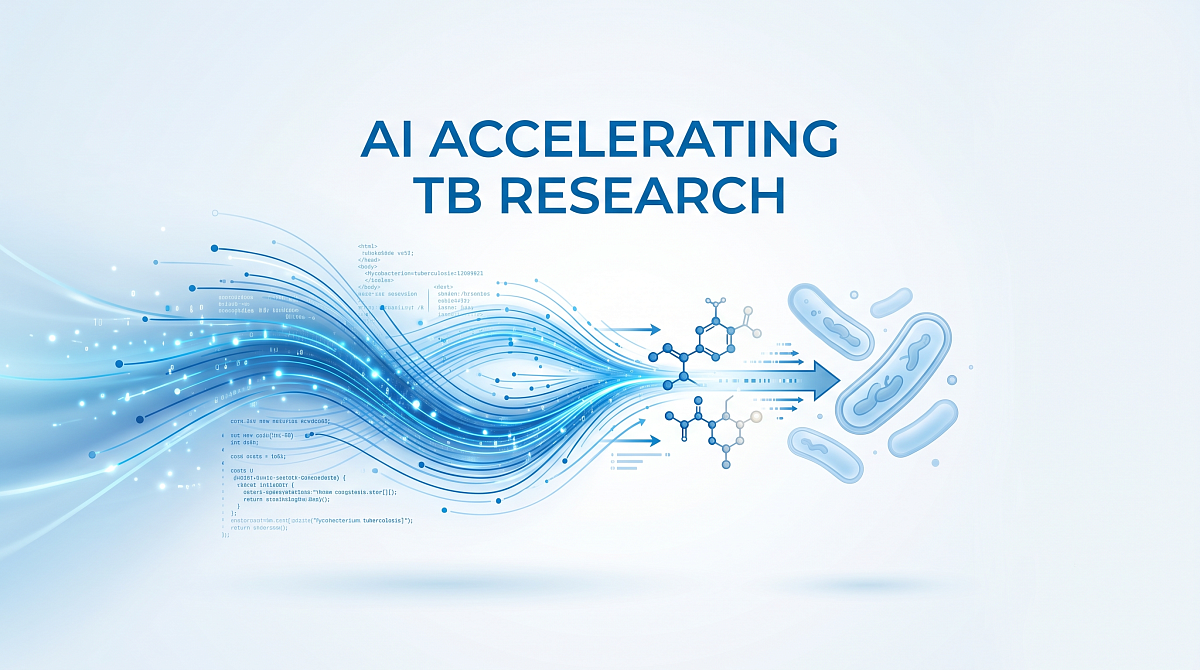
To overcome this hurdle, Dr. Sacchettini's laboratory recently engineered a novel artificial intelligence tool engineered to help scientists focus their research efforts immediately following initial screening assays. Concurrently, the research team is utilizing AI algorithms to organize decades of collaborative scientific data into an accessible, searchable digital format.
“What information can we extract that really helps us make critical decision-making steps?” Sacchettini said. “If we can use AI tools to shorten the timeline required to go from an initial concept to a real clinical treatment, that would be a transformative advance.”
The Challenge of Tuberculosis and Slow Experimental Cycles
The laboratory's focus on AI integration carries massive weight given the global disease burden. According to the World Health Organization (WHO), tuberculosis (TB) remains the world's deadliest infectious disease, having afflicted human populations for millennia. Standard antibiotic regimens require months of continuous administration, while complex cases involving drug-resistant strains or co-infection with HIV demand far longer treatment durations. The vast majority of affected patients reside in lower-income global regions where prolonged treatment protocols and limited healthcare infrastructure render disease containment extraordinarily difficult.
In the United States, a prominent tuberculosis outbreak in New York during the 1990s highlighted the persistent threat of the pathogen. “People had assumed, 'oh, we cured that illness decades ago, right?'” Sacchettini recalled. “Then it turned out that facility environments like Rikers Island were heavily affected with active tuberculosis. Individuals were being released from prison and entering elevators with six other people, and by the time they reached the sixth floor, five other individuals had been exposed and infected.”
Developing novel therapeutics against TB poses steep biological obstacles. The causative bacteria are encased in a dense, waxy cell coat that prevents most antibiotic compounds from penetrating to reach target proteins inside. Furthermore, the slow growth rate of the bacteria significantly delays laboratory experimentation. “Executing a single tuberculosis culture experiment can take months, whereas testing against staph or strep might take only a week,” Sacchettini noted. “That extended timeline is a primary reason why the overall drug discovery pipeline has been historically slow. It represents an ideal application area for machine learning and AI.”
Filtering Nuisance Molecules with CAGE-Fusion
In early-stage drug development, research teams test vast chemical libraries against specific target proteins. However, many compounds generate false-positive biological signals or interfere with assay chemistry directly. “These 'nuisance molecules' cost research programs enormous amounts of time and funding,” Sacchettini emphasized. “A primary objective is to flag them early so we don't spend months, years, or hundreds of thousands of dollars investigating non-viable leads.”
To tackle this problem, Sacchettini's team built a specialized AI model called CAGE-Fusion. Detailed in a study published in the Journal of Cheminformatics, the model learns from historical screening datasets to automatically categorize problematic molecules into four distinct categories: compounds that aggregate or clump together, compounds that interfere with chemical signaling mechanisms, reactive molecules that modify targets non-specifically, and pan-assay interference compounds that bind indiscriminately to multiple targets.
Crucially, the tool offers transparent interpretability. “The model walks researchers through its reasoning process and highlights the exact chemical regions of a molecule that it flagged as problematic,” stated Siddhant Rath, an AgriLife Research scientist in Sacchettini's lab who led the development effort.
Unifying Consortium Data Through Conversational Interfaces
Eliminating false-positive compounds early addresses only one part of the discovery challenge. Drug development requires coordination across numerous institutions. To optimize collective knowledge, the Sacchettini lab is leveraging AI to help the Tuberculosis Drug Accelerator (TBDA) consortium organize and utilize its extensive research repositories.
Rath and colleague Saswati Panda developed an AI infrastructure designed to process and harmonize years of TBDA documentation, including complex chemical structures. “In my research, I might evaluate a molecule and feel I've seen a similar scaffold before, but historically there was no simple system to cross-reference past work,” Sacchettini noted.
The newly developed system integrates TBDA data across every phase of the drug discovery pipeline. Researchers can visually track candidate molecules across historical projects — including identifying where previous efforts encountered insurmountable dead ends — and query the database directly using an intuitive chat interface.
In 2026, scientific teams have access to computational processing power that was previously unavailable, enabling AI models to play a expanded role in chemical design, Rath and Panda highlighted. Sacchettini concluded: “We aren't expecting AI to automatically generate the complete final drug structure. Rather, it accurately tells us what compounds NOT to pursue, which directly clarifies where we should focus our active research. It serves as an invaluable time saver.”