



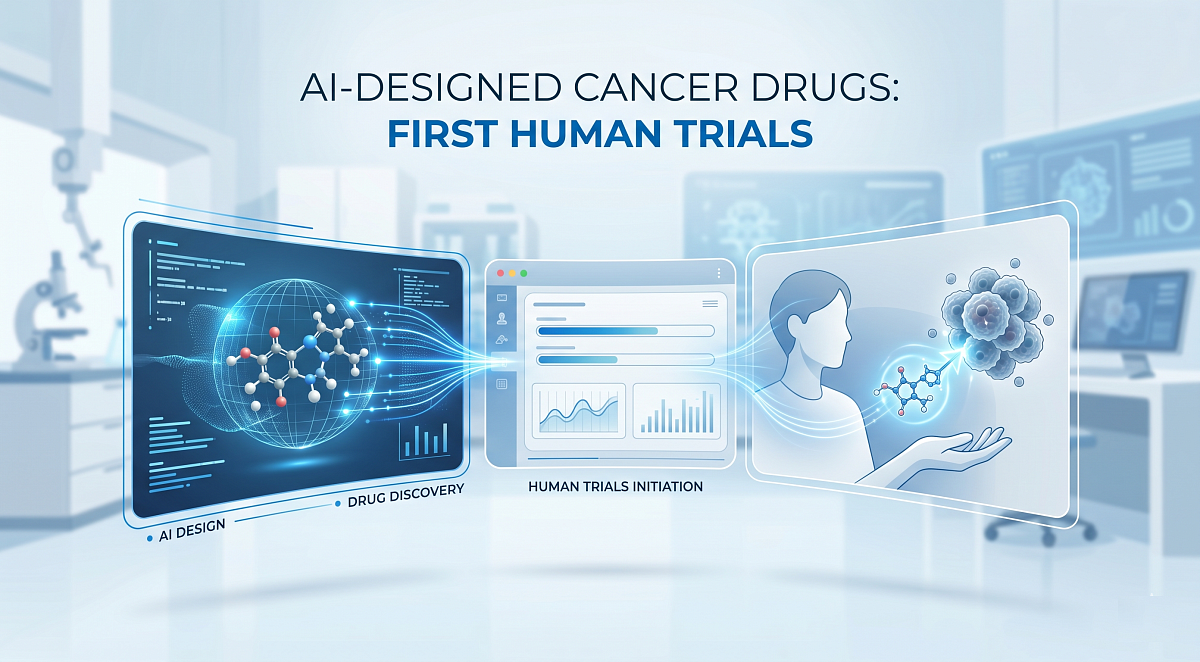
Isomorphic Labs, Alphabet's AI drug discovery unit spun out from Google DeepMind, is set to begin human clinical trials for drugs designed using its artificial intelligence models. The milestone follows years of development based on AlphaFold technology and comes after a $600 million funding round in 2025.
Company Background and Technology
Isomorphic Labs was established in 2021 from DeepMind's AlphaFold breakthrough, which predicts protein structures with high accuracy. The company has advanced this with AlphaFold 3, co-developed with Google DeepMind, and its own Isomorphic Labs Drug Design Engine (IsoDDE). IsoDDE provides predictive accuracy for molecular interactions, enabling rational drug design for complex biological systems. President Colin Murdoch described teams in London collaborating with AI to design cancer drugs.
Trial Preparations and Focus Areas
Isomorphic is prioritizing oncology candidates for its first clinical trials, though AlphaFold technology applies to other areas. Murdoch told Fortune that human trials are 'the next big milestone,' with the company 'staffing up now' and making 'good progress' on internal programs. The firm plans to develop these candidates through early-stage trials before licensing them. Traditional drug development faces high costs and low success rates, often around 10% once trials begin.
Funding and Strategic Partnerships
In March 2025, Isomorphic secured $600 million in external funding led by Thrive Capital to build its drug design engine and advance programs to clinical stages. CEO Demis Hassabis stated the funds would 'turbocharge' AI development toward solving diseases with AI. The company also has deals with major pharma players to support their programs while pursuing its own candidates in oncology and immunology.
AI Accuracy in Drug Design
Isomorphic Labs' push into human trials highlights the maturation of AI from predictive tools like AlphaFold to generative drug design systems. The Drug Design Engine's ability to model unseen structures and novel chemical matter addresses key bottlenecks in traditional discovery, where failure rates remain high due to poor molecular predictions. By combining machine learning experts with pharma veterans, Isomorphic aims to boost success probabilities, potentially reshaping economics in an industry where single-drug development can cost hundreds of millions. This development underscores a shift toward internal pipelines alongside partnerships, allowing Isomorphic to retain control over high-potential candidates. Oncology focus aligns with urgent unmet needs and AlphaFold's strengths in protein interactions relevant to cancer pathways. However, the technology's unproven track record in humans means early trial data will be critical for validating claims of improved efficiency.